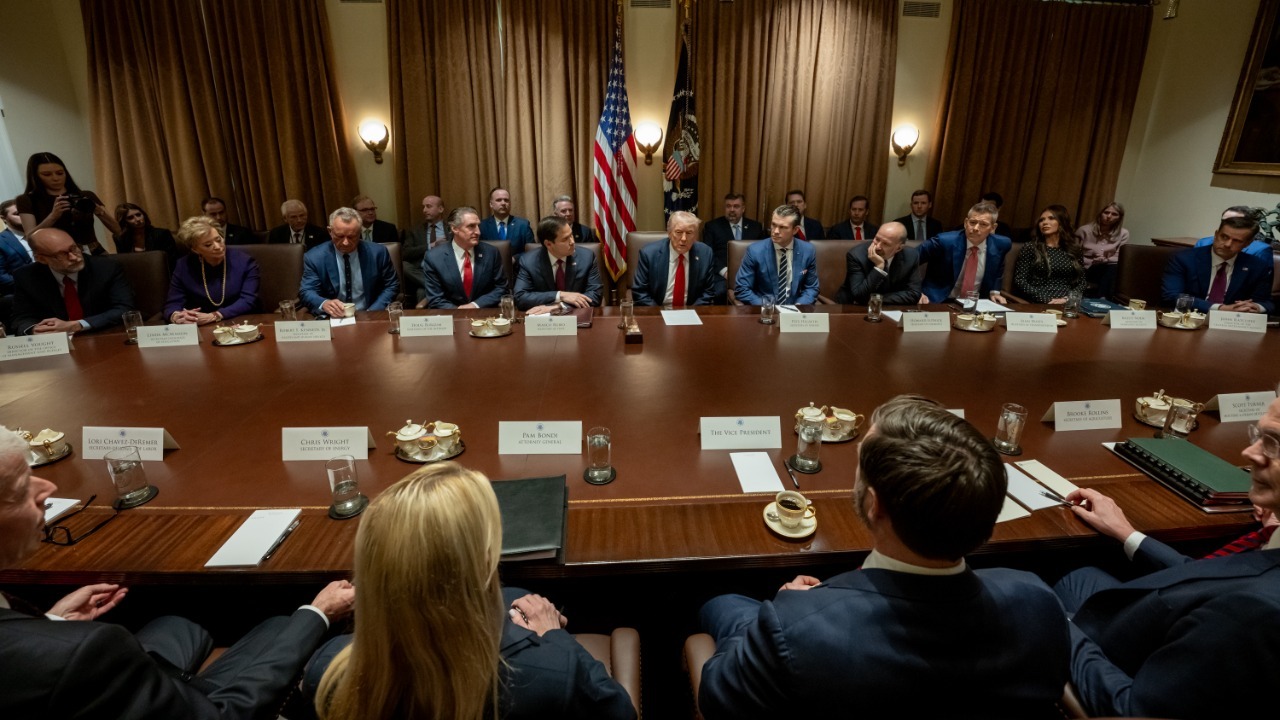
The people who work closest to the president help shape everything from foreign policy to the wording of a State of the Union, and their paychecks reflect just how valuable that work is considered inside the West Wing. The highest earners on the White House payroll now take home salaries that rival top posts in federal agencies and sit just below what Cabinet secretaries make. To understand who these staffers are and what they earn, I dug into the latest official personnel report and recent breakdowns of the administration’s pay scale.
The pay ceiling inside the modern White House
At the top of the current pay ladder, the White House salary report shows that the most senior aides can earn up to $225,700 a year, a figure that effectively functions as the ceiling for staff pay in the complex. That number is not arbitrary, it reflects the statutory cap that ties senior staff compensation to the broader federal pay schedule and signals which roles the president’s team views as indispensable. In practical terms, it means a handful of advisers, lawyers, and strategists are compensated at a level comparable to the most senior civil servants, even though they serve entirely at the pleasure of the president.
That top rate of $225,700 anchors the entire pay structure, with other staff salaries cascading down from that benchmark. The White House uses it to signal which positions carry the heaviest policy and political weight, often assigning it to senior advisors, legal counsel, and other high level strategists who sit just outside the Cabinet but still help drive the administration’s agenda. When I look at that figure in the context of private sector executive pay, it is clear that the White House is not trying to compete with Wall Street or Silicon Valley, but it is offering enough to attract lawyers, policy experts, and communications professionals who might otherwise remain in high paying corporate roles.
Who actually earns the maximum salary
Within that pay ceiling, only a select group of aides actually reach the maximum rate, and their titles tell a story about what this White House values most. The current list of top earners is dominated by senior advisors who sit at the center of policy and political decision making, along with key legal and communications figures who manage the administration’s exposure on everything from executive orders to congressional investigations. These are the people who are in the Oval Office for the toughest calls, and the salary data simply makes that hierarchy visible.
One of the clearest examples is Jacalynne Klopp, whose compensation illustrates how the White House reserves the top rate for its most trusted insiders. Her pay at the full $225,700 level places her in the same narrow band as other senior advisors and legal counselors who carry the heaviest portfolios. When I compare her salary to the rest of the staff list, it underscores how sharply the pay scale rises at the very top, with a small cluster of names at the ceiling and a steep drop to the next tier of high level aides.
The second tier: powerful staffers just below the top
Right behind the handful of maximum earners sits a large cohort of senior staff whose pay is only slightly lower but whose influence is still enormous. The administration’s own disclosures show that Behind the top group comes a block of 33 staffers making $195,200, a salary that still places them among the best compensated employees in the federal government. This tier often includes high profile figures such as the White House press secretary, senior communications strategists, and policy leads who manage major domestic and international portfolios.
That cluster of 33 staffers at $195,200 effectively forms the backbone of the senior staff, bridging the gap between the president’s inner circle and the broader team of directors and deputies. Their pay reflects the expectation that they will be on call at all hours, manage crises in real time, and absorb the political risk that comes with being the public face of the administration on television and social media. When I look at that number in the context of the overall payroll, it is clear that the White House is willing to pay a premium for people who can both execute policy and survive the relentless scrutiny that comes with the job.
How many people the Trump White House actually employs
To understand how these high salaries fit into the bigger picture, it helps to look at the size of the operation they sit atop. The Trump White House is a sprawling workplace that includes policy experts, schedulers, military liaisons, and administrative staff, all of whom are captured in the official personnel report. According to that report, there are 404 staff members in the complex, a figure that gives a sense of just how many people it takes to keep the modern presidency running day to day.
According to the same documentation, the White House does not just employ political strategists and speechwriters, it also relies on policy analysts, lawyers, and operations staff whose salaries span a wide range. The fact that only a small fraction of the 404 employees reach the top pay bands highlights how concentrated the highest compensation is at the very top. When I compare the number of maximum earners to the total headcount, it becomes clear that the vast majority of people working in the building are paid far less, even as they help carry out the same agenda.
What the official payroll report reveals
The most detailed snapshot of this pay structure comes from the administration’s own filing with Congress, which lays out every staffer’s name, status, and salary in black and white. In the latest report, the White House notes that the data is current As of Date a specific Tuesday in early July, and then proceeds to list each employee line by line. The document is formatted with columns labeled NAME, STATUS, SALARY, pay basis, and position title, which together show not just how much people are paid but also whether they are full time, part time, or serving in another capacity.
One entry, for example, shows that ADAMS, PATRICK M. is listed as an Employee with a salary of $110,500, a mid range figure that still reflects a significant level of responsibility inside the complex. That specific number, drawn directly from the Annual Report, illustrates how the pay scale steps down from the top tier of $225,700 and $195,200 to a broad middle band of six figure salaries. When I scan the report as a whole, the pattern is clear: a small cluster of maximum earners, a larger group in the high $100,000s, and then a long tail of staffers whose pay reflects more specialized or junior roles.
The top ten earners and what their roles signal
Within that broader structure, the top ten highest paid staffers offer a concise snapshot of the administration’s priorities. These are the people whose names appear at or near the $225,700 ceiling, often holding titles like senior advisor, counsel to the president, or director of key policy councils. Their compensation signals that the president and his team see their work as central to the success of the administration, whether that means steering economic policy, managing national security decisions, or coordinating the White House’s political strategy.
Outside analyses of the payroll have highlighted how figures like Jacalynne Klopp sit at the very top of that list, with reporting that notes she “earns the highest” salary among the staffers reviewed. That framing, drawn from a breakdown of the top ten, underscores how a small group of aides capture the maximum rate while others fall just below it. When I look at those names together, I see a roster that blends political loyalists with subject matter experts, a mix that reflects the dual demands of governing and campaigning that define any modern White House.
How these salaries compare to lower level staff
The contrast between the highest paid staffers and their colleagues further down the list is stark. While the top tier earns between $195,200 and $225,700, many mid level aides and specialists make salaries closer to the $110,500 range or below, even as they shoulder demanding workloads. These employees include policy assistants, junior lawyers, and communications staffers who draft memos, prepare briefings, and manage the day to day machinery that keeps the West Wing functioning.
Looking at the official payroll, the presence of someone like ADAMS, PATRICK M. at $110,500 shows how the administration values experienced professionals who may not sit in the president’s inner circle but still play critical roles. The salary table makes clear that there is a wide band of staffers clustered around that figure, forming the middle management layer that translates high level directives into concrete policy steps. When I compare those numbers to the top salaries, it is evident that the White House, like many large organizations, reserves its biggest paychecks for a small group at the top while relying on a much larger cadre of mid level professionals to carry out the work.
Unpaid roles and symbolic salaries
Not every influential figure in the building is drawing a large paycheck. Some high profile individuals have historically taken no salary at all, either as a political statement or because they have substantial income from outside the government. The current payroll data and related reporting note that a subset of senior figures have opted out of compensation, even as they hold titles that would normally qualify them for the upper pay bands.
In addition, the reporting on the highest paid staffers points to specific examples of legal and policy advisers whose compensation details are noteworthy in their own right. One such figure is Edgar Mkrtchian, identified as an attorney adviser whose pay and role have drawn attention in the context of broader discussions about White House salaries. When I consider these cases alongside the unpaid roles, it becomes clear that compensation inside the complex is not just about money, it is also about signaling status, commitment, and in some cases a deliberate distance from personal financial gain.
Why these numbers matter for transparency and power
Ultimately, the salaries of the highest paid White House staffers are more than just line items in a budget, they are a window into how power is organized around the president. The fact that the top rate sits at $225,700, with a second tier at $195,200 and a broader middle around $110,500, shows how the administration ranks different kinds of work, from big picture strategy to the grind of implementation. When I map those numbers onto job titles, I see a clear hierarchy that mirrors the informal pecking order insiders often describe.
At the same time, the very existence of a detailed public payroll, from the As of Date note at the top of the report to the final entry in the NAME, STATUS, and SALARY columns, is a reminder that the White House is still a public institution funded by taxpayers. Analyses that follow figures like Kristine and track each new salary report help keep that information accessible, whether they are highlighting a top earner like Jacalynne Klopp or unpacking the roles of the Senior advisers who sit just below her on the pay scale. When I put all of this together, the picture that emerges is of a workplace where money, influence, and proximity to the Oval Office are tightly intertwined, and where every line on the salary sheet tells a small part of the story of how this presidency operates.
More From TheDailyOverview

Grant Mercer covers market dynamics, business trends, and the economic forces driving growth across industries. His analysis connects macro movements with real-world implications for investors, entrepreneurs, and professionals. Through his work at The Daily Overview, Grant helps readers understand how markets function and where opportunities may emerge.

