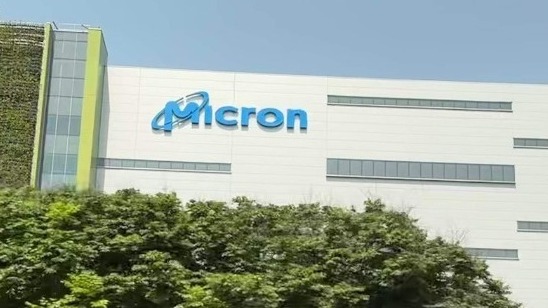
Micron has officially begun work on a vast semiconductor campus in central New York, a project framed as both an industrial revival and a generational jobs engine. The company and state leaders are tying the $100 billion buildout to a promise of roughly 49,000 high paying positions when direct hires and surrounding growth are counted. I see this as a test of whether one megaproject can truly reset a regional economy while reshaping the global memory chip supply chain.
The stakes reach far beyond the town of Clay. Micron is pitching the campus as a cornerstone of United States efforts to secure advanced memory production, while New York is treating it as the largest private investment in its history. The numbers are eye catching, but the real story lies in how those jobs are structured, who gets them, and whether the surrounding communities can keep pace with the scale of change.
The $100 billion bet and a four fab campus
At the heart of the plan is a commitment by Micron to spend $100 billion or more building a memory manufacturing complex in New York. State officials describe it as the largest private investment the state has ever landed, and Micron is pairing that figure with a promise to construct what it calls the largest cleanroom in the United States. The campus is planned as a cluster of four fabrication plants, a configuration that gives the company room to scale production in phases as demand for advanced DRAM and other memory products grows.
Micron Technology, Inc has now moved from planning to execution, celebrating an official groundbreaking at the New York megafab site in CLAY, N.Y., an event the company marked through a GLOBE NEWSWIRE announcement. In that statement Micron Technology, Inc underscored that the project sits in Onondaga County, New York, and is designed as a long term manufacturing hub rather than a single factory. I read that as a signal that the company expects memory demand, particularly from artificial intelligence and data center customers, to justify sustained expansion rather than a one off build.
From 9,000 people on site to 40,000 around it
The headline figure of 49,000 jobs is not a single payroll line, and the breakdown matters. Micron has told local officials that the company itself expects to employ up to 9,000 people at the campus once all four fabs are running. Around that core, the company projects roughly 40,000 additional jobs tied to suppliers, construction, logistics and the broader service economy that tends to grow up around a major industrial site. When I add those figures together, I arrive at the roughly 49,000 positions that state leaders now cite as the project’s long term employment impact.
Local leaders have tried to unpack what those numbers mean in practice, particularly for Onondaga County. Reporting on the deal has highlighted that Onondaga County Executive Ryan McMahon, identified in one analysis as Onondaga County Executive, has emphasized that the jobs at Micron and at suppliers will largely pay well above typical service sector wages. That same reporting notes that jobs in the computer and electronics sector have historically offered higher pay than many other local industries, which helps explain why county officials are willing to reshape zoning, infrastructure and workforce programs around the project.
High paying roles and who gets them
When I look at the job mix Micron is promising, the phrase “high paying” is not just a political talking point. Analyses of the project point out that roles at Micron and at related suppliers are expected to include engineers, technicians, equipment operators and specialized construction workers, categories that typically command salaries well above regional medians. One deep dive into the employment projections for the campus, framed around those 50,000 jobs, stresses that the bulk of positions will sit in computer and electronics manufacturing, logistics and advanced construction rather than low wage retail.
That same analysis underscores that the jobs at Micron and its suppliers will demand specific skills, from cleanroom protocols to equipment maintenance on multimillion dollar lithography tools. I see a clear risk here: without aggressive training pipelines, the highest paying roles could skew toward workers recruited from outside the region. That is why state and local officials are pairing the project with community college programs, apprenticeship tracks and K 12 STEM initiatives, all aimed at making sure residents of central New York can compete for the most lucrative positions rather than being confined to secondary service jobs.
National strategy, global supply chain
Micron’s New York campus is not just a local development story, it is part of a broader national strategy to rebuild domestic chipmaking capacity. In one account of the project’s launch, Micron Technology is described as starting construction on its $100 billion megafab as part of a push to expand advanced memory output in the United States. That report, by Anwesha Pattanaik, notes that Micron Technology framed the investment as a response to surging demand from artificial intelligence and data center customers, and as a way to reduce reliance on overseas manufacturing hubs that have dominated DRAM and NAND production for decades.
A separate analysis by Anwesha Pattanaik, focused on Micron Technology’s decision to break ground on a new $100 billion semiconductor megafab in New York, goes further and ties the project to global market share. That piece notes that Micron Technology expects the campus to significantly increase its contribution to worldwide memory output within ten years, effectively turning central New York into a key node in the global supply chain. I read that as a recognition that the campus is not just about reshoring existing capacity, it is about capturing a larger slice of future growth in AI focused memory demand.
Politics, incentives and regional ripple effects
The scale of Micron’s commitment has drawn in every level of government, from the White House to county executives. New York’s governor has repeatedly highlighted that Micron’s $100 billion plus pledge is the largest private investment in New York’s history, and has framed the project as a turning point after decades of industrial stagnation. One social media post by Justin Huang, identified as Chief Executive Officer at IDCNOVA (IDCQUAN), points out that the project is underpinned by incentives at multiple government levels, a reminder that taxpayers are effectively co investing in the megafab in exchange for jobs and long term tax revenue.
Regional leaders beyond Syracuse are also watching closely. One television report described how computer chip maker Micron, joined by federal, state and local officials, broke ground for its massive complex in the town of Clay and noted that the project could benefit the North Country over the next 30 years. That framing captures the broader economic geography at play: suppliers, construction firms and logistics providers from across upstate New York are positioning themselves to capture slices of the work, and smaller communities are hoping to see spillover in the form of new warehouses, housing developments and service businesses.
More From TheDailyOverview
*This article was researched with the help of AI, with human editors creating the final content.

Grant Mercer covers market dynamics, business trends, and the economic forces driving growth across industries. His analysis connects macro movements with real-world implications for investors, entrepreneurs, and professionals. Through his work at The Daily Overview, Grant helps readers understand how markets function and where opportunities may emerge.