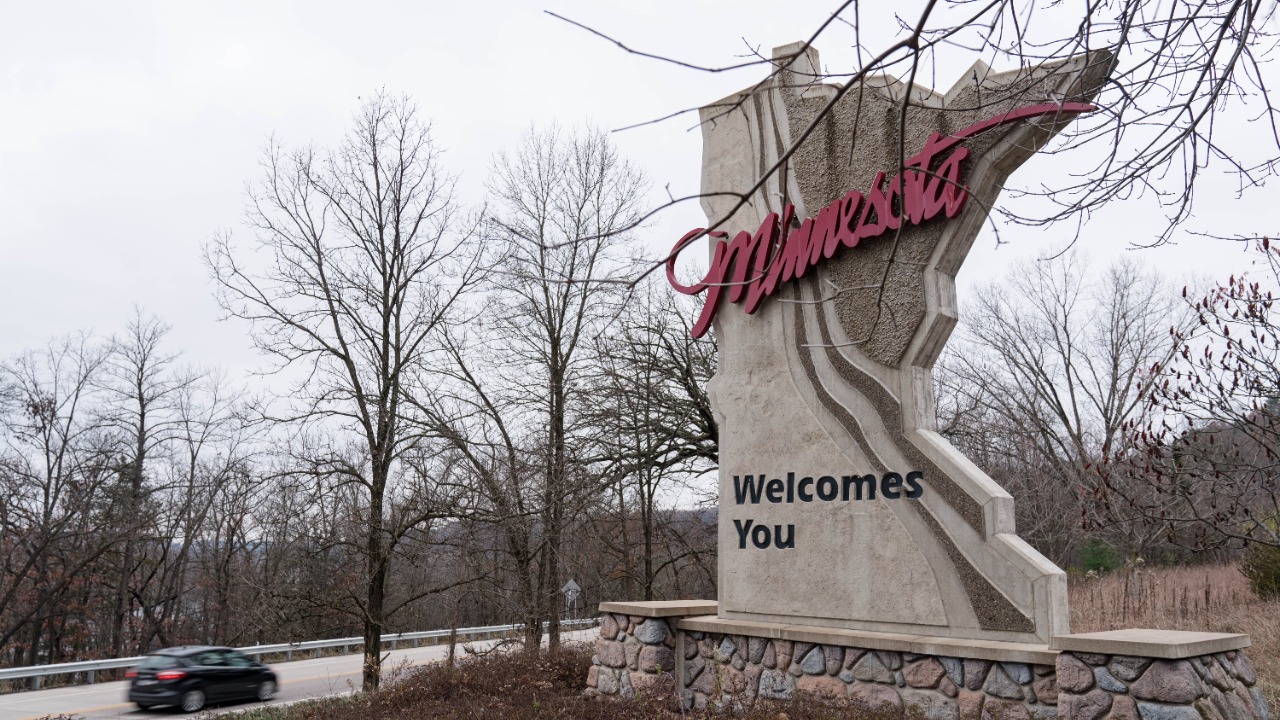
Minnesota is confronting a welfare fraud scandal that has already produced nearly $1 billion in alleged losses, yet the emerging investigations suggest the damage may extend far beyond a single program or community. What began as a story about pandemic food aid has widened into a broader reckoning over how the state monitors public money, how federal agencies coordinate, and whether criminal networks have learned to treat safety-net programs as a standing revenue stream. The question now is not whether there was a breakdown, but how deep it runs and who will ultimately be held to account.
The billion-dollar shock and why it matters
The scale of the Minnesota welfare scandal is staggering by any standard, with estimates of the combined fraud tied to pandemic-era programs reaching or exceeding $1 billion in alleged theft. That figure is not just a headline number, it represents money that was supposed to feed children, stabilize housing and support vulnerable families, yet instead was allegedly diverted into luxury goods, foreign real estate and other personal enrichment. As I look across the reporting, the throughline is clear: the state’s safety net became a lucrative target for people who understood how to exploit rapid federal spending and weak oversight.
Reporting on the central food-aid case describes a scheme in which the Justice Department has now charged a seventy-eighth defendant in what prosecutors call the Feeding Our Futu scheme, a program that was supposed to provide meals to children but instead allegedly became a vehicle for massive fraud. Separate analysis notes that the welfare scandal roiling the state involves Somali-linked networks and that some estimates of the total losses exceed $1 billion, underscoring how far beyond a single nonprofit the problem appears to reach.
Inside the Feeding Our Future case
At the center of the story is Feeding Our Future, a nonprofit that was supposed to channel federal nutrition dollars into free meals for low income children but is now synonymous with brazen fraud allegations. Prosecutors say the organization and its partners claimed to serve vast numbers of meals that were never actually provided, using fabricated invoices, shell companies and kickbacks to siphon off public funds. The case has become a symbol of how quickly emergency pandemic programs scaled up without matching controls, creating an opening for sophisticated actors to move in.
Federal filings describe how the Last week announcement of new charges brought the total number of defendants in the Feeding Our network to seventy-eight, a figure that reflects both the breadth of the alleged conspiracy and the government’s determination to keep adding cases. Local coverage has highlighted how properties linked to the fraud, including homes and commercial buildings, remain in the hands of defendants even as forfeiture efforts grind forward, with Properties still owned despite plans to seize them. That disconnect between headline-grabbing indictments and the slow work of clawing back assets is one reason many Minnesotans suspect the financial damage will never be fully repaired.
Housing fraud shows the problem is wider than food aid
If the Feeding Our Future case exposed vulnerabilities in child nutrition programs, a separate housing scandal suggests the same playbook has been applied to other parts of the safety net. Federal authorities in Minnesota have charged multiple defendants with exploiting housing stabilization funds, alleging that they billed for services that were never delivered or inflated claims to extract more money from Medicaid-linked programs. The pattern looks familiar: rapid expansion of benefits, limited verification and intermediaries who understood how to turn paperwork into cash.
In one case, the acting United States Attorney for the District of Minnesota, Joe Thompson, described how eight people were charged in a massive housing stabilization fraud scheme that allegedly siphoned millions from programs meant to keep vulnerable residents in stable homes. Local television coverage echoed that eight people were charged with taking millions in a related Minnesota housing fraud scheme, reinforcing the sense that the state’s oversight problems are not confined to one agency or benefit category. When food and housing programs show parallel weaknesses, it suggests systemic gaps that organized fraudsters can exploit across multiple funding streams.
Political accountability and the fight over blame
As the fraud numbers have grown, so has the political fallout, with Minnesota’s leadership facing intense scrutiny over how such schemes were allowed to flourish. Social service workers inside the system have been particularly blunt, accusing Gov Tim Walz of bearing direct responsibility for the breakdown in oversight. Their criticism reflects not just anger over the lost money, but frustration that front line warnings about irregularities were allegedly ignored or minimized while the fraud was still unfolding.
One report quotes Minnesota social service workers saying Gov Tim Walz is 100% responsible for the massive fraud tied to the Feeding Our Future scheme, a stark charge that has become a rallying cry for critics. A separate account notes that Walz’s GOP challenger, Demuth, has argued that Walz bears Walz “full responsibility” for the $1 billion scandal, framing it as the product of a breakdown in systemic oversight rather than a few bad actors. As the House delegation and statewide candidates weigh in, the fraud cases have become a proxy for a larger debate over how Minnesota’s government manages risk when it expands social programs at speed.
Somali-linked networks and community tensions
Another volatile dimension of the scandal is the role of Somali-linked networks, which has fueled both legitimate concern about organized crime and an ugly backlash against Minnesota’s Somali community. Several of the charged defendants come from that community, and investigators have described how some fraud rings allegedly used cultural and familial ties to build trust and recruit participants. At the same time, community leaders warn that painting an entire diaspora with the brush of criminality risks deepening divisions and undermining cooperation with law enforcement.
Analysts have described the scandal as part of a broader pattern involving Somali-connected fraud in Minnesota, with one detailed report on the 1bn Somali fraud scheme outlining how stolen funds allegedly flowed into luxury cars, high end goods and foreign real estate. A separate analysis titled The Somali Minnesota Welfare Fraud Edition notes that the scandal roiling Minnesota has become a flashpoint in national debates over immigration and public benefits. Letters from local readers describe how the “Feeding Our Future” fraud has intensified resentment toward Somali neighbors to the point that intense it’s turned into hatred, a reminder that the social damage may outlast the legal cases.
Federal probes: SBA, Treasury and the terror finance question
As the criminal indictments pile up, federal agencies beyond the Justice Department are now digging into whether Minnesota’s fraud problem intersects with broader financial crime and even terrorism financing. The Small Business Administration has opened an investigation into whether pandemic-era business relief programs were similarly exploited by some of the same networks that targeted food and housing aid. That move signals a recognition in Washington that the fraud may not be confined to one set of grants or a single state agency’s controls.
An SBA spokesperson told An SBA investigation is underway into individuals and organizations tied to alleged Minnesota Somali fraud networks that may have tapped COVID aid, describing a focus on crime rings that appear to persist beyond any single program. At the same time, the Treasury Department has launched a separate probe into whether Minnesota tax dollars or fraud proceeds have ended up in the hands of al-Shabaab, with one analysis by Thorpe and Rufo noting that the Somali diaspora sent $1.7 billion to Somalia in 2023. Letters from Minnesota residents cite Reports that Shabaab is taking a cut of stolen funds, turning Minnesota’s generosity into a potential pipeline for a terror group, although the full extent of that link remains under investigation.
How prosecutors and watchdogs are responding
For all the criticism of slow oversight, the scale of the indictments shows that law enforcement has begun to respond aggressively once the fraud patterns were identified. Federal prosecutors have built sprawling cases that trace money flows through dozens of shell entities, bank accounts and property purchases, a complex task that requires years of forensic work. The challenge now is to move from headline arrests to sustained deterrence, so that future would-be scammers believe the risk of getting caught is real.
On the food aid front, Prosecutors have already charged dozens of Minnesota residents in what some critics call the single greatest theft of taxpayer dollars in state history, and they have now charged nearly 80 people tied to the Feeding Our Future network. Separate federal briefings on the housing cases, including the one where Joe Thompson outlined charges against eight defendants, show that investigators are extending their reach into other benefit categories. A broader video discussion titled Are Minnesota’s $1 Billion Safety-Net Scams a Drop in the frames these prosecutions as only the beginning of a longer campaign to root out entrenched fraud, raising the possibility that more rings will be exposed as auditors and inspectors general dig deeper.
Systemic weaknesses that let fraud flourish
Stepping back from the individual cases, the Minnesota scandal exposes structural weaknesses in how emergency aid and welfare programs are designed and monitored. During the pandemic, federal and state officials prioritized speed over verification, loosening documentation requirements and relying heavily on self reporting by nonprofits and vendors. That tradeoff may have been understandable in the moment, but it created an environment where falsified meal counts, inflated housing claims and sham business applications could slip through with minimal scrutiny.
Investigative coverage of the Feeding Our Future case notes that the indictments followed extensive reporting by the TV station Care 11, which helped expose how one of the Feeding Our Future executives allegedly used federal funds for personal enrichment. A broader analysis of Minnesota’s welfare fraud problem argues that the scandal is connected to a larger sense of government that is not just failing in the financial realm but in its duty to maintain public trust, a theme explored in the video titled Are Minnesota’s $1 Billion Safety-Net Scams a Drop in the. When “Numerous” individuals and nonprofits indicted in the Minnesota COVID fraud scandal include executives across multiple schemes, it suggests that oversight failures were not isolated glitches but recurring blind spots that savvy operators learned to exploit.
Why this may be only the beginning
All of this raises a sobering possibility: the billion dollars already identified in Minnesota may represent only a fraction of the true losses, both in that state and nationwide. Fraudsters who successfully tapped child nutrition funds and housing stabilization money are unlikely to have stopped there, especially when other pandemic-era programs like small business relief and unemployment insurance were also flush with cash and light on verification. The emerging federal probes hint at a much larger iceberg of interconnected schemes, some of which may never be fully uncovered.
One detailed slideshow on the massive billion-dollar fraud in Minnesota notes that the scandal shocks the conscience but not the instincts of those who have long warned about vulnerabilities in welfare systems, especially when money can be moved quickly into luxury goods and foreign real estate. A broader political analysis framed as Conventional Wisdom argues that the Minnesota scandal is already reshaping national debates over welfare, immigration and public trust, with some estimates of losses exceeding $1 billion and growing. When federal officials are still adding defendants, state leaders are still arguing over who is to blame, and agencies like the SBA and Treasury are only now mapping the full network of fraud, it is hard to escape the conclusion that Minnesota’s $1 billion welfare scam may be only the visible tip of a much larger problem.
More From TheDailyOverview
- Tennessee loses $2.6B megafactory and faces major layoffs
- Retired But Want To Work? Try These 18 Jobs for Seniors That Pay Weekly
- What to do with your pennies after the U.S. stops minting them
- Home Depot CEO warns of a troubling customer trend in stores

Grant Mercer covers market dynamics, business trends, and the economic forces driving growth across industries. His analysis connects macro movements with real-world implications for investors, entrepreneurs, and professionals. Through his work at The Daily Overview, Grant helps readers understand how markets function and where opportunities may emerge.