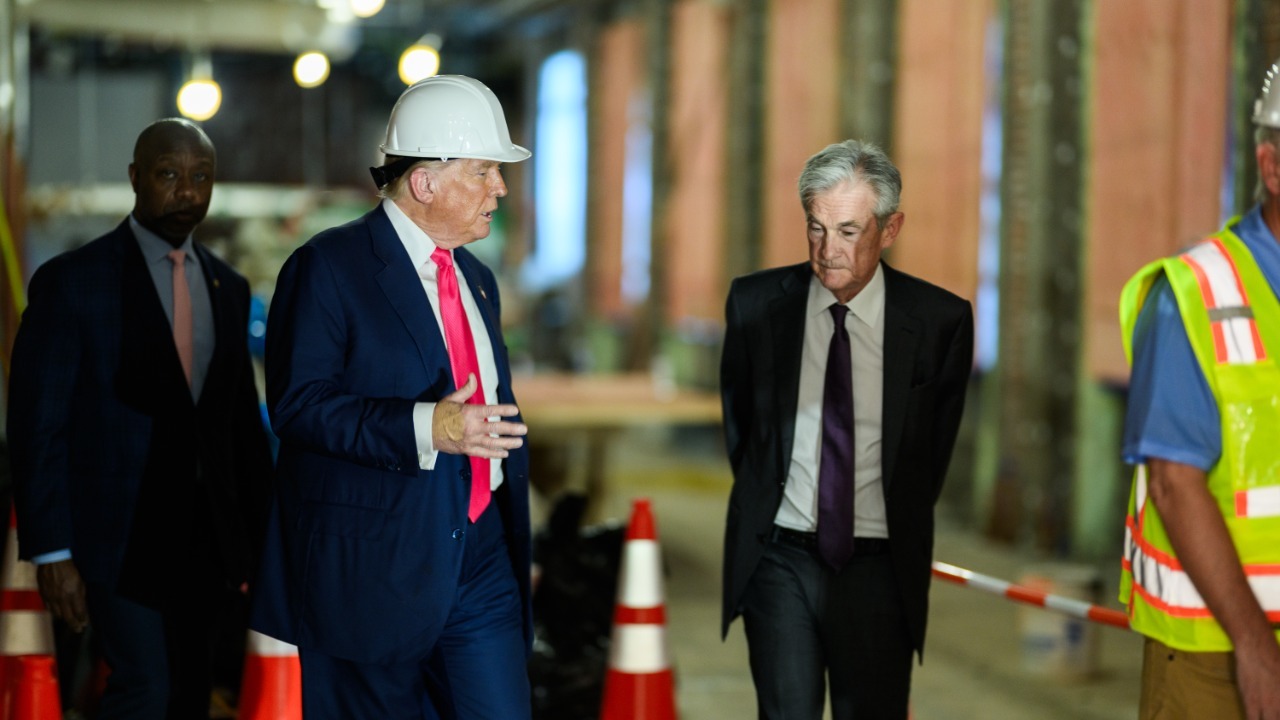
The standoff between the Federal Reserve and federal prosecutors has turned a normally technocratic institution into the center of a political and legal drama. What began as a criminal inquiry into Federal Reserve Chair Jay Powell’s conduct has widened into a test of central bank independence and the limits of presidential power over monetary policy.
At its core, the clash is about mistrust: prosecutors say they are scrutinizing potential wrongdoing, while Fed officials see an attempt to intimidate them into changing interest rate decisions. The mixed signals around that investigation, and the way they have been interpreted inside the central bank and the White House, have produced one of the most unusual confrontations in modern U.S. economic governance.
The criminal probe that jolted the Fed
Federal prosecutors opened a criminal investigation into whether Jerome Powell, serving as Federal Reserve chair, misused his position in connection with the renovation of Fed office buildings, according to officials briefed on the matter. The inquiry, which included questions about contracts and possible conflicts of interest, quickly expanded in the minds of central bankers into something larger than a construction review, especially once it became clear that the White House was closely tracking the case against the man who leads the Fed’s rate setting committee, the Federal Reserve Board of Governors.
Federal Reserve Chair Powell later confirmed that the Department of Justice had subpoenaed the central bank and warned that prosecutors were threatening a criminal indictment, a step that would be extraordinary for a sitting central bank chief. In public remarks, he described the subpoenas as part of a broader pattern in which the DOJ, under President Trump’s direction, was scrutinizing decisions that the administration has criticized as excessive interest rate hikes, a concern he detailed when he said the Federal Reserve Chair was being targeted over policy choices.
Mixed messages, rising suspicions
Inside the Fed, the legal moves did not unfold in a vacuum. Late last month, senior officials became convinced that the Justice Department was preparing a criminal case against them after a series of opaque communications and document demands, prompting them to hire the law firm Williams & Connolly to help navigate the confrontation. That sense of looming peril, and the perception that the Justice Department was not being transparent about its intentions, fed a narrative inside the central bank that the probe was less about building renovations and more about leverage.
One official involved in the response later rejected the idea that the Fed had overreacted, arguing that the claim that staff did not think the subpoenas were a big deal was “naive and almost malpractice” given the stakes. That official said they had provided detailed warnings about how the investigation could be used to bully Powell into resigning, a concern that crystallized the view that the legal process itself had become a political weapon aimed at the Fed chair.
Trump’s pressure campaign and the politics of rates
President Trump has never hidden his frustration with Powell and the Fed’s rate path, and the legal offensive fits into a broader effort to gain more direct control over monetary policy. Trump’s legal attack on Powell has been framed by his allies as a way to hold the Fed accountable for decisions that, in their view, have hurt jobs, mortgage and auto loans, but critics see it as an attempt to secure full control over the Fed and its decisions. By CHRISTOPHER RUGABER and JOSH BOAK have noted that this strategy underscores Trump’s long standing desire to bend interest rate policy toward his political priorities.
Powell has responded in unusually personal terms for a central banker. Fed Chair Jerome Powell has vowed to “stand firm in face of threats” after Trump’s DOJ launched the probe, signaling that he sees the investigation as part of a campaign of intimidation rather than a routine legal review. In remarks reported by Holly Bishop, he cast the confrontation as a test of whether the Fed can continue to set policy based on its own assessment of the economy, a stance that put Fed Chair Jerome directly at odds with the president.
Markets, rate cuts and a crypto shock absorber
The legal fight is not just a constitutional drama, it is also an economic risk. Analysts have warned that the confrontation between Trump, Powell and the DOJ could reduce the odds of near term interest rate cuts, since any move to ease policy might be interpreted as capitulation to political pressure. Reporting by By Allie Canal, Shannon Pettypiece and Steve Kopack has highlighted concerns that the standoff could keep borrowing costs higher for longer, with the timing of decisions scrutinized down to the minute, including references to 32 and 53 in coverage of how markets reacted as the investigation plays out, a reminder of how closely traders watch every signal from the PST trading day.
One of the more striking market reactions has come from the cryptocurrency world. As the confrontation escalated, Bitcoin Price Climbs Near $92,000, with traders explicitly citing the Federal Reserve and DOJ Showdown as a catalyst for the move. The surge toward $92,000 has been interpreted by some investors as a hedge against perceived political interference in traditional monetary institutions, a view reflected in analysis that tied the rally to worries about the renovation of Fed office buildings and the broader $92,000 milestone.
A broader assault on Fed independence
Beyond the immediate legal jeopardy, the episode has revived a deeper debate over whether the United States still wants an independent central bank. Harvard Law Professor Daniel Tarullo has warned that in the upcoming Supreme Court case Trump v. Cook, the independence of the Feder could be directly at issue, with the justices asked to weigh how much insulation the Fed’s Board of Governors, including member Lisa Cook, should have from presidential removal. That case, combined with the criminal inquiry into Powell, has led legal scholars to argue that the Supreme Court may soon be asked to redraw the balance between democratic accountability and technocratic autonomy.
On Capitol Hill, the political backlash has been sharp. DOJ’s Fed probe has sparked GOP criticism, with In the Senate, Sen Thom Tillis, R N C, vowing to block any Fed nominees “until this legal m” is resolved, a threat that could leave key positions unfilled and further complicate policy making at the GOP controlled committees.
More From TheDailyOverview

Grant Mercer covers market dynamics, business trends, and the economic forces driving growth across industries. His analysis connects macro movements with real-world implications for investors, entrepreneurs, and professionals. Through his work at The Daily Overview, Grant helps readers understand how markets function and where opportunities may emerge.

