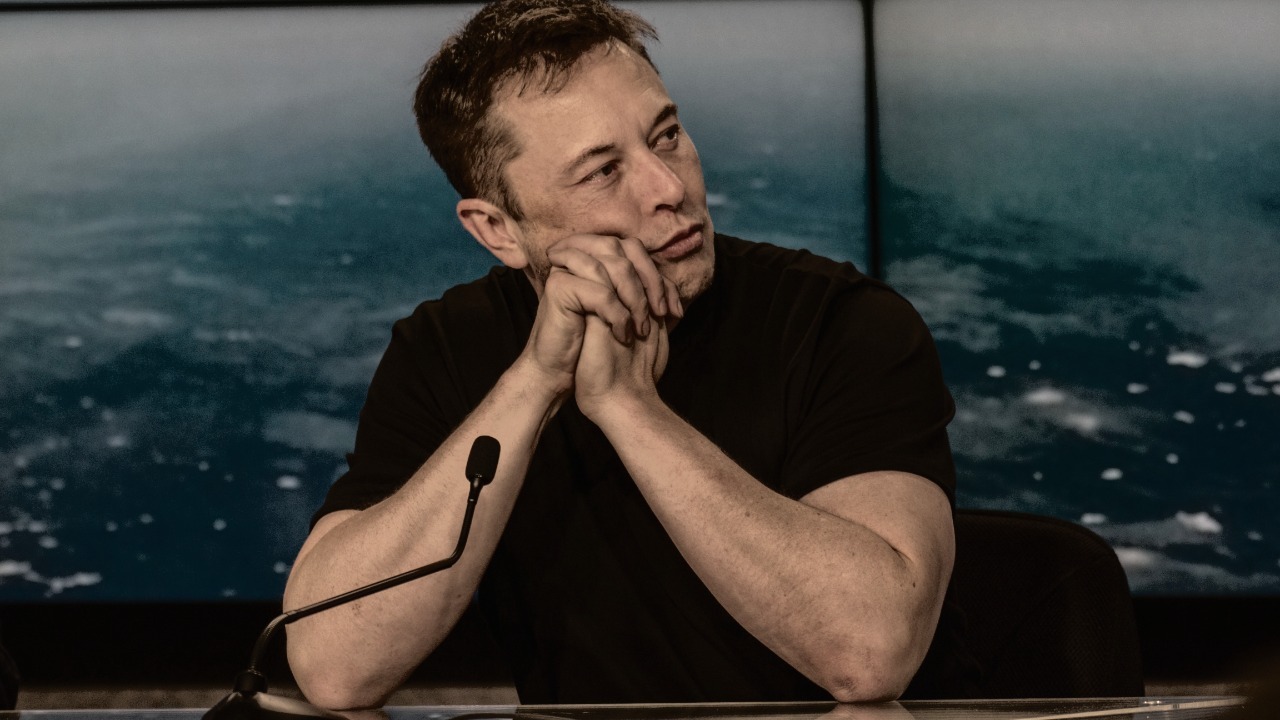
Elon Musk ends 2025 in a financial stratosphere that barely resembles the world most people inhabit, with a personal fortune that rivals the economic output of entire regions. His net worth, now measured in the high hundreds of billions of dollars, has grown so large that it eclipses the annual production of goods and services in a majority of the world’s sovereign states, turning one individual balance sheet into a geopolitical data point.
That concentration of wealth is not just a curiosity for billionaire rankings, it is a lens on how modern markets reward scale, technology, and narrative. As Musk’s holdings in electric vehicles, space launch, and digital infrastructure swell, the gap between his fortune and the gross domestic product of dozens of countries raises uncomfortable questions about power, accountability, and what it means when a single entrepreneur can financially overshadow national economies.
The staggering headline number
By the final weeks of 2025, estimates of Elon Musk’s net worth were clustering around the three-quarter-trillion mark, a level that would have sounded like science fiction a decade ago. At approx. $749 billion, his fortune is no longer just a leaderboard entry among tech founders, it is a macroeconomic variable in its own right, large enough to move indices, sway capital flows, and shape the strategic decisions of suppliers, competitors, and governments that depend on his companies’ investments.
That $749 billion figure is not an abstract construct, it is a market-priced snapshot of Musk’s stakes in businesses that investors have decided are worth betting on at extraordinary multiples. When I compare that valuation to the size of national economies, the scale becomes clearer: a social media post tracking global output notes that at approx. $749 billion, Elon Musk’s net worth now exceeds the annual GDP of more than 170 countries, a reminder that one man’s equity portfolio can outweigh the productive capacity of most of the world’s flags.
Richer than most of the world’s countries
Putting Musk’s wealth next to national GDPs is not just a rhetorical flourish, it is a way to translate market capitalization into something ordinary readers can grasp. Gross domestic product measures the value of all goods and services produced within a country’s borders in a year, and when a single individual’s net worth surpasses that figure for more than 170 countries, it signals a profound imbalance between private capital and public economies that still rely on tax revenue, foreign aid, and multilateral lending to function.
Earlier in the year, analysts tracking this imbalance highlighted that Elon Musk’s Wealth Now Dwarfs The GDP Of 83% Of Countries, a formulation that underlines how far his fortune has pulled away from the median nation-state. That same analysis pointed out that Tesla was the $234 Billion Engine Behind The Milestone, showing how a single listed company can propel a founder’s holdings past the output of dozens of low and middle income economies and turn stock market enthusiasm into a geopolitical talking point.
Tesla as the $234 billion engine
To understand how Musk reached these heights, I start with Tesla, the company that turned him from a wealthy entrepreneur into a figure whose net worth can be compared to continents. The electric car maker’s valuation has swung wildly over the years, but at key points in 2025 its market capitalization embedded a $234 Billion Engine Behind The Milestone, effectively converting investor expectations about future battery technology, autonomous driving, and global EV adoption into a towering personal stake for its chief executive.
That $234 billion slice of value is not just about selling Model 3s and Model Ys, it reflects a belief that Tesla can dominate energy storage, grid services, and software-driven mobility in ways that justify premium pricing. When markets assign that kind of multiple to a company, the founder’s equity becomes a lever that magnifies every uptick in sentiment, and in Musk’s case, the Tesla component of his portfolio has been the most visible driver of the leap from billionaire to a figure whose wealth now dwarfs the GDP Of 83% Of Countries.
How one fortune compares to national GDP
Comparing a personal net worth to GDP is imperfect, since one is a stock of assets and the other is a flow of annual production, but the juxtaposition still reveals something important about scale. When Musk’s holdings are valued at around $749 billion, they sit in the same range as the yearly output of mid sized developed economies, meaning that if his balance sheet were a country, it would slot into the global rankings ahead of more than 170 sovereign states that must fund healthcare, education, infrastructure, and defense with less.
That contrast becomes even starker when I consider that many of the countries whose GDP is smaller than Musk’s fortune are home to tens of millions of people. Their governments juggle debt repayments, currency volatility, and climate shocks while a single private individual can, in theory, reallocate capital across industries and continents at will. The fact that Elon Musk’s Wealth Now Dwarfs The GDP Of 83% Of Countries is not just a trivia point, it is a marker of how financial markets have concentrated influence in the hands of a tiny number of tech founders.
What it means for economic power
Economic power has traditionally been measured in national terms, with GDP, trade balances, and foreign reserves serving as proxies for a state’s ability to project influence. Musk’s ascent complicates that picture, because his personal fortune, anchored by Tesla and other ventures, gives him a capacity to fund projects, sway supply chains, and shape technological standards that rivals what some governments can do through public budgets and development banks.
When one person’s net worth exceeds the GDP of more than 170 countries, the lines between private and public power start to blur. I see that in the way policymakers court Musk’s investments in battery plants and gigafactories, offering tax breaks and regulatory concessions that reflect his leverage. The same dynamic appears in space and satellite infrastructure, where contracts with his companies can determine whether smaller nations gain access to launch capacity or broadband coverage, effectively turning a private balance sheet into a gatekeeper for critical services.
The volatility behind the headline
Despite the eye catching headline numbers, Musk’s wealth is inherently volatile, because it is tied to equity markets that can reprice optimism overnight. The $234 Billion Engine Behind The Milestone at Tesla is a case in point, since a shift in interest rates, a safety recall, or a disappointing delivery report can wipe tens of billions of dollars from the company’s capitalization and, by extension, from Musk’s net worth in a matter of trading sessions.
That volatility matters when I compare his fortune to GDP, which tends to move more slowly as economies grow or contract over years rather than days. A country whose output is smaller than Elon Musk’s Wealth Now Dwarfs The GDP Of 83% Of Countries figure might still have a more stable economic base, with diversified industries and tax systems that do not evaporate with a single earnings miss. The contrast highlights how financialized wealth can soar and swoon without necessarily reflecting changes in underlying productive capacity.
Implications for inequality and policy
The spectacle of one individual ending 2025 with a fortune in the neighborhood of $749 billion inevitably feeds debates about inequality and the design of tax systems. When Musk’s net worth exceeds the annual GDP of more than 170 countries, it raises questions about whether existing fiscal frameworks are equipped to capture a fair share of the value created by global technology platforms, or whether wealth can compound at the very top faster than governments can legislate responses.
Policymakers who look at the fact that Elon Musk’s Wealth Now Dwarfs The GDP Of 83% Of Countries may see both a challenge and an opportunity. On one hand, such concentration can erode public trust if citizens feel that prosperity is locked up in a handful of stock tickers. On the other, the same fortune could, in theory, be mobilized through philanthropy, public private partnerships, or targeted investments in clean energy and infrastructure that complement state budgets, provided there is transparency and accountability around how that capital is deployed.
Countries in Musk’s shadow
For the more than 170 countries whose annual GDP is smaller than Musk’s net worth, the comparison can feel stark, but it also underscores how uneven global development remains. Many of these states are in regions where per capita income is low, infrastructure gaps are wide, and access to capital markets is constrained, which means that a single large scale investment decision by a company like Tesla can materially shift their growth trajectory in a way that would barely register in a larger economy.
When analysts note that Elon Musk’s Wealth Now Dwarfs The GDP Of 83% Of Countries, they are implicitly pointing to a world where the financial decisions of a few tech magnates can have outsized effects on employment, energy systems, and digital connectivity far beyond their home markets. I see that as a reminder that while Musk’s $234 Billion Engine Behind The Milestone at Tesla and the broader $749 billion valuation of his holdings are rooted in investor expectations, the ripple effects of those numbers are felt in real factories, power grids, and city budgets that must adapt to the gravitational pull of such concentrated private capital.
More From TheDailyOverview

Grant Mercer covers market dynamics, business trends, and the economic forces driving growth across industries. His analysis connects macro movements with real-world implications for investors, entrepreneurs, and professionals. Through his work at The Daily Overview, Grant helps readers understand how markets function and where opportunities may emerge.