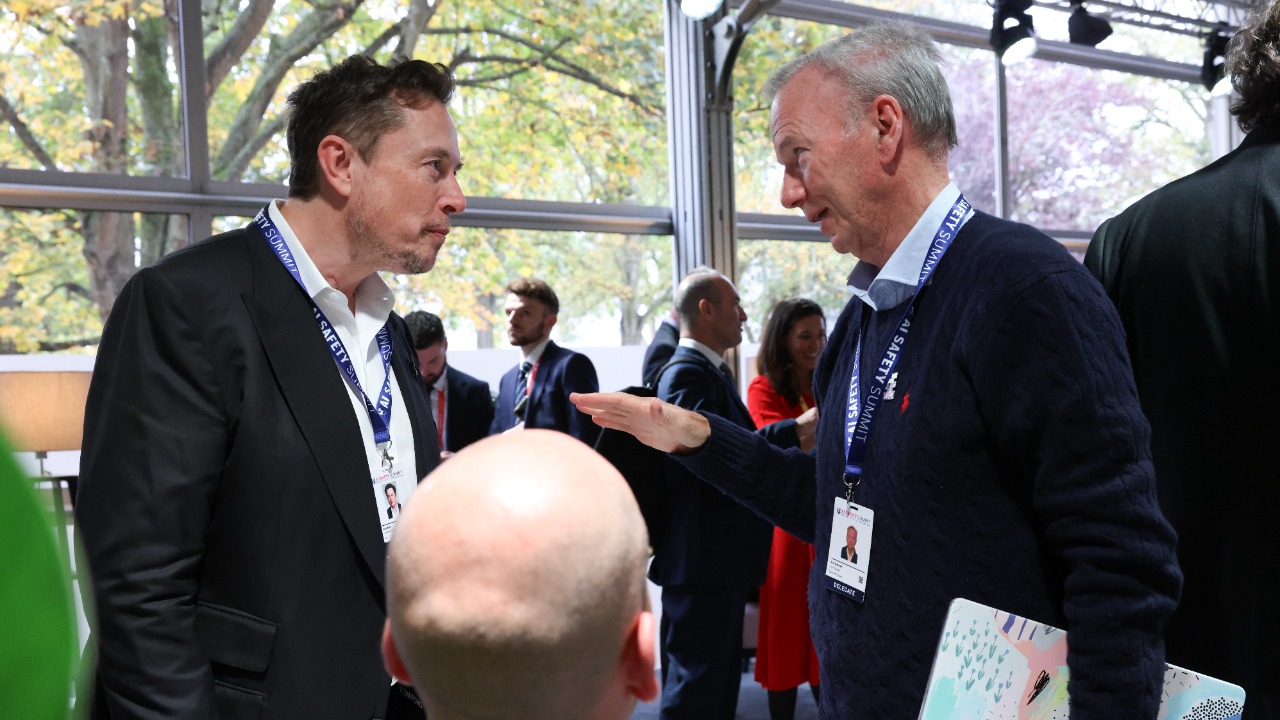
Elon Musk is once again pushing the outer edge of the artificial intelligence debate, arguing that rapid advances could make paid work a choice rather than a necessity within about twenty years. His forecast, delivered as AI systems accelerate in capability and scale, raises a sharper question than whether jobs will be lost: it asks what happens to economies and identities if human labor stops being the organizing principle of daily life.
I see his prediction less as a sci‑fi flourish and more as a stress test for how prepared governments, companies, and workers are for a world where machines handle most productive tasks. The technology is moving faster than the social contract around it, and Musk’s timeline forces a reckoning with who benefits, who pays, and who decides when work becomes optional rather than obsolete.
Musk’s vision of “optional” work in an AI-first economy
Musk’s core claim is that AI will become so capable and so cheap that it can perform nearly every task people are paid to do today, turning employment into something closer to a lifestyle choice than an economic requirement. In his telling, future AI systems would not just automate repetitive office chores or factory work, they would design products, write code, manage logistics, and even generate entertainment, leaving humans to pursue creative or social projects because they want to, not because they must. That framing goes beyond the usual fear of job losses and instead imagines a structural shift in which the link between labor and income is deliberately loosened.
He has tied that outlook to the rapid progress of large-scale models and robotics, arguing that the same breakthroughs that power advanced chatbots and autonomous driving could underpin general-purpose “digital workers” that operate around the clock. Musk has also warned that such systems, if concentrated in a few hands, could reshape power and wealth, which is why he often pairs his optimism about abundant AI-driven production with calls for safety rules and economic cushions such as broader social support or new forms of income funded by AI-enabled productivity gains, as reflected in his recent comments on AI and work.
How Musk’s AI bets inform his timeline
When Musk talks about work becoming optional, he is not speaking as a detached observer. His companies are building many of the systems he expects to drive that shift, from self-driving software to humanoid robots and custom AI chips. At Tesla, he has repeatedly described the “Optimus” robot as a potential general-purpose worker that could handle tasks in factories, warehouses, and eventually homes, arguing that such machines could be produced at scale once the underlying AI and hardware are mature. That vision of millions of low-cost robots, each powered by increasingly capable models, is central to his belief that physical labor can be largely automated within a couple of decades.
On the digital side, Musk’s AI startup xAI is training large language models intended to compete with the most advanced systems on the market, while also pushing for more powerful compute infrastructure. He has publicly pressed for access to vast numbers of Nvidia H100 chips and has discussed building his own data centers to support future generations of models. Those investments, combined with his long-standing work on autonomous driving at Tesla, underpin his confidence that both cognitive and physical tasks can be handled by AI at a level that makes human workers economically optional, even if many people still choose to work.
Why a job-optional future is not guaranteed
Even if AI systems reach the capabilities Musk anticipates, the leap from technical possibility to widespread “optional” work is far from automatic. Labor markets are shaped by regulation, corporate incentives, and social norms, not just by what is technologically feasible. Companies may choose to retain human workers for reasons ranging from customer trust to legal liability, particularly in sectors like healthcare, education, and public safety where accountability and empathy matter as much as efficiency. Governments can also slow or redirect automation through policy, for example by requiring human oversight in critical decisions or by subsidizing human-centered services that AI cannot easily replace.
There is also the question of whether AI-driven productivity gains will be shared broadly enough to make work truly optional for most people. Musk has floated ideas such as some form of universal income funded by AI-enabled growth, but he has not detailed a concrete mechanism for how the value created by advanced systems and robots would be redistributed at scale. Without deliberate policy, the owners of AI infrastructure and data could capture a disproportionate share of the gains, leaving many workers displaced but not financially secure. That tension is already visible in debates over how to compensate creators whose work trains generative models and in concerns about concentration of power among a small set of AI and cloud providers, issues highlighted in recent reporting on AI-driven profits.
Risks, regulation, and the politics of abundance
Musk’s forecast of abundant AI labor exists alongside his warnings about the risks of highly capable systems, from misinformation to loss of human control. He has urged regulators to move faster on AI oversight, arguing that safety rules should be in place before models become vastly more powerful. That stance reflects a broader concern that if AI can perform most economically valuable tasks, it can also be weaponized for large-scale cyberattacks, automated propaganda, or destabilizing financial trades. The same capabilities that could free people from routine work could also amplify the reach of bad actors or create new systemic vulnerabilities if left unchecked.
Regulators in the United States and Europe are already responding with proposals that would impose transparency, testing, and accountability requirements on advanced AI systems, including those used in employment decisions and critical infrastructure. Musk has participated in high-profile policy discussions about AI safety and has called for coordination among major developers to avoid a race that sacrifices caution for speed. As governments weigh rules on data use, model deployment, and liability, the political debate is increasingly about who sets the terms of an AI-rich economy and how to prevent a scenario in which a handful of firms control the tools that make work optional for some while precarious for others, a concern echoed in recent antitrust scrutiny of AI partnerships.
What a world of optional work would demand from society
If Musk’s timeline proves directionally right, the hardest problems may not be technical but social. A society where most people do not need to work for income would have to rethink education, identity, and status, since so much of modern life is organized around careers. Schools might shift from training students for specific jobs to cultivating broader capabilities like critical thinking, collaboration, and creativity that help people navigate a life less anchored to traditional employment. Communities would need new institutions and rituals to replace the social fabric that offices, factories, and service jobs currently provide.
Economic policy would also have to adapt, from tax systems that rely heavily on labor income to safety nets designed for temporary unemployment rather than permanent abundance. Experiments with cash transfers and reduced working hours in several countries hint at both the promise and the complexity of decoupling income from full-time jobs, but they remain small compared with the scale Musk envisions. As AI investment accelerates and companies race to deploy models in everything from customer service to logistics, the question is no longer whether automation will reshape work, but whether political and cultural institutions can move quickly enough to ensure that a future of optional labor, if it arrives, feels like liberation rather than exclusion, a tension already visible in global economic debates over AI.
More From TheDailyOverview
- Dave Ramsey says these two simple questions show whether you’re rich or poor
- Retired But Want To Work? Try These 18 Jobs for Seniors That Pay Weekly
- IRS raises capital gains thresholds for 2026 and what’s new
- 12 ways to make $5,000 fast that actually work

Grant Mercer covers market dynamics, business trends, and the economic forces driving growth across industries. His analysis connects macro movements with real-world implications for investors, entrepreneurs, and professionals. Through his work at The Daily Overview, Grant helps readers understand how markets function and where opportunities may emerge.

