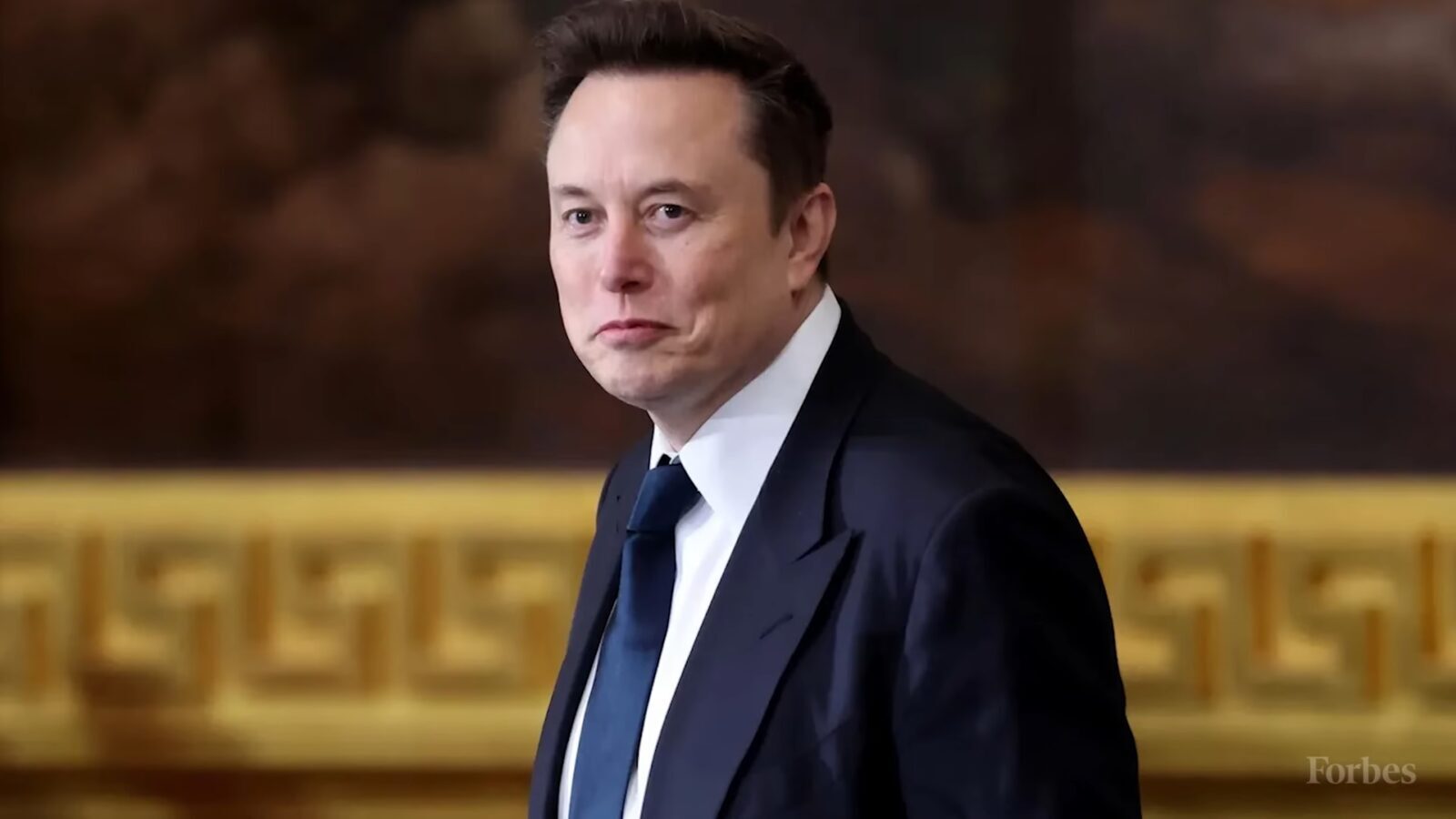
Elon Musk has never been shy about apocalyptic warnings, but his latest is unusually stark. He now insists the United States is “1,000%” headed for bankruptcy unless artificial intelligence and robots turbocharge growth fast enough to outrun the federal government’s swelling interest bill. With the national debt at $38.56 trillion and annual interest costs already rivaling core government functions, the stakes behind his rhetoric are not theoretical.
The real question is not whether the debt is large or the math is worrying, it is whether AI is truly the only lifeline. The evidence suggests something more nuanced: advanced automation could meaningfully ease the pressure if it lifts productivity and trims waste, yet it cannot substitute for hard political choices on taxes and spending. Treating AI as a fiscal deus ex machina risks turning a serious warning into a convenient distraction.
Musk’s “1,000%” warning and the scale of the debt problem
In a recent interview, Elon Musk argued that the United States is “1,000% going to go bankrupt as a country and fail as a country, without AI and robots,” adding that “Nothing else will” solve the problem. He framed the issue less as a cyclical downturn and more as a structural math problem, in which compounding interest on the federal balance sheet eventually overwhelms tax revenues. In his telling, only a step change in output per worker, delivered by automation, can keep the federal government solvent.
The backdrop for that alarm is stark. According to congressional figures, $38.56 trillion in gross national debt is now on the books, up by $2.35 trillion from a year earlier, which works out to billions added every day. Earlier Treasury data show that net interest payments reached $970 billion in a single fiscal year, a figure Musk has cited as “crazy” because it rivals or exceeds what Washington spends on the military. Projections referenced in his comments suggest those interest costs could climb toward $1.8 trillion by 2035, which would turn debt service into one of the largest line items in the federal budget.
What Musk actually means by AI “saving” America
When Musk talks about AI and robots rescuing the country, he is not just musing about cool gadgets. In a February conversation, he argued that “In the absence of AI and robotics, we’re actually totally screwed because the national debt is piling up like crazy,” and reiterated that the United States is “1,000% going to go bankrupt” without them. In his view, the only realistic path out is to flood the economy with highly capable machines that can produce far more goods and services per person, expanding the tax base without raising rates.
He has also warned that the cost of servicing the debt is becoming a “heavy burden,” stressing that interest payments already exceed the military budget and will keep rising unless growth accelerates. One analysis of his remarks notes that he expects interest costs to reach roughly $1.8 trillion by 2035 if current trends persist, a scenario that would crowd out other priorities. In a separate interview, Elon Musk doubled down on this framing, casting AI not as a marginal efficiency tool but as the only lever big enough to offset compounding obligations.
The debt math: how bad is the “bomb” really?
To understand whether Musk is overstating the danger, it helps to look at the debt like a household mortgage. The principal is huge, but what really matters in the near term is the monthly payment relative to income. For the federal government, that “payment” is interest, and it is rising fast. Official figures show that, As of February 4, 2026, gross national debt stands at $38.56 trillion, with Relative year over year growth of $2.35 trillion, and the amount the U.S. pays on debt is consuming a growing share of federal revenue.
Analysts who share Musk’s concern point out that if interest costs keep rising faster than the economy, the government will eventually face a choice between sharp tax hikes, deep spending cuts, or inflationary money creation. A recent breakdown of his comments notes that interest payments already exceed the military budget and could reach $1.8 trillion by 2035 if borrowing and rates stay elevated, a trajectory that would make the “debt bomb” metaphor feel less like hyperbole. At the same time, investment firms such as Investment firm J.P. have argued that a full blown American “debt crisis” is not yet inevitable, suggesting that policy changes and growth could still stabilize the ratio of debt to GDP.
Can AI really move the fiscal needle that much?
Economists who are more optimistic about technology than Musk is about politics see a plausible, if narrow, path where AI meaningfully improves the federal balance sheet. A group of researchers has argued that artificial intelligence could narrow U.S. deficits by improving health care, particularly by reducing administrative waste and enabling earlier, cheaper interventions for chronic disease. According to three economists cited in one analysis, AI could deliver a “positive shock” to productivity if it is deployed aggressively in sectors like health care, where the federal government is a major payer through Medicare and Medicaid.
Other modeling work suggests that AI driven productivity gains could help solve America’s mounting federal debt crisis through faster GDP growth, which would make existing debt less burdensome relative to the size of the economy. One detailed scenario argues that Artificial intelligence could boost America’s GDP enough to stabilize or even reduce the debt ratio, especially if it also helps lower inflation and brings down interest rates. A separate analysis from a technology firm frames AI as a way to streamline government operations, cut fraud, and optimize procurement, with the potential to save hundreds of billions over time if widely adopted, a view laid out in its Key Takeaways on how AI could address America’s debt crisis.
The catch: jobs, inequality and political backlash
There is a reason Musk’s techno optimism is not universally shared. A long running debate among economists and technologists asks whether robots and AI will boost or decimate the economy, and the answer is still unsettled. One influential study, summarized in a major magazine, found that experts are split on whether artificial intelligence will ultimately create more jobs than it destroys, or instead hollow out middle class work and concentrate gains at the top. As that piece put it, “A new study shows experts are split on whether artificial intelligence will boost, or decimate, the economy,” capturing the uncertainty that hangs over any forecast of AI driven growth.
If AI adoption leads to significant job displacement without robust retraining and safety nets, the federal government could face higher spending on unemployment benefits, disability programs, and other social supports. That would blunt some of the fiscal gains from higher productivity. A report on the broader debate notes that experts worry about whether robots are really taking our jobs, highlighting that the distribution of gains matters as much as the aggregate. The Atlantic’s analysis of how “the robots are coming” underscores that experts remain divided on whether artificial intelligence will boost or decimate the economy, a tension captured in its discussion of experts are split on AI’s impact.
AI is not the only lever: taxes, entitlements and waste
One of the most striking parts of Musk’s argument is his insistence that “Nothing else will” solve the debt problem besides AI and robots. That is a powerful soundbite, but it glosses over a menu of more traditional tools that budget experts have been debating for years. Changes to tax policy, such as broadening the base or adjusting rates on high earners and corporations, can raise revenue without crushing growth if designed carefully. On the spending side, gradual reforms to entitlement programs, particularly in health care, can slow cost growth over time without abrupt benefit cuts.
There is also the unglamorous work of reducing waste and fraud in existing programs, something Musk himself has nodded to in other contexts. During his stint leading a government efficiency initiative, he publicly thanked President Donald Trump for the opportunity to “reduce wasteful spending,” signaling that even a technologist of his stature sees value in old fashioned belt tightening. In a retrospective on his time in that role, Musk said he wanted to make cutting waste “a way of life throughout the government,” a reminder that technology and governance reforms are complements, not substitutes.
Musk’s incentives and the risk of AI hype
It is also worth asking why Musk, in particular, is so eager to cast AI as the only way out. He is deeply invested, financially and reputationally, in the success of advanced automation, from self driving systems to humanoid robots. That does not make his warnings wrong, but it does mean he has strong incentives to frame AI as a national imperative rather than one tool among many. Coverage of his recent comments notes that he has issued a Dire Warning For America The U.S. national debt currently stands at Elon Musk’s Dire national debt is $38.56 trillion, tying his technological agenda directly to macroeconomic fears.
His history of bold, sometimes promotional claims around technology and finance, from electric cars to cryptocurrencies, suggests a pattern of using dramatic narratives to accelerate adoption. A recent profile of his role in government efficiency efforts and digital currencies highlights how Musk has blended public policy, markets and online fandom, including his time leading DOGE related initiatives. In that context, his latest statements about America’s debt “problem” and the idea that only technology can solve it, as reported by TOI Tech Desk at TIMESOFINDIA.COM, fit a familiar pattern of high stakes storytelling that can blur the line between sober analysis and strategic hype.
More From The Daily Overview
*This article was researched with the help of AI, with human editors creating the final content.

Grant Mercer covers market dynamics, business trends, and the economic forces driving growth across industries. His analysis connects macro movements with real-world implications for investors, entrepreneurs, and professionals. Through his work at The Daily Overview, Grant helps readers understand how markets function and where opportunities may emerge.

