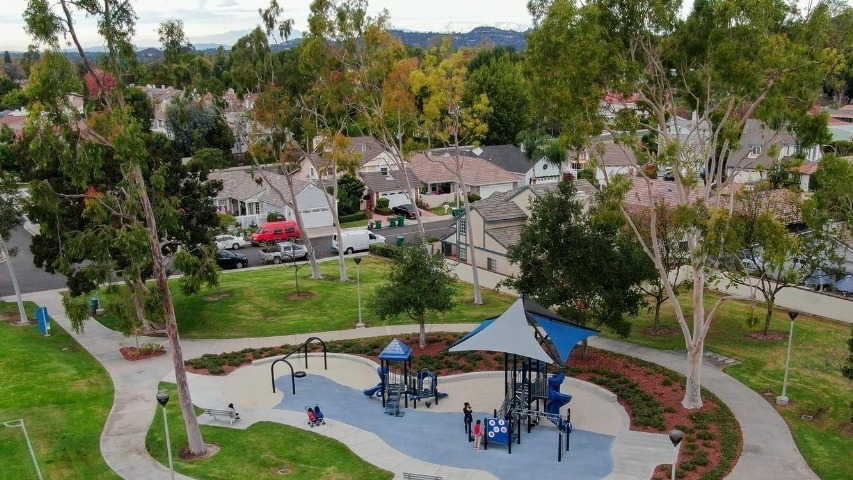
Nearly 1,000 California homes and other properties are being pushed toward public auction after years of unpaid taxes, turning delinquent bills into a wave of forced sales that will ripple through local housing markets. The largest single batch is in Riverside County, where tax-defaulted parcels, including houses in suburban communities, are being lined up for online bidding this spring. For owners, the clock is running out to redeem their properties, while investors are preparing for a rare chance to buy at distressed prices.
Riverside County’s nearly 1,000 properties head to auction
Riverside County officials have moved to clear a backlog of tax-defaulted real estate, approving an online sale that covers nearly 1,000 parcels that have fallen into default. The portfolio stretches from inland suburbs to more rural tracts, reflecting years of owners falling behind on property tax bills and failing to bring accounts current despite repeated notices. County staff have described the list as a mix of residential, commercial, and vacant land, with a significant share made up of single-family homes that will now be exposed to competitive bidding.
Local coverage has highlighted how deeply this sale will reach into everyday neighborhoods, noting that the batch includes houses in communities such as Lake Elsinore and Wildomar. One report framed the move as “Nearly 1,000 RivCo Properties Approved For,” underscoring that this is not just a paper shuffle of obscure parcels but a direct hit on occupied housing. For buyers, that breadth means a rare opportunity to bid on everything from starter homes to investment properties in one concentrated event.
How the Riverside sale will work and who is behind it
The Riverside County Treasurer-Tax Collector’s office has laid out a detailed process for the sale, which will be conducted entirely online over two days. According to a notice circulated by county staff writer Toni McAllister, the auctions are scheduled for April 23 and 24, with prospective bidders required to register in advance and review a TTC 223 Tax Sale List that spells out minimum bids, parcel numbers, and any known encumbrances. The notice emphasizes that these are tax-defaulted properties, not voluntary listings, and that buyers are responsible for doing their own due diligence on title, condition, and occupancy before placing a bid.
County leaders have been explicit about why they are taking this step now. In a staff report prepared for the Board of Supervisors, officials explained that the goal is to collect long overdue revenue and return idle parcels to productive use. As one summary of the board’s discussion put it, “purpose of offering is to collect unpaid taxes and return the property to a revenue-generating status,” particularly for parcels that have been in default for at least five years. In other words, the auction is as much about stabilizing the county’s tax base as it is about clearing out a backlog of problem accounts.
Statewide pattern: Los Angeles, Sacramento and coastal counties line up sales
Riverside is not alone in turning to the auction block to resolve chronic delinquencies. In Los Angeles County, the Treasurer and Tax Collector has already posted a schedule for a 2026A Online Auction of tax-defaulted properties, with bidding set to start on a Saturday in April at 3:00 P.M. Pacific Time and close the following Tuesday at midday. That event is part of a broader calendar that also includes a June sale, all conducted through a dedicated internet platform that allows remote participation from anywhere in the country.
The Los Angeles office has framed these events under a clear banner: TAX DEFAULTED PROPERTIES, with the Treasurer and Tax Collector stressing that the auctions are a statutory tool to recover unpaid taxes. Farther north, Sacramento County is preparing its own Deed Auction, with Registration opening on January 28, 2026 and closing February 18, and would-be bidders required to submit a $5,000 deposit to qualify. Together, these calendars show a statewide pattern: counties are leaning on online auctions to convert long-running delinquencies into cash and to move distressed properties into new hands.
What owners and bidders need to know about rights and risks
For owners facing a tax sale, the most important concept is the right of redemption, the legal window in which they can pay off delinquent taxes, penalties, and costs to reclaim their property before it is sold. In Sacramento, The Tax Collector has spelled out that the public auction will be held on Monday, February 23, 2026, at 10:00 a.m., and that once the sale begins, redemption rights are cut off. Along the Central Coast, Santa Cruz County’s tax office explains that “the right of redemption will cease at 5:00 pm on the day before the start of the auction and properties not redeemed will be offered for sale,” a standard it applies ahead of each scheduled event in its Auction General Information.
Those cutoffs are not theoretical. In a prior Santa Cruz notice, officials warned that “the right of redemption will cease on March 2, 2023, at 5:00 p.m. and properties not redeemed will be offered for sale,” adding that If the parcels did not sell, they would be reoffered at a future auction. For bidders, these rules create both opportunity and risk: once the redemption deadline passes, the winning bid can secure title at a fraction of market value, but buyers must accept properties “as is,” often without interior access, and with the possibility of liens, code violations, or occupants who will need to be lawfully removed.
Investor interest and the broader housing-market impact
As counties move more of these sales online, investor interest has followed. National platforms now list distressed California houses alongside bank-owned and foreclosure inventory, marketing them as potential bargains. One such site currently advertises “20 CA Properties” under an Online Auctions section labeled CWCOT, with countdown clocks to each Auction date and an Opening Bid posted for addresses like 25871 MERCY CT in Hemet, a three-bedroom, two-bath home. That kind of listing gives a preview of what Riverside’s tax sale could look like once its nearly 1,000 parcels are loaded into bidding software and exposed to a national pool of buyers.
For local housing markets, the impact will depend on who ultimately wins these auctions. If owner-occupants and small landlords manage to compete with institutional buyers, the sales could help stabilize neighborhoods by putting long-neglected homes back into circulation. If large investors dominate, the result may be a new wave of rentals or flips, with limited relief for would-be first-time buyers. Either way, the scale of Riverside County’s sale, combined with parallel auctions in Los Angeles, Sacramento, and coastal counties, signals that tax-defaulted properties are about to play a more visible role in California’s already strained housing landscape.
More From TheDailyOverview

Elias Broderick specializes in residential and commercial real estate, with a focus on market cycles, property fundamentals, and investment strategy. His writing translates complex housing and development trends into clear insights for both new and experienced investors. At The Daily Overview, Elias explores how real estate fits into long-term wealth planning.

