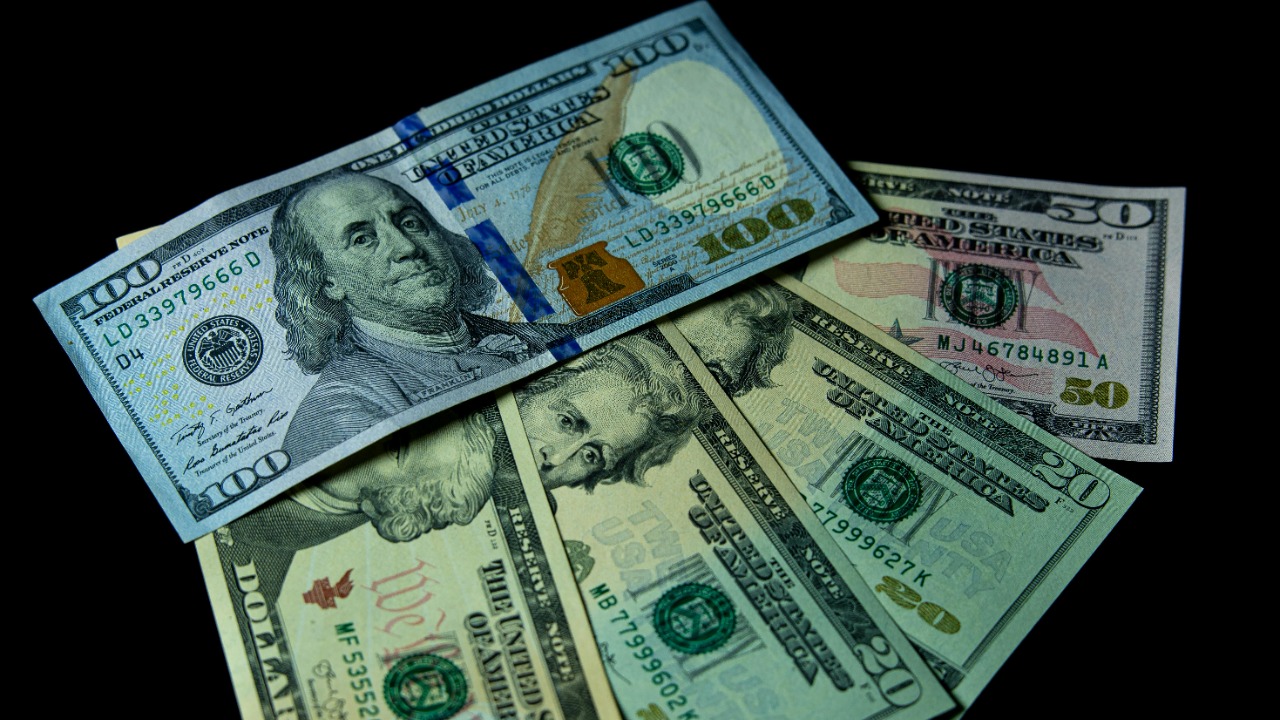
Collectors are quietly hunting through wallets and cash drawers for the redesigned blue security–strip $100 notes, because some of them are trading for far more than face value. With the right combination of serial number, condition and scarcity, a single bill that spends like $100 can sell for as much as $2,500 to a specialist buyer.
That upside is not reserved for century‑old paper or obscure misprints. I am seeing modern notes, including the blue‑tinted design that most of us treat as routine spending money, command four‑figure prices when they tick a few very specific boxes that the hobby tracks closely.
Why the new blue $100 design became a stealth collectible
The latest generation of $100 notes, with the bold blue security ribbon and updated portrait of Benjamin Franklin, was engineered to fight counterfeiting, not to create a new collectibles market. Yet the redesign has had that side effect, because it produced a fresh run of serial numbers and printing quirks on a denomination that already attracts intense attention from currency specialists. Reporting on the secondary market shows that some of these modern blue notes in currency value guides now sit alongside much older issues in price tables.
Collectors are especially focused on the fact that these are everyday circulation notes, not limited commemoratives, which means the most desirable pieces are literally being spent at grocery stores and gas stations. Coverage of the market for modern notes points out that America’s new blue $100 bills in circulation now can be worth $2,500 to a collector when the serial number and condition line up, a premium that turns a routine cash withdrawal into a potential windfall for anyone who checks their money carefully.
The $2,500 opportunity hiding in serial numbers
The key to that kind of jump in value is the eight digit serial number printed twice on the face of every note. Specialists treat certain patterns as “fancy” because they are statistically rare, and that rarity translates into higher prices when a collector wants to own a specific combination. One widely cited example is a bill whose serial number forms a perfect ladder such as 01234567, or a tight repeating pattern, the kind of fancy serial that is far scarcer than a random mix of digits.
Earlier coverage of the blue design notes that America’s new blue $100 bills can reach $2,500 when the serial number falls into one of these coveted categories and the note is still crisp. That same reporting, drawing on analysis from The Globe, explains that collectors view certain eight digit strings as “fancier,” meaning more rare and more collectible, and highlights how a number like 44444444 can command a serious premium because every additional constraint on the pattern slashes the number of possible notes that qualify.
How to decode “fancy” serials on your own $100 bills
For anyone who is not already deep in the hobby, the jargon around serial numbers can sound opaque, but the underlying logic is straightforward. Guides aimed at everyday savers break the field into categories such as low numbers that start with several zeros, repeating patterns, palindromes and other visually striking combinations. One reference on the Fancy serial number checker side spells out that something like 01234567 or 87298349 can be worth more than face value, and invites users to Check Your Serial Num against known patterns.
Another breakdown of Values of low serial number notes gives concrete ranges, stating that 00000XXX can bring $30 to $75, while 000000XX can reach $100 to $300, even before layering on the extra desirability of a blue security strip design. A separate list of 15 types of valuable serials walks through categories like “radar” palindromes and notes that combinations tied to specific Federal Reserve districts, such as A1 for Boston or B2 for New York City and C3 for Philadelphia, can also catch the eye of specialists who build themed sets around locations.
The role of condition, grading and older $100 issues
Serial numbers are only half the story, because condition is the other major driver of price. Professional grading services such as PMG and PCGS scrutinize centering, folds and handling marks, and a note that has never been creased can sit in a completely different price bracket from one that has lived in a wallet. Collecting guides stress that Condition is important in determining value and that An Uncircul note of the same series and denomination will almost always outpace a worn example, which is why some collectors pull crisp bills from bank straps and store them immediately in protective sleeves.
That focus on preservation is not limited to the newest design. Historical overviews of the denomination point out that there are Highly Collectible $100 Bills to Consider from earlier eras, including 1928 and 1934 Blue Seal Silver Certificates that once promised silver redemption, and that collectors value certain combinations of serial numbers even on those older issues. A separate description of a 2013 $2 Uncut Sheet in UNC, or Uncirculated, condition explains that such notes have never entered circulation and retain full original embossing and bright, vibrant ink, illustrating the standard that serious buyers expect when they pay a premium for any modern $100.
Turning a casual wallet check into a collector’s edge
For someone who is not planning to become a full time numismatist, the practical question is how to apply all of this without getting lost in the weeds. I find that the most efficient approach is to build a simple habit: whenever I receive a $100 bill, I give the serial number a quick scan for obvious patterns and then check the overall crispness of the paper. If something looks promising, I can plug the digits into a serial checker or a Rare Serial Numbers calculator that flags Fancy patterns and Star Notes, then compare any hits against Values of low serial number tables to see whether it is worth setting the bill aside.
From there, the market is increasingly transparent. Online marketplaces list 100 Dollar Star Note offerings by Year, giving a real time snapshot of what collectors are actually paying for specific combinations, while specialist auction houses maintain currency value archives that show how high the best examples have already climbed. Educational videos walk through real world cases where a $100 bill from 2009 or another modern series sold for far more than $100, and other clips on $100 Bills worth Way More than Just One Hundred Bucks underline that the bills in those videos are selling for a lot more precisely because they combine strong serials with top grade condition. When I put all of that together, it is clear that a few seconds of attention at the cash register can be the difference between spending a routine note and quietly holding a four figure collectible.
Beyond individual checks, I also pay attention to how digital tools are reshaping this niche. Platforms that aggregate Product information from brands, stores and other content providers are starting to surface collectible currency alongside sneakers and trading cards, and dollar bill value lookup services emphasize that While a bill’s final market value is a combination of several key factors, even a common modern bill in perfect Uncirculated condition can surprise sellers. Top questions about collecting paper money repeatedly circle back to how many notes have been saved and how they have been stored, reinforcing the idea that the blue $100 in your hand today might be tomorrow’s scarce survivor if you recognize its potential and protect it early.
More From The Daily Overview

Silas Redman writes about the structure of modern banking, financial regulations, and the rules that govern money movement. His work examines how institutions, policies, and compliance frameworks affect individuals and businesses alike. At The Daily Overview, Silas aims to help readers better understand the systems operating behind everyday financial decisions.

