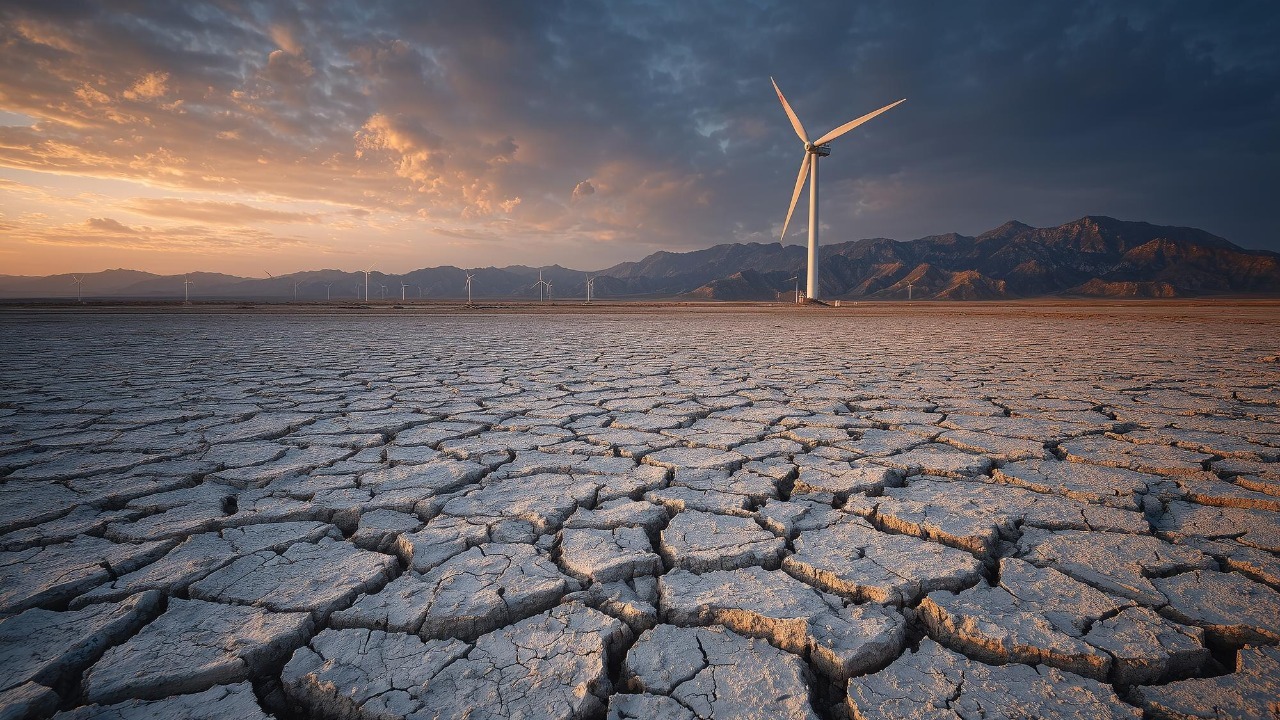
The OECD and UNDP released a joint report this week arguing that accelerated climate action is not just an environmental necessity but the most cost-effective way to protect economic growth and reduce poverty worldwide. The report, timed ahead of the next round of Nationally Determined Contributions under the Paris Agreement, lands as separate research estimates that unchecked climate change could strip roughly $38 trillion a year from the global economy by mid-century. Taken together, the findings reframe climate investment less as a burden and more as a premium payment on a policy that prevents far larger losses.
The Price Tag of Doing Nothing
The economic argument for climate action has shifted from abstract modeling to hard dollar figures that financial institutions can no longer ignore. A peer-reviewed Nature study, summarized by the Associated Press, projects about $38 trillion a year in climate-driven economic losses by 2049. That figure dwarfs every credible estimate of what it would cost to cut emissions in line with Paris Agreement targets. The IPCC’s AR6 Working Group III report, in its assessment of mitigation pathways, found that the benefits of mitigation can outweigh costs over the century under moderate-to-high damage estimates, meaning the math favors spending now to avoid compounding losses later.
A separate analysis from the University of Oxford’s School of Geography and the Environment put a finer point on delay risk: every year that firms put off climate action could cost the financial sector an estimated US$150 billion. That report was the first to estimate costs to the financial sector specifically from delayed climate action, and it warned that those costs are large and rise quickly with every additional year of inaction. For ordinary households and businesses, the implication is direct: when financial institutions absorb climate losses, those costs flow downstream through higher lending rates, tighter credit, and more expensive insurance.
Why the OECD and UNDP Call Climate Spending an Investment
The new joint analysis from the OECD and UNDP argues that climate spending should be seen as a growth strategy rather than a line-item sacrifice. In their call for enhanced climate pledges, the institutions stress that stronger national commitments can boost GDP, support job creation, and cut poverty by steering capital into resilient infrastructure and low-carbon technologies. The report highlights that avoiding climate damages and disruption delivers large macroeconomic gains over time, and it links those avoided losses directly to better fiscal stability, lower risk premiums, and more predictable investment conditions for both public and private actors.
Economist Nicholas Stern, writing in an updated assessment for The Economic Journal, underscores how rapidly changing technology costs have transformed the calculus behind those arguments. He notes that the prices of solar and wind power, battery storage, and electric vehicles have fallen far faster than expected, making deep emissions cuts substantially cheaper than earlier models projected. As a result, the gap between the cost of acting and the cost of inaction has widened, with the OECD and UNDP framing echoing Stern’s conclusion that climate policy is now best understood as a high-return investment in future productivity, not a drag on current growth.
Insurance Markets as an Early Warning System
If the macroeconomic data feels abstract, the insurance sector offers a more tangible signal. West Coast insurance regulators recently completed an investment stress test to examine the hidden costs of delaying climate action, using tools from RMI/PACTA and Theia that model a sharp transition scenario. Their analysis of corporate bond portfolios suggested that an abrupt policy shift toward a low-carbon economy could trigger rapid asset repricing, with higher losses for investors who remain heavily exposed to fossil fuels. Regulators concluded that an orderly, early transition is far less destructive to balance sheets than a delayed, disorderly one that forces markets to adjust all at once.
The strain is already visible at the household level. About 14% of U.S. homes now carry non-standard insurance coverage, according to recent reporting on coverage gaps that highlights how many homeowners are being pushed into expensive, limited policies as mainstream insurers retreat from high-risk areas. An OECD study on the sector’s role in adaptation warns that reducing climate risk through adaptation is the only sustainable way to limit future damage and avoid systemic disruptions to insurance markets. In plain terms, if communities and governments do not invest in stronger buildings, better land-use planning, and protective infrastructure, insurers will keep raising premiums or pulling out of high-risk regions altogether.
Insurers as Climate Financiers
While insurers are on the front lines of climate risk, new research suggests they could also become powerful engines of climate finance. A recent Nature paper on the sector’s balance sheets argues that by reallocating a portion of their vast investment portfolios, insurers could provide a major source of long-term mitigation funding. Because insurers typically hold long-dated assets to match their liabilities, they are well suited to back infrastructure such as renewable power, grid upgrades, and flood defenses that pay off over decades. The study quantifies how even modest shifts away from high-emitting assets and toward climate-aligned investments could materially accelerate the global energy transition while also reducing the sector’s own exposure to climate-related losses.
This dual role (as both a vulnerable industry and a potential financier) reinforces the broader message emerging from the OECD, UNDP, and academic research: climate action is fiscally prudent when measured over the relevant time horizon. By channeling premiums and reserves into low-carbon and resilient projects, insurers can help reduce the very risks that threaten their business models, creating a feedback loop in which better climate outcomes support more stable insurance markets. For policymakers, aligning regulation to encourage such investments, while maintaining prudential safeguards, is increasingly seen as part of a comprehensive economic strategy rather than a niche sustainability initiative.
From Cost to Competitive Advantage
Across these studies, a consistent pattern emerges: the largest economic threat is not the price tag of emissions cuts but the compounding damage from delay. The projected trillions in annual climate losses, the hundreds of billions in financial-sector costs from inaction, and the growing instability in insurance markets all point in the same direction. Early, well-planned climate policies reduce volatility, protect household balance sheets, and give firms clearer signals about where to invest. Conversely, postponing action concentrates risk into shorter timeframes, forcing more abrupt and painful adjustments that undermine growth and strain public finances.
Framing climate policy as an investment rather than a sacrifice changes how governments, businesses, and voters weigh their options. The OECD–UNDP report, the IPCC’s mitigation analysis, Stern’s updated cost curves, and the evolving experience of insurers all suggest that climate ambition is now a marker of economic competitiveness. Countries that mobilize capital for clean energy, resilient infrastructure, and adaptation measures are not just cutting emissions; they are buying insurance against future shocks and positioning their economies for the technologies and industries that will dominate mid-century markets. In that light, accelerated climate action is less a moral imperative layered on top of economic policy than a core strategy for safeguarding prosperity in a warming world.
More From The Daily Overview
*This article was researched with the help of AI, with human editors creating the final content.

Grant Mercer covers market dynamics, business trends, and the economic forces driving growth across industries. His analysis connects macro movements with real-world implications for investors, entrepreneurs, and professionals. Through his work at The Daily Overview, Grant helps readers understand how markets function and where opportunities may emerge.