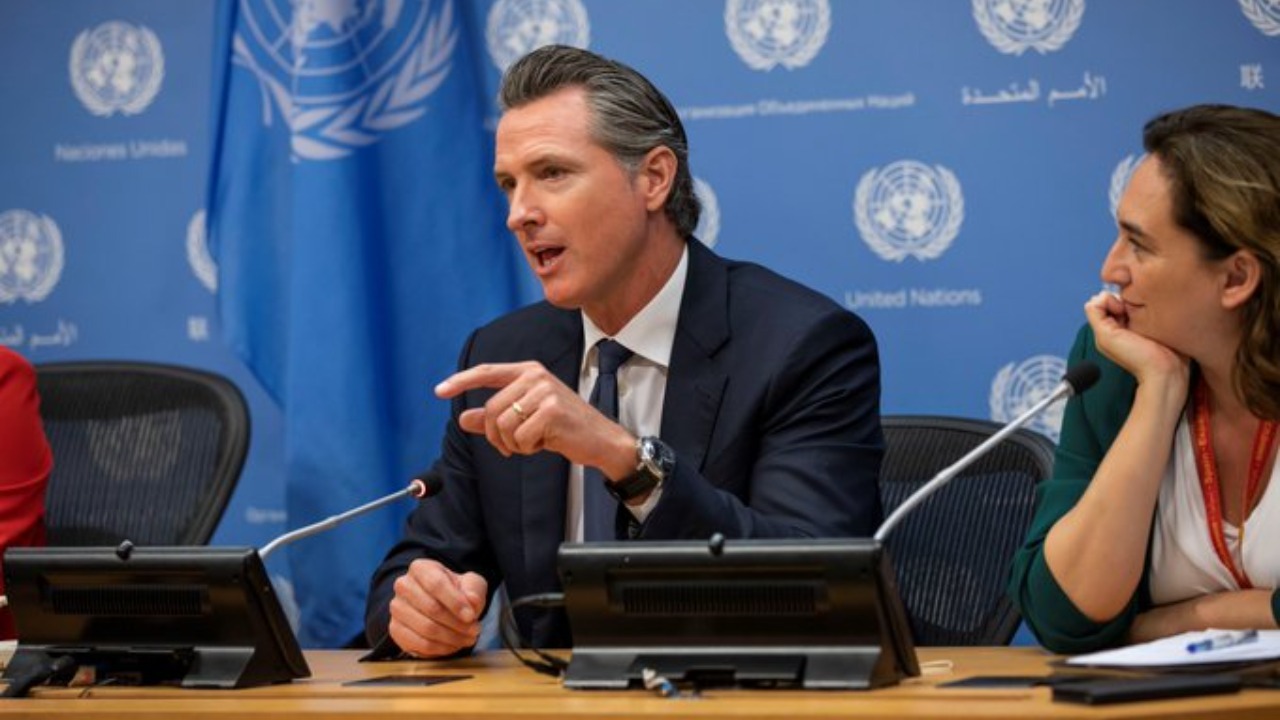
Governor Gavin Newsom has started talking about inequality in existential terms, warning that democracy “will die” if wealth is not spread more broadly and tying that warning to California’s budget fights and a new wave of tax proposals. At the same time, he is previewing a 2025–26 budget that refills the state’s rainy day fund and channels billions into education, regional job creation and long term growth. Put together, it is less a morality play about billionaires and more a roadmap for where the next fortunes in California are likely to be built by 2026.
If the political class is arguing over how to slice the pie, the smarter move for households and small investors is to figure out where the pie itself is getting bigger. From green industry to community owned businesses, Newsom’s agenda points toward specific sectors and regions that will be showered with public money and regulatory attention. The question is not whether redistribution is coming, but whether you position yourself on the side that is building new assets instead of waiting to see what gets taxed away.
Newsom’s democracy warning and the new wealth map
When Gavin Newsom said democracy “will die” without a better “distribution of wealth,” he was not just echoing national talking points about inequality, he was signaling that California’s growth model is being retooled. His argument is that concentrated fortunes and stagnant wages corrode trust in institutions, and that the only durable fix is to expand ownership and opportunity so more people can “get rich like America’s elites in 2026,” as one summary of his remarks put it. That framing matters for investors because it suggests the state will reward models that spread upside, from employee stock plans to neighborhood investment vehicles, rather than simply tolerating trickle down promises.
Newsom’s own budget blueprint backs up that rhetoric with cash. His proposed spending plan refills the state’s rainy day fund while making what his office describes as “historic investments in education,” positioning schools and colleges as engines of long term wealth mobility rather than just cost centers. In that proposal, the administration highlights how targeted education dollars can lift low income families into higher earning brackets over time, which is another way of saying that the state intends to manufacture its own future middle class and customer base. For anyone thinking about where to live, work or start a business, that is a direct hint that the next generation of skilled workers and entrepreneurs will be clustered where those education investments land.
Jobs First: where the public money is flowing
The clearest guide to California’s near term opportunity map is Newsom’s California Jobs First tour, which he took to Stanislaus County, California as he previewed a balanced 2025–26 budget. In that setting, Governor Gavin Newsom described a “new bold economic vision” that ties fiscal discipline to aggressive job creation, promising that the state is “on track to another strong year ahead” if it can steer capital into the right industries. The subtext is simple: if you follow the Jobs First footprint, you are following the money that will underwrite new factories, training centers and small business ecosystems.
That strategy is being operationalized through a statewide plan for economic growth that directs $245 million into more jobs and additional investment for Los Angeles’s recovery. The objective, as the administration puts it, is to create good paying, accessible jobs and sustainable growth across the state’s thirteen regions, with Each region encouraged to specialize in industry sectors that are poised for future expansion. For workers and savers, that means there is a premium on getting into those sectors early, whether by retraining into a targeted field, buying into local firms that win state backed contracts, or joining cooperatives that plug into the regional growth strategy.
The tax knife fight: billionaire levies and a one time wealth grab
Hovering over this growth agenda is a fierce battle over how aggressively to tax the very rich. One front is the California One, Time Wealth Tax for State, Funded Health Care Programs Initiative, a proposed measure that would impose The California One, Time Wealth Tax for high net worth residents to fund programs such as Medi Cal. The idea is to tap existing fortunes to pay for expanded health coverage, effectively converting private balance sheets into a public revenue stream in a single stroke. For affluent households, that raises obvious defensive questions about residency and asset location, but for everyone else it raises a different one: will that money translate into better services and lower out of pocket costs that free up cash for saving and investment.
Another front is the 2026 Billionaire Tax Act, a proposal that has been described as a $100 billion wealth tax and has triggered what some have called a billionaire game of chicken. In early 2026, reporting out of California detailed how the measure would target the state’s ultra rich and how some of those individuals are threatening to decamp to states like Florida and Texas if it passes. That threat is not just political theater, it is a bargaining chip that could reshape local housing markets, philanthropic patterns and startup funding if even a fraction of those fortunes actually move, which is why the unfolding wealth tax battle is worth watching as an investor.
Newsom’s critique: growth over punitive taxes
Newsom has been unusually blunt about his discomfort with some of these tax ideas. In a televised segment from Jan, he criticized the billionaire wealth tax proposal and warned that it would cut into California’s competitiveness by driving capital and jobs elsewhere. He framed himself as “burdened” by the facts of how mobile high net worth individuals can be, arguing that a state level levy risks triggering exactly the exodus that supporters dismiss as a bluff. That stance puts him at odds with parts of his own party but aligns with a view that the state should focus on making it attractive to build new wealth rather than punishing existing fortunes.
His skepticism extends to the broader climate of ballot box taxation. While the initiative has not yet qualified for the November 2026 ballot, the billionaire tax proposal is backed by the Service Employees Internatio, a powerful labor force that sees it as a way to fund social programs without squeezing workers. Newsom’s counterargument is that the long term health of democracy depends more on job creation and shared growth than on one off levies that may backfire. That is why he keeps returning to his Jobs First framework and why his office has been careful to emphasize the “balanced” nature of the 2025–26 budget previewed in Stanislaus County.
There is a critique to be made of the dominant coverage here, which often treats the debate as a binary choice between soaking the rich and coddling them. The more interesting tension is between static redistribution, which taxes what already exists, and dynamic redistribution, which uses public investment to expand the number of people who can build assets in the first place. Newsom is clearly betting on the latter, and if he is right, the biggest winners by 2026 will not be the billionaires who stay or go, but the workers and small investors who ride the wave of new projects his administration is seeding.
How to “cash in” on a fairer economy by 2026
So what does all this mean for someone trying to build wealth in California over the next two years. The first move is to align your skills and capital with the sectors the state is explicitly backing, from clean energy and advanced manufacturing to health care and education technology. Newsom’s own budget documents highlight “historic investments in education,” which implies a surge in demand for tutors, curriculum platforms, credentialing services and student housing around the institutions that receive those funds. Positioning yourself near those flows, whether as a contractor, landlord or startup employee, is a concrete way to turn abstract budget lines into personal income, especially as the democracy warning translates into real spending.
More From The Daily Overview
*This article was researched with the help of AI, with human editors creating the final content.

Cole Whitaker focuses on the fundamentals of money management, helping readers make smarter decisions around income, spending, saving, and long-term financial stability. His writing emphasizes clarity, discipline, and practical systems that work in real life. At The Daily Overview, Cole breaks down personal finance topics into straightforward guidance readers can apply immediately.

