Electricity is one of the few household costs that can quietly double without anyone noticing until the bill lands. The biggest culprits are not obscure gadgets but familiar machines that run for hours, pull heavy loads of power, or never really switch off. By zeroing in on a handful of high‑impact devices, I can usually explain most of the spike in a home’s monthly charges and point to fixes that actually move the needle.
Here are nine everyday devices that can send your electric bill soaring, along with practical ways to rein them in without sacrificing comfort or convenience.
1. Heating and cooling systems that run around the clock
Nothing drives household electricity use like climate control, especially in homes that rely on electric furnaces, boilers, or heat pumps. Multiple analyses of Heating and and cooling show that these systems alone can account for roughly 40 to 50% of a home’s power consumption, which means a poorly tuned thermostat or leaky duct can be the difference between a manageable bill and a painful one. When I see a statement suddenly jump in winter or during a heat wave, I look first at how often the system is cycling and whether the temperature settings have quietly crept up or down.
Several breakdowns of Air Conditioning and Heating costs put Your HVAC at the top of the list of power‑hungry equipment, with cooling and heating often swallowing close to half of a typical home’s energy use. That is why small changes, like sealing air leaks, adding basic insulation, or programming a smart thermostat to ease off when everyone is asleep or out, can have outsized impact. When replacement time comes, choosing a high‑efficiency system that meets the criteria laid out for qualified products on sites like Energy Star can lock in lower consumption for a decade or more.
2. Electric furnaces, boilers and water heaters that never get a break
Space heating is only part of the story. Electric furnaces and boilers that feed radiators or underfloor systems can be some of The Biggest Electricity Users in Your Home, especially in colder regions where they run for months at a time. One detailed guide on Electric Furnace and Boiler loads notes that, During the coldest stretches, these systems can dominate the meter, especially if they are older resistance models rather than modern heat pumps. If your bill spikes every time the temperature drops, the heating plant itself, not just the thermostat, is likely the main driver.
Water heaters quietly add another layer of constant demand, since they cycle all day to keep tanks hot for showers, dishwashers, and laundry. Several breakdowns of Which Household Appliances Use the Most Electricity point out that water heating typically sits just behind space conditioning in the household hierarchy of power use, which means a long, daily shower habit can be surprisingly expensive. One analysis of Which Household Appliances Use the Most Electricity stresses that trimming water temperature, insulating hot‑water pipes, and installing low‑flow fixtures can shave real money off the bill without anyone feeling deprived.
3. Refrigerators and freezers that run 24/7
Unlike a heater or air conditioner, a refrigerator never gets a seasonal break, which is why it consistently ranks among the top energy users in any home. Several audits of Top Seven Appliances that Use the Most Energy in Your Home list the fridge right behind Your HVAC and water heater, precisely because it runs around the clock. Older models, especially those with worn door seals or coils clogged with dust, can draw far more power than newer, efficient units that meet modern standards.
Separate chest freezers and garage fridges compound the problem, particularly when they sit in hot spaces that force compressors to work harder. A breakdown of Fridges and other large appliances notes that these always‑on cold boxes are among the top six energy draining appliances in a typical home, and that poor placement or overloading can push their consumption even higher. When replacement is on the table, I look for models that carry high‑efficiency labels and check independent data on how many kilowatt‑hours they use per year, since that figure translates directly into dollars on the bill.
4. Washing machines and clothes dryers that run multiple loads a week
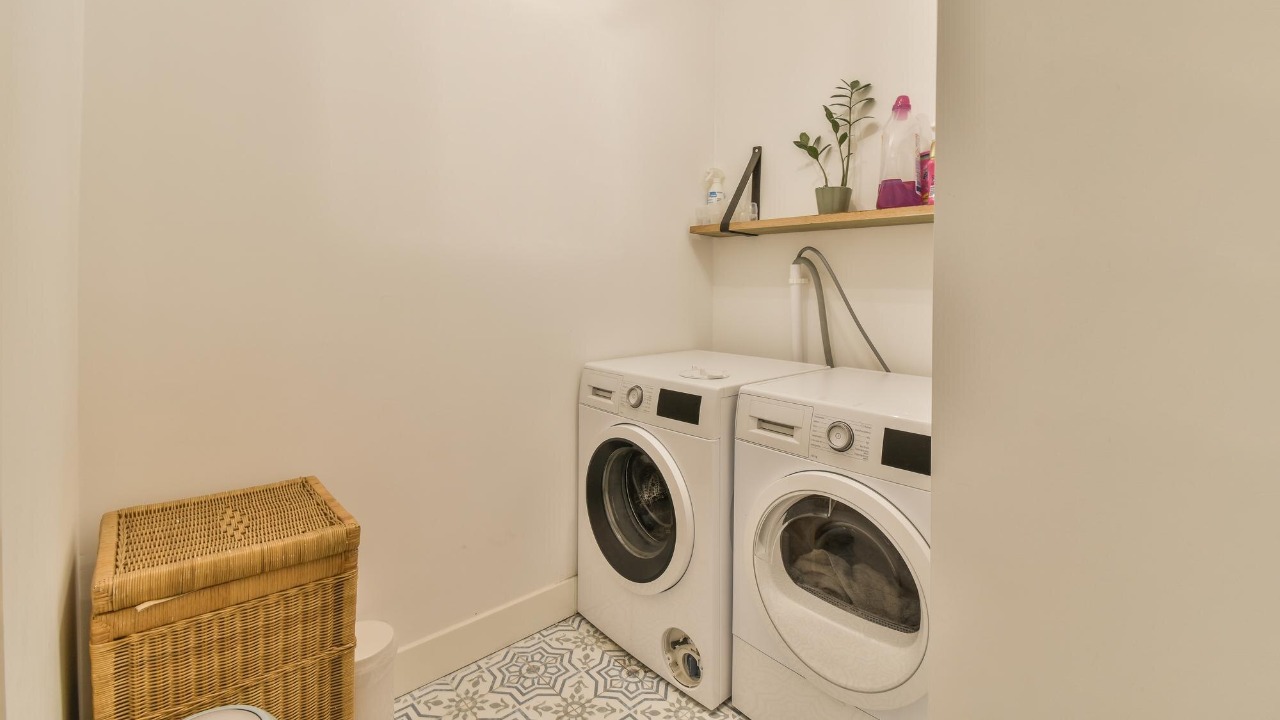
Laundry equipment is another quiet heavyweight, especially in busy households that run several loads every week. Analyses of What appliances use the most electricity at home consistently flag Washing machines and dryers as major contributors, not because each cycle is catastrophic on its own, but because the energy use adds up over time. A detailed breakdown from an energy‑saving group on What appliances use the most electricity at home highlights Washing machines, dishwashers, and tumble dryers as part of the top five energy consuming home appliances, which means laundry habits are a prime target for savings.
Dryers in particular are notorious for their high wattage, especially older vented models that rely on electric resistance heating. Several guides that ask What uses the most electricity in a house point out that line drying, using lower heat settings, and cleaning lint filters regularly can cut dryer energy use significantly. High‑spin washing machines that extract more water before clothes go into the dryer also help, since they shorten drying times and reduce the total power drawn per load.
5. Dishwashers, ovens and other kitchen workhorses
The kitchen is packed with devices that draw serious power in short, intense bursts. Electric ovens and cooktops can pull several kilowatts when preheating or boiling water, and dishwashers use both electricity and hot water to clean and dry dishes. In breakdowns of If your energy bill is too high, analysts often group ovens, dishwashers, and other kitchen appliances together as a cluster of high‑draw devices that can be managed with smarter scheduling and settings.
Several lists of Which Household Appliances Use the Most Electricity note that dishwashers, especially when run on high‑temperature or heated‑dry cycles, can rival some larger appliances in total energy use over a month. Choosing eco or air‑dry settings, waiting for full loads, and avoiding pre‑rinsing with hot water can all trim the impact. When it is time to replace a dishwasher or oven, I look for models that meet independent efficiency criteria and cross‑check them against product databases like the one maintained for qualified appliances on products that meet strict energy performance standards.
6. TVs, game consoles and “always ready” electronics
Modern entertainment systems rarely switch fully off, and that standby behavior adds up. Large televisions, streaming boxes, soundbars, and game consoles all draw power while waiting for a quick start, and they can collectively become one of the bigger line items in a home’s plug load. A detailed look at what uses most electricity in a house notes that electronics and lighting together can rival some major appliances, especially in homes with multiple screens and consoles running for several hours a day.
These devices are also classic examples of what energy experts call Vampire power, the trickle of electricity that flows even when a device appears off. A guide to Vampire loads explains that electronics with remote controls, status lights, or “instant on” features are key contributors, since they stay in a semi‑awake state around the clock. I often recommend smart power strips that cut power completely when a TV or console is not in use, along with turning off “instant on” settings in menus, as simple ways to keep these background draws from inflating the bill.
7. Computers, routers and home office gear that never sleep
As more work has shifted into living rooms and spare bedrooms, home office setups have quietly become a permanent part of the household load. Desktop PCs, multiple monitors, printers, and external hard drives can draw a surprising amount of power when left on all day, especially if they are older models without aggressive sleep settings. Several breakdowns of Let us discover the most expensive electricity users note that, while a single Computer might account for a smaller slice of total energy use than Your HVAC, the cumulative effect of multiple devices running constantly is not trivial.
Networking gear like Wi‑Fi routers, mesh nodes, and cable modems also run 24 hours a day, and while each unit draws modest power, together they form another layer of always‑on consumption. A social media explainer that asks Are “vampire devices” draining energy in your home? notes that Many people leave electronic devices plugged in when they are not in use, which means they keep drawing power around the clock. I encourage people to enable automatic sleep on laptops and desktops, shut down printers between uses, and consolidate chargers and small electronics on switched strips so they can be fully powered down overnight.
8. “Energy vampires” hiding in chargers and smart gadgets
Beyond obvious electronics, a growing web of chargers, smart speakers, and connected gadgets has created a new class of stealthy energy users. Phone chargers, tablet bricks, and laptop adapters often stay plugged in even when they are not actively charging anything, and while each one sips only a small amount of power, the combined effect across a home can be significant. A consumer program that urges people to Stop Energy Vampires from Sucking Away Your Savings points out that Energy vampires are common appliances like game consoles, coffee makers, and Phone chargers and charging stations that continue to draw power even when idle.
Smart speakers, connected thermostats, and internet‑linked security cameras add another layer of always‑on demand, since they must stay powered to listen for voice commands or stream video. A detailed guide to energy vampires notes that devices that are “always ready” are also key contributors to background consumption, even if each one uses only a few watts. I typically suggest grouping low‑priority gadgets on smart plugs that can be scheduled off overnight, while leaving critical devices like routers and security systems on dedicated outlets so safety and connectivity are not compromised.
9. Lighting and legacy appliances that quietly waste power
Lighting used to be a major driver of residential electricity use, and in homes that still rely on incandescent or halogen bulbs, it can remain a significant cost. Modern LED bulbs use a fraction of the power for the same brightness, which is why lighting has fallen down the rankings in newer, upgraded homes. Yet analyses that ask What uses most electricity in a house still flag lighting as a meaningful slice of the pie in older buildings that have not fully switched to efficient lamps or that leave exterior lights on all night.
Legacy appliances, from decades‑old refrigerators to aging window air conditioners, are another underappreciated source of waste. A comprehensive review that explains Why you can trust SolarReviews notes that the average household consumes about 900 k watt‑hours of electricity each month, and points out that older, inefficient appliances can push that figure higher than it needs to be. When I walk through a home with a high bill, I look for any machine that predates modern efficiency standards and compare its estimated annual kilowatt‑hour use to that of a current, efficient replacement, since the long‑term savings often justify an upgrade.
How to spot your personal top nine and bring the bill back down
While national averages and expert breakdowns are useful, every home has its own mix of devices and habits that drive costs. The most reliable way to identify your personal top nine is to combine a close reading of your utility bill with a room‑by‑room inventory of major appliances, always‑on electronics, and anything that produces heat or cold. Several guides that ask what uses most electricity in house recommend focusing first on heating and cooling, water heating, refrigeration, and laundry, then moving on to plug‑in devices and lighting once the big systems are under control.
Smart plugs, whole‑home monitors, and even simple habits like feeling for warm power bricks can help pinpoint hidden drains. A practical list of what appliances use the most energy in a home suggests tracking the run time and settings of Fridges, washers, dryers, and other large appliances to understand their true impact. Once you know which devices are doing the most damage, the fixes are usually straightforward: adjust thermostats, shorten hot showers, retire ancient appliances, switch to LEDs, and unplug or automate the vampires. The result is not just a lower bill, but a home that wastes less energy to deliver the same comfort and convenience.
More From TheDailyOverview
- Dave Ramsey warns to stop 401(k) contributions
- 11 night jobs you can do from home (not exciting but steady)
- Small U.S. cities ready to boom next
- 19 things boomers should never sell no matter what

Cole Whitaker focuses on the fundamentals of money management, helping readers make smarter decisions around income, spending, saving, and long-term financial stability. His writing emphasizes clarity, discipline, and practical systems that work in real life. At The Daily Overview, Cole breaks down personal finance topics into straightforward guidance readers can apply immediately.
