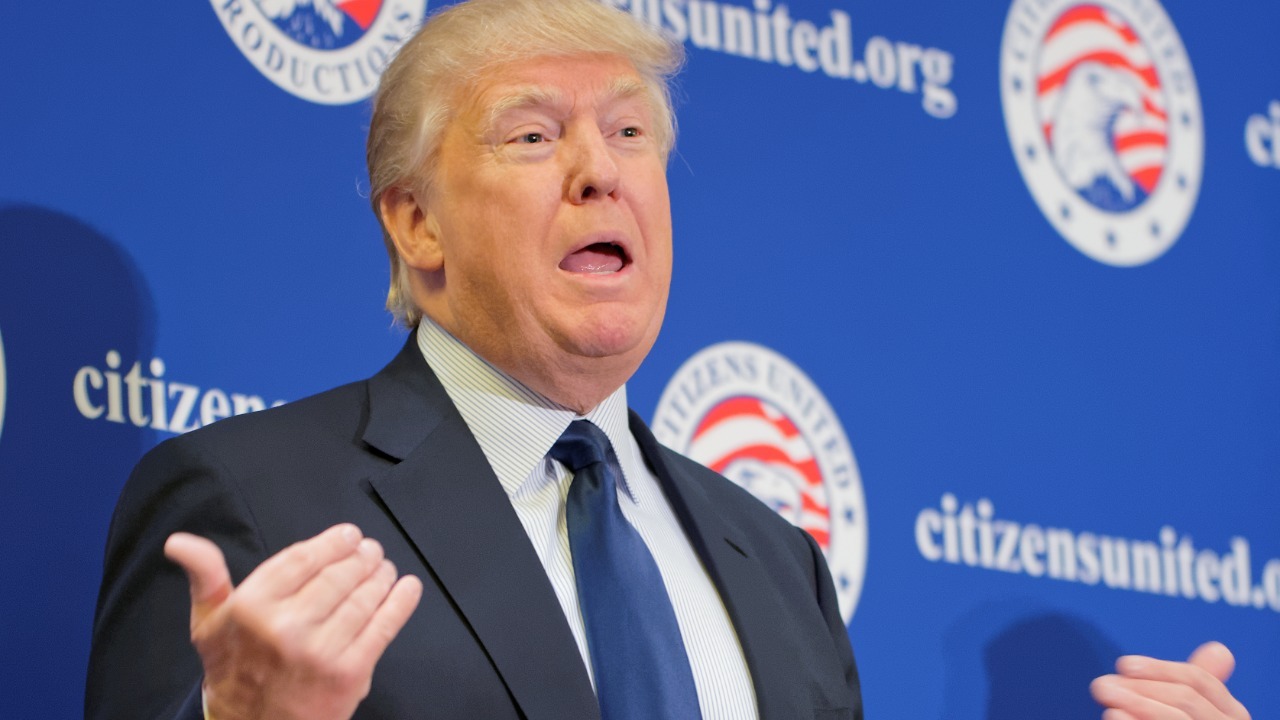
President Trump has promised that new tariffs on foreign goods could fund a “tariff dividend” of $2,000 a year for American households, a kind of rebate check meant to turn trade policy into visible cash. The pitch sounds simple: tax imports, send the proceeds back to families, and claim a win for both toughness abroad and relief at home. Once I walk through the numbers, though, the picture that emerges is far less generous than the slogan suggests, with most families likely to find that the money is gone before it even arrives.
The core problem is that tariffs are not free money from overseas competitors, they are taxes that American consumers and businesses pay on what they buy. When I line up the likely revenue against the higher prices that ripple through everything from groceries to cars, the gap is stark. The promised $2,000 check is quickly eaten up by the hidden costs of the policy that is supposed to fund it, leaving households with little or nothing left after the math is done.
How the $2,000 tariff dividend is supposed to work
The basic architecture of the plan is straightforward: the federal government would levy broad tariffs on imported goods, collect the revenue, and then distribute a flat annual payment of $2,000 to tens of millions of American households. In public remarks, President Trump has framed this as a way to make foreign producers “pay” for domestic benefits, turning trade restrictions into a kind of national dividend. The idea borrows the language of programs like Alaska’s oil checks, but instead of oil royalties, the funding would come from taxes on everything from electronics to clothing and cars.
In one televised discussion, AMNA NAWAZ summarized how President Trump “doubled down” on the concept of sending $2,000 rebate checks to “tens of millions of Amer” households, presenting it as a signature payoff from a sweeping tariff strategy that could touch more than $18 trillion in economic activity, according to that discussion. The political appeal is obvious: a simple, round number that families can picture in their bank accounts, tied to a policy that is marketed as tough on trading partners rather than costly for voters. My task here is to unpack how that promise collides with the underlying arithmetic of tariffs.
Tariffs are taxes that land on American shoppers
Before I can judge the dividend, I have to be clear about what tariffs actually are. A tariff is a tax on imported goods, collected at the border from importers, who then pass most or all of that cost along the supply chain. Retailers adjust their prices, domestic producers often raise theirs to match, and in the end it is American shoppers and businesses who pay more for the same products. Economists across the ideological spectrum treat tariffs as consumption taxes, even when politicians describe them as a bill sent to foreign governments.
That distinction matters because it determines who is really funding the $2,000 checks. If the money comes from higher prices on everyday items, then households are effectively paying into the pot every time they buy a smartphone, a washing machine, or a tank of gas that depends on imported components. The more comprehensive the tariff regime that President Trump envisions, the more deeply it reaches into the $18 trillion plus in goods and services that AMNA NAWAZ referenced, and the more it behaves like a broad-based tax on American consumption rather than a penalty on foreign exporters.
The revenue side: how much money tariffs can realistically raise
To see whether the dividend is even plausible, I start with the revenue side of the ledger. A $2,000 payment to “tens of millions” of households implies a program that could easily run into the hundreds of billions of dollars a year. If I assume, conservatively, that 80 million households receive the payment, the gross cost would be $160 billion annually. If the target is closer to covering nearly all American households, the figure climbs higher still. That money has to come from tariff collections, which depend on the volume of imports and the rates applied.
Tariff revenue is inherently volatile because higher rates tend to reduce import volumes over time, as buyers switch suppliers or cut back on purchases. The more aggressive the tariff schedule that President Trump proposes, the more it risks shrinking the very tax base that is supposed to fund the $2,000 checks. In practice, that means the government would either have to impose extremely broad and steep tariffs, accept that the dividend will be smaller than advertised, or quietly backfill the gap with other taxes or borrowing. None of those options matches the clean, self-financing picture that the sales pitch implies.
The cost side: higher prices on everything from food to phones
On the other side of the ledger sit the costs that households bear when tariffs raise prices. Because tariffs apply to inputs as well as finished goods, they ripple through supply chains in ways that are hard to see but easy to feel. A tariff on imported steel, for example, does not just affect the price of raw metal, it raises the cost of cars, appliances, and construction projects that rely on that steel. A levy on electronics components shows up in the price of a 2025 iPhone, a smart TV, or the networking gear that keeps home internet running.
For a typical family, these increases accumulate across categories. Groceries cost more when imported fertilizer, machinery, or packaging materials are taxed. Clothing prices rise when tariffs hit textiles and finished garments. A new Honda CR-V or Ford F-150 becomes more expensive when foreign parts are taxed at the border, even if the final assembly happens in the United States. When I add up those incremental costs over a year, it is easy to see how the effective tariff burden on a middle class household could approach or exceed $2,000, especially under a sweeping regime that aims to generate enough revenue to fund a national dividend.
Why experts say “the math simply doesn’t work”
Critics of the plan have zeroed in on this mismatch between revenue and cost. Trade policy specialists argue that once I account for the higher prices that tariffs impose on American consumers, the net benefit of a $2,000 check evaporates. One of the clearest formulations comes from Clark Packard, a trade expert at the Cato Institute, who has publicly argued that “the math simply doesn’t work” when it comes to using tariffs to fund a large household dividend. His point is not just that the numbers are tight, but that the structure of tariffs guarantees that much of the burden falls on the same people who are supposed to be helped.
In a detailed explainer, Clark Packard walks through why President Trump’s proposal to finance a $2,000 payment through tariffs “doesn’t add up,” emphasizing that the tax is paid by American buyers rather than foreign governments, and that any rebate would be offset by higher costs on the very goods families need to purchase, according to that analysis. When I follow his logic, the conclusion is stark: unless the government is willing to accept a much smaller dividend or supplement tariff revenue with other funds, the promise of a $2,000 windfall is more political branding than economic reality.
What polling says about tariffs and public skepticism
Public opinion research adds another layer to the story. Polling has consistently shown that President Trump’s tariffs are unpopular with the American public, even when respondents support the broader goal of getting tough on trade partners. When survey questions spell out that tariffs can raise prices on consumer goods, support tends to fall further, suggesting that voters intuitively grasp that they are the ones paying the bill. That skepticism matters because it shapes how much political room there is to expand tariffs enough to fund a large-scale dividend.
In one widely shared clip, trade analysts pointed to Polling that shows Americans are wary of tariff hikes and that many prefer more targeted tools over broad import taxes, a pattern that undercuts the idea that a $2,000 check would erase concerns about higher prices, as highlighted in that discussion. When I weigh that sentiment against the scale of tariffs needed to generate enough revenue, it becomes even harder to imagine a scenario where the policy is both economically sustainable and politically durable over time.
Household budgets: where the $2,000 would actually go
To understand how this plays out in real life, I find it useful to walk through a typical household budget. Consider a family of four with a modest mortgage or rent, two used cars, and a mix of spending on groceries, clothing, school supplies, and streaming services. A $2,000 check might initially look like a month’s rent, a chunk of credit card debt, or a cushion for emergencies. But if tariffs have already pushed up the cost of their weekly supermarket run, their kids’ sneakers, and the replacement parts for a 2019 Toyota RAV4, much of that money is effectively spoken for.
Higher prices do not arrive as a single line item labeled “tariff,” they seep into the budget in small increments. The family might notice that their back-to-school shopping at Target costs $40 more than last year, that their grocery bill at Kroger is up $25 a week, and that the quote for a new refrigerator is several hundred dollars higher than they expected. Over twelve months, those increases can easily add up to or surpass $2,000, especially if tariffs are broad enough to fund a national dividend. In that scenario, the check is not a bonus, it is a partial refund of taxes they have already paid through higher prices.
Winners, losers, and the politics of a visible check
Even if the average household breaks even or loses slightly, the distribution of costs and benefits is uneven. Families that consume more imported goods, or that live in regions where local industries rely heavily on foreign inputs, are likely to pay more in hidden tariff taxes than they receive in the $2,000 payment. Others, particularly those with lower consumption or access to cheaper domestic alternatives, might come out slightly ahead. That unevenness creates clear winners and losers, even if the headline number is the same for everyone.
Politically, though, the visibility of a check can outweigh the invisibility of higher prices. A $2,000 deposit from the federal government is tangible and easy to credit to President Trump’s policies, while the extra $10 on a pharmacy bill or $50 on a monthly grocery run is harder to trace back to tariffs. That asymmetry is part of what makes the dividend idea attractive as a campaign message. When I strip away the optics and focus on the underlying flows of money, however, the policy looks less like a gift from Washington and more like a reshuffling of household resources through a costly and distortionary tax.
Why a simpler alternative would be to cut tariffs, not recycle them
There is an alternative path that many trade economists favor: instead of using tariffs to raise money and then sending it back as a dividend, the government could simply avoid imposing the tariffs in the first place. That approach would leave prices lower, reduce administrative complexity, and eliminate the need to design and police a new transfer program. In effect, it would deliver a quiet, ongoing “dividend” in the form of cheaper goods and more efficient supply chains, rather than a once-a-year check funded by higher costs.
When I compare the two models, the trade-off is clear. The tariff-funded dividend offers a visible, politically salient benefit at the cost of higher prices and economic distortions, while a low-tariff regime delivers less flashy but more durable gains in purchasing power. The expert critiques from figures like Clark Packard, the skeptical Polling on tariffs, and the detailed breakdowns from AMNA NAWAZ’s interviews all point in the same direction: once the math is done, there is little reason to expect that a $2,000 tariff dividend would leave most American families with extra money in their pockets.
More From TheDailyOverview

Cole Whitaker focuses on the fundamentals of money management, helping readers make smarter decisions around income, spending, saving, and long-term financial stability. His writing emphasizes clarity, discipline, and practical systems that work in real life. At The Daily Overview, Cole breaks down personal finance topics into straightforward guidance readers can apply immediately.
