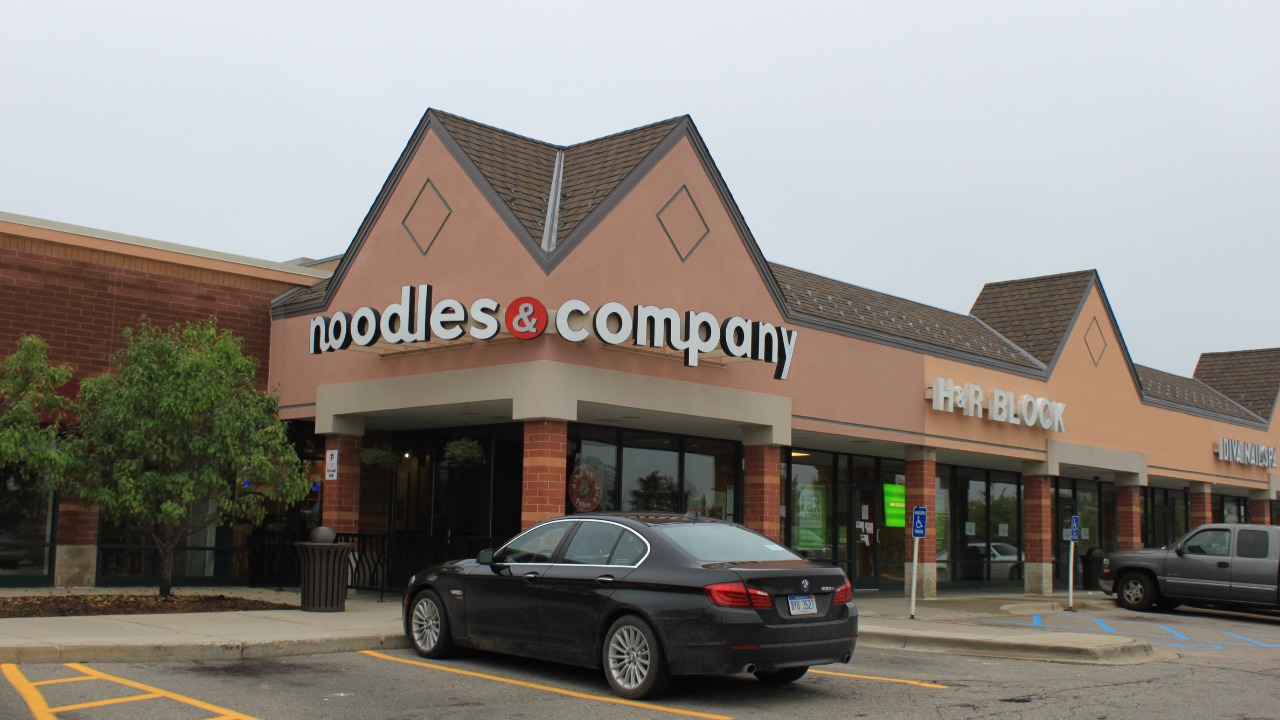
Noodles & Company plans to close dozens of additional restaurants in the coming year, extending a contraction that has already trimmed its footprint significantly. The fast-casual chain, best known for pasta bowls and macaroni and cheese, shuttered 33 company-owned locations during fiscal 2025 and now intends to cut another 30 to 35 units. The closures come even as same-store sales have ticked upward, raising a pointed question: if revenue is improving, why is the brand still shrinking?
Sales Rose, but the Chain Still Shrank in 2025
The tension at the heart of the Noodles & Company story is that its comparable sales performance looks respectable on paper while its restaurant count keeps falling. Preliminary fourth-quarter fiscal 2025 results show system-wide sales up 6.6%, with company-owned locations posting a 7.3% gain and franchise units rising 3.8%. Those are solid numbers for a brand that has struggled with traffic for several years. Yet the same filing confirms that the company ended the fiscal year with just 340 company-owned restaurants and 83 franchise locations, a net decline driven by 33 company-owned closures and 9 franchise closures during the year.
The disconnect between improving sales and a shrinking store base suggests that many of the closed units were dragging down overall profitability. Positive comparable sales can mask wide performance gaps across a portfolio. A handful of strong-performing restaurants can lift the system average while dozens of weaker locations burn cash on rent, labor, and food costs without generating adequate returns. Noodles & Company appears to be making that exact calculation: keep the locations that contribute to margins and exit the ones that do not, even if it means a smaller total footprint.
Closure Plans Escalated Throughout 2025
The current round of closures did not arrive as a sudden announcement. Instead, the company steadily expanded its closure targets over the course of 2025 in a pattern visible across its quarterly earnings disclosures. Early in the year, management revised its closure guidance for company-owned restaurants upward, signaling that initial plans had underestimated the scope of underperformance. By the second quarter, executives again updated their targets, referencing plans to close 30 to 35 restaurants in 2026 on top of what was already happening in 2025.
That escalation matters because it shows the restructuring was reactive, not purely strategic. A company executing a clean, pre-planned optimization would set a closure target and stick to it. Noodles & Company kept raising the number, which implies that performance data from individual stores continued to disappoint as the year progressed. The company’s third-quarter SEC filing documented ongoing profitability pressures and impairment charges that were already weighing on results, underscoring how deteriorating unit economics pushed management toward a more aggressive contraction than originally envisioned.
A Longer Pattern of Contraction and Refranchising
The 2025 and 2026 closures build on a contraction trend that started before the current fiscal year. During 2024, the company opened 10 restaurants but closed 13 company-owned locations and sold six units to a franchisee. That net loss of stores, combined with the franchise sales, indicated that corporate leadership was already pulling back from direct operation of marginal locations. The sale to a franchise operator is particularly telling: it signals that the company believed those restaurants could survive under a different capital structure and local ownership model, but not under the cost burden and return thresholds applied to corporate units.
Refranchising is a common playbook in the restaurant industry, and chains like Denny’s and Applebee’s have used it to shift capital risk while preserving brand presence. For Noodles & Company, however, the franchise segment remains relatively small at 83 units, and franchise comparable sales growth of 3.8% lags the 7.3% posted by company-owned stores in the latest update. That gap complicates the refranchising thesis. If franchisees are not generating the same sales momentum, expanding the franchise base may not be a reliable path to maintaining brand strength. The company faces a difficult balancing act: shedding underperforming corporate units while ensuring that franchise operators can carry the brand forward in markets where corporate retreats, without allowing a weaker franchise performance profile to erode overall consumer perception.
Operational Pressures Behind the Closures
Behind the headline numbers, Noodles & Company is grappling with familiar operational headwinds that make marginal restaurants harder to justify. Industry-wide labor inflation, higher occupancy costs, and elevated food prices compress four-wall margins, particularly at locations with middling traffic or weaker real estate. The company’s disclosures of impairments and restructuring charges in its investor presentation point to a portfolio review that is not just about pruning obvious outliers but reassessing whether some trade areas can support the brand at all under current cost conditions. In that context, closing dozens of restaurants becomes less an opportunistic reset and more a defensive move to protect the balance sheet.
At the same time, the company is trying to maintain or even improve the guest experience at remaining locations, which requires continued investment in staffing, training, and kitchen execution. Concentrating resources in a smaller number of restaurants can help support those goals, particularly if management directs capital toward remodels, digital-ordering infrastructure, and throughput improvements. However, that strategy only works if the surviving units can grow sales enough to offset the fixed-cost deleverage from a smaller system. The recent comparable sales gains are encouraging, but they must be sustained over multiple quarters to prove that a leaner Noodles & Company can still deliver acceptable returns for shareholders.
What 30 More Closures Mean for the Brand
With 340 company-owned restaurants at the end of fiscal 2025, the planned closure of an additional 30 locations would reduce the company-operated portfolio by roughly 9%. Combined with the 33 closures already completed, the two-year contraction would eliminate more than 60 company-owned units from the system. For a chain that never reached the scale of fast-casual competitors such as Panera Bread or Chipotle, that is a significant reduction in physical presence. Fewer locations mean fewer touchpoints with customers, reduced brand visibility in key markets, and potentially weaker negotiating leverage with suppliers who look at total system volume when setting pricing and terms.
The closures also carry workforce implications that the company has not detailed publicly. SEC filings and investor releases provide aggregate closure counts and financial projections but do not break out expected job losses per location or total headcount reductions. Each restaurant typically employs several dozen workers depending on volume and scheduling, which means the combined 2025 and 2026 closures could affect a substantial number of hourly and management positions across multiple states. For local communities, the disappearance of a Noodles & Company unit is not just a change in dining options but also a loss of entry-level jobs and, in some cases, a reduction in activity at neighborhood shopping centers that rely on restaurant traffic to support adjacent retailers.
For the brand itself, the next phase will test whether a smaller, more focused footprint can still support national marketing and digital engagement. Concentrating on core markets where Noodles & Company already has strong awareness could allow the chain to sharpen its value proposition and menu innovation without stretching field-level resources too thin. But if closures fragment contiguous trade areas or leave isolated stores in weaker markets, the company risks eroding the network effects that come from clustered locations and consistent regional advertising. The success or failure of this contraction will ultimately hinge on whether the remaining restaurants can perform like the top tier of the current system, delivering sustained traffic growth and margin expansion that justify the painful decision to walk away from dozens of underperforming units.
More From The Daily Overview
*This article was researched with the help of AI, with human editors creating the final content.

Grant Mercer covers market dynamics, business trends, and the economic forces driving growth across industries. His analysis connects macro movements with real-world implications for investors, entrepreneurs, and professionals. Through his work at The Daily Overview, Grant helps readers understand how markets function and where opportunities may emerge.

