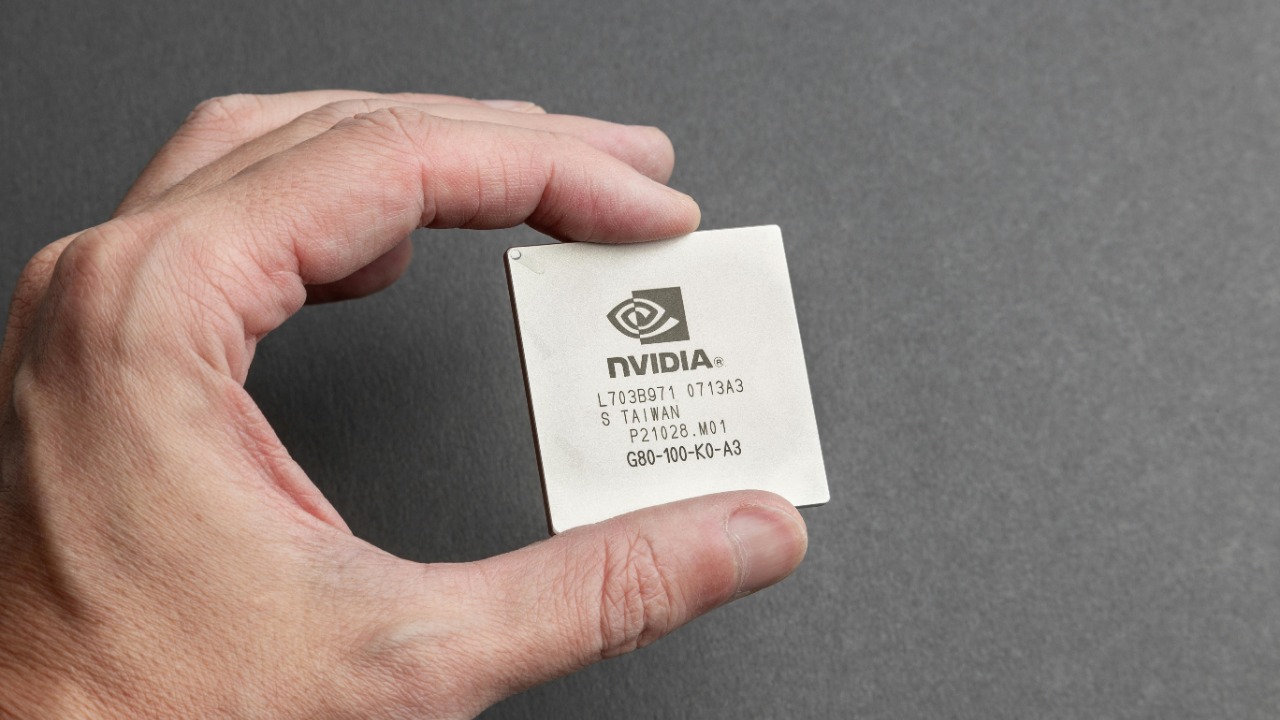
Federal prosecutors say a sprawling operation quietly moved some of the world’s most coveted artificial intelligence hardware out of the United States and into China, sidestepping export controls that were supposed to keep those chips out of foreign militaries’ hands. The alleged scheme, centered on high‑end Nvidia processors and worth roughly $160 million, now sits at the heart of a New York case that exposes how fragile Washington’s grip on AI supply chains can be.
What emerges from the charging documents and related national security cases is not a one‑off caper, but a template for how AI components can be disguised, rerouted, and monetized in defiance of U.S. rules. I see a pattern of shell companies, relabeled hardware, and cross‑border money flows that tests whether American export policy can keep pace with the race for machine learning power.
The alleged $160 million Nvidia pipeline
At the core of the New York case is an accusation that smugglers treated Nvidia’s most advanced graphics processing units as contraband, moving them through U.S. warehouses and out to China despite explicit export bans. Prosecutors describe a network that allegedly tried to reroute high‑end GPUs, including Nvidia’s data center parts, in a scheme valued at about $160 m, a figure that underscores how lucrative access to this hardware has become. The chips at issue are the same class of processors that power large language models, recommendation engines, and advanced surveillance systems, which is why U.S. officials have tried to keep them out of sensitive foreign labs.
Authorities say the operation relied on intermediaries and front companies to obtain Nvidia hardware that should have been restricted, then pushed it into China through a mix of false paperwork and covert logistics. In parallel filings, investigators describe how Two Chinese businessmen allegedly helped orchestrate shipments of Nvidia GPUs worth $160 million to China, even as Washington tightened export rules on the most capable accelerators. I read those details as a sign that the market for black‑market AI compute is no longer theoretical, it is organized and capitalized.
Inside the Brooklyn warehouse operation
The New York case comes into sharp focus inside a Brooklyn warehouse, where workers allegedly handled cutting‑edge chips with the care of smugglers, not engineers. According to investigators, Chinese businessmen in New York allegedly oversaw a process in which Nvidia components were relabeled by hand, stripping or obscuring markings that would have flagged them as export controlled. In that Brooklyn setting, the chips were treated like any other gray‑market commodity, repackaged and prepared for shipment to China despite U.S. restrictions.
The same reporting describes how the Brooklyn warehouse sat at the intersection of local logistics and global geopolitics, with workers in Brooklyn allegedly preparing boxes of Nvidia hardware for export that would ultimately end up in China. The shipments, valued at about $160 in the charging narrative, were not just a bookkeeping fraud, they were a direct challenge to U.S. national security policy that treats advanced AI chips as strategic assets rather than ordinary electronics. I see that warehouse as a physical reminder that the AI race is being fought not only in boardrooms and research labs, but on loading docks and in back offices.
How the smuggling network allegedly worked
Prosecutors describe a sophisticated network that did not rely on a single route or tactic, but instead layered deception across paperwork, corporate structures, and shipping channels. In one strand of the broader crackdown, federal law enforcement said they had dismantled a ring that moved about $160 million worth of AI chips to China, using false end‑user statements and misdeclared cargo to disguise the true nature of the hardware. The chips were described as generic computer parts, even though they were powerful accelerators suitable for training large neural networks and running high‑performance computing workloads.
Another case highlights how a PRC citizen named Fanyue Gong, also known as Tom Gong, allegedly used a New York technology company to funnel restricted goods to China by mislabeling them as generic components. Prosecutors say the 43 year old, who lives in Brooklyn, New York, oversaw a scheme that treated export‑controlled items as ordinary shipments, a pattern that mirrors the alleged relabeling of Nvidia chips in the Brooklyn warehouse. When I line up these cases, I see a consistent playbook: use U.S. corporate fronts, falsify documentation, and rely on the sheer volume of global trade to hide sensitive AI hardware in plain sight.
Houston, Missouri City and the western U.S. link
The New York allegations do not stand alone, they connect to a broader enforcement push that has already surfaced in Texas and across the western United States. In one case, prosecutors say a Missouri City man tried to smuggle $160 in AI chips to China, with the FBI breaking up what they describe as a Houston‑linked ring that stretched across the western U.S. That case, rooted in Houston logistics and Texas financial flows, shows how regional hubs far from Washington or Silicon Valley have become critical nodes in the AI hardware trade.
Investigators say the Houston‑area operation relied on domestic shipping routes and local contacts to move restricted chips toward ports and onward to China, echoing the alleged use of New York warehouses for similar purposes. The FBI describes the Houston ring as part of a broader pattern of smuggling networks that exploit the sheer demand for AI chips in China, where domestic alternatives still lag behind Nvidia’s most advanced designs. I read the Missouri City case as a reminder that export control enforcement is now a nationwide challenge, not just a coastal or border issue.
Money trails and alleged masterminds
Follow the money and the alleged smuggling network looks less like a side hustle and more like a capital‑intensive business. In one charging document, prosecutors say Hsu and his company received more than $50 m in wire transfers from China to fund operations that allegedly involved smuggling Nvidia chips. That $50 million in inbound payments, which prosecutors say totaled more than $50 million over time, signals that buyers in China were willing to pay a premium for access to restricted GPUs, and that intermediaries in the U.S. were not operating on a shoestring.
Other cases point to senior figures in tech firms who allegedly turned their corporate roles into conduits for smuggling. One filing describes Benlin Yuan, 58, a Canadian citizen living in Mississauga, Ontario, who served as CEO of a Virginia‑based subsidiary of a Beijing company and is accused of helping move controlled technology to China. In another, prosecutors say Executives at technology companies were caught smuggling Nvidia GPUs worth $160 million to China, allegedly using their positions to bypass compliance checks that would have stopped ordinary buyers. When I connect those dots, the picture that emerges is of a market where senior managers, not just low‑level brokers, are willing to risk criminal charges to satisfy China’s appetite for AI compute.
Why these chips matter for AI and the military
The intensity of the enforcement push makes more sense once you understand how central these chips are to both commercial AI and modern warfare. Federal officials have described Nvidia’s accelerators as the building blocks of AI superiority, and in one enforcement summary, Prosecutors explicitly called them integral to modern military applications. These processors do not just speed up chatbots, they enable faster image recognition for drones, more capable signals intelligence, and more realistic simulations for weapons testing.
That is why federal law enforcement highlighted that the $160 million worth of AI chips allegedly smuggled to China could support advanced machine learning models and high‑performance computing apps that have direct defense relevance. In a separate description of the crackdown, officials said a multimillion‑dollar smuggling enterprise focused on shipping Nvidia chips to China had been dismantled, underscoring that Washington sees these components as strategic assets. From my vantage point, the message is clear: in the age of AI, control over compute is as sensitive as control over missiles or radar systems.
Export controls, Trump’s policy shift and the gray zone
The alleged smuggling network is unfolding against a backdrop of shifting U.S. policy on how tightly to control AI hardware exports. Earlier this year, President Trump ended certain controls on Nvidia chips that the DOJ had argued would boost China’s military if they flowed freely, a move that signaled a tilt toward trade and industry concerns. That decision created a gray zone in which some Nvidia products could be sold more easily, even as the most advanced accelerators remained tightly restricted and highly sought after on the black market.
Analysts have noted that Trump’s approach marks a different strategy from earlier administrations, with the White House in July allowing Nvidia to sell its second‑best AI chips to China while keeping the very top tier under stricter control. That partial opening may have eased pressure on some Chinese buyers, but it also highlighted the premium on the most capable GPUs, which remained off limits and therefore more attractive to smugglers. I see the New York case as a stress test of that policy compromise, revealing how quickly market actors will probe the line between what is legal and what is banned.
China’s demand and the global AI chip squeeze
Behind the alleged smuggling lies a simple economic reality: China’s AI ambitions are colliding with U.S. efforts to choke off access to the best hardware. Official filings repeatedly note that the smuggled chips were destined for China, where data center operators, research labs, and defense‑linked entities are racing to match U.S. capabilities. With domestic alternatives still catching up, Nvidia’s GPUs have become a bottleneck, and that scarcity is exactly what makes a $160 million smuggling scheme plausible.
In the New York narrative, the chips allegedly moved from New York to China through a chain of intermediaries that capitalized on that demand, with Nvidia hardware relabeled and repackaged to slip past export checks. When I look at the broader pattern, from Houston to Brooklyn to Mississauga, I see a global AI chip squeeze that is driving some actors to treat export rules as just another cost of doing business, rather than a hard red line.
What the New York case signals about the next AI front line
The alleged $160 million Nvidia scheme in New York is more than a criminal case, it is an early glimpse of how contested the AI hardware supply chain will be in the years ahead. The involvement of Brooklyn entrepreneurs, Canadian CEOs, Houston brokers, and Chinese buyers shows that the front line of AI competition now runs through ordinary industrial parks and office suites. Each indictment, from the Missouri City man accused of trying to move $160 in chips to the executives charged over $160 million in Nvidia GPUs, suggests that enforcement will have to be as networked and data‑driven as the smugglers themselves.
For now, U.S. authorities say they have shut down a major China‑linked AI tech smuggling network and disrupted a multimillion‑dollar enterprise that shipped Nvidia chips to China, but the incentives that fueled those operations remain. As long as advanced GPUs can tilt the balance in both commercial AI and military power, I expect more cases that look a lot like the New York allegations, with prosecutors racing to keep up with a black market that understands exactly how valuable each chip has become.
More From TheDailyOverview

Grant Mercer covers market dynamics, business trends, and the economic forces driving growth across industries. His analysis connects macro movements with real-world implications for investors, entrepreneurs, and professionals. Through his work at The Daily Overview, Grant helps readers understand how markets function and where opportunities may emerge.