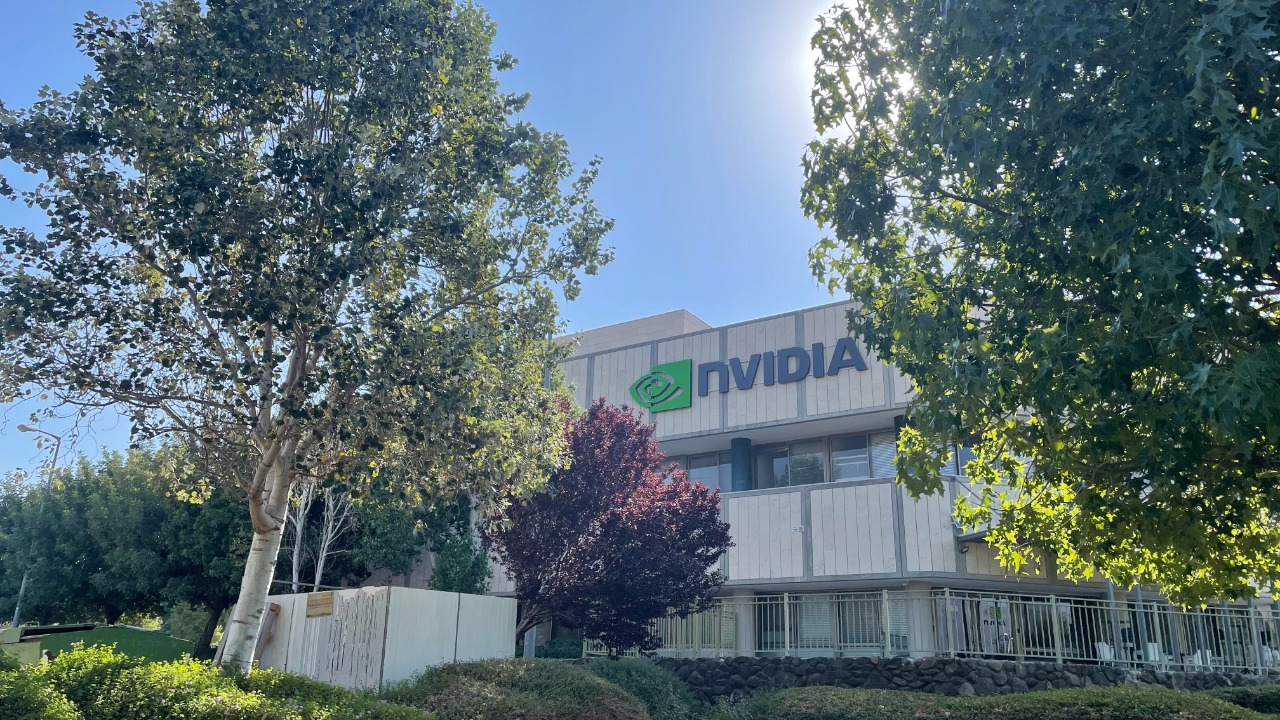
Nvidia’s gravity-defying run in artificial intelligence has finally met a visible pocket of resistance. After years of being the market’s go-to way to bet on AI, the chip maker is now confronting a wave of high-profile selling that began with Peter Thiel’s funds and is spreading to other elite investors who are questioning how much further the story can stretch. The stock’s latest slip is less about a single trade and more about a growing debate over whether Nvidia’s dominance can keep justifying its valuation as the AI boom matures.
As I see it, Thiel’s exit is functioning as a psychological turning point: a marquee backer of Silicon Valley’s most ambitious bets is no longer willing to ride Nvidia’s rally into 2026. That shift is prompting everyone from hedge funds to retail traders to reassess whether the AI leader is priced for perfection, or simply priced for disappointment if anything in the narrative wobbles.
The Thiel selloff that jolted Nvidia
The immediate catalyst for Nvidia’s latest pullback was a regulatory filing showing that Peter Thiel’s investment vehicles had effectively walked away from the trade. A filing reported around Nov 16, 2025 showed that Peter Thiel’s fund offloaded Nvidia stake in third quarter, crystallizing profits after a historic AI run. That disclosure confirmed what traders had suspected for weeks: one of the most influential tech investors had decided the risk‑reward balance no longer favored staying in the stock at current levels.
Further detail emerged as market watchers dug into the 13F paperwork. Reporting on Nov 16, 2025 noted that Vlad Savov and Tom Metcalf highlighted how the fund had sold its entire position in NVDA, alongside stakes in other tech names such as PLTR, according to the filing. The move was not a token trim. It was a clean break that signaled Thiel was comfortable stepping aside from one of the market’s most crowded winners, even as AI spending commitments across the industry continued to swell.
Market reaction: a slip that hints at fragile confidence
Once the Thiel exit became public, Nvidia’s share price quickly reflected the shift in sentiment. In early trading on Nov 17, 2025, Nvidia shares decreased 1.2% to $187.95 in premarket trading, despite a 1.8% rise on Friday, as investors digested news that Thiel Macro LLC had sold its entire stake in Nvidia. That kind of move is modest in percentage terms, but in a stock that had been relentlessly bid up on every AI headline, even a small pullback carried outsized symbolic weight.
The pressure did not stop there. Ahead of the next trading session, Nvidia (NVDA) shares were described as having sank nearly 2% before the market open Monday, as investors weighed the implications of Peter Thiel’s sale and looked ahead to the company’s next earnings update. Another account on Nov 16, 2025 underscored that Nvidia Stock Slips, Peter Thiel Dumped His Stake in the Chip Maker, with the stock again described as down 1.2% to $187.95 in premarket trading. The pattern was clear: each new confirmation of Thiel’s exit chipped away at the aura of invincibility around the chip maker’s share price.
Elite investors are lining up on the other side
Thiel is not the only heavyweight stepping back from Nvidia. Reporting on Nov 17, 2025 noted that Peter Thiel and Masayoshi Son have sold all of their Nvidia shares, while Michael Burry is shorting the stock. When a roster like that, spanning venture capital, conglomerate investing and contrarian hedge fund trading, converges on the same name, it sends a powerful signal that the easy money phase of the rally may be over.
Some of these moves are being interpreted as a referendum on the broader AI trade rather than on Nvidia alone. One analysis framed the shift by noting that it’s not entirely certain what Thiel and SoftBank’s sell-offs confidently signal about overall investor sentiment regarding AI, especially with key earnings updates still ahead. Yet the clustering of exits and shorts around the same stock is hard to dismiss as coincidence. It looks more like a coordinated expression of caution from investors who have seen multiple tech cycles crest and break.
Bubble fears and what Thiel’s exit really signals
For many market participants, the most unsettling part of Thiel’s move is not the sale itself, but what it might say about the durability of the AI boom. One widely cited analysis argued that Why Thiel’s Nvidia exit sends a very different signal is that, with Thiel Corp hitting zero with Nvidia, a clear message stands out about which AI economics will actually last. In other words, if a long‑time champion of frontier technologies is cashing out, it may reflect a view that the current phase of AI infrastructure spending is peaking, or at least that the market is already pricing in years of flawless execution.
That interpretation has filtered quickly into retail and advisory circles. One investor‑focused note framed the question bluntly as Why Is Thiel’s Exit Meaningful for Nvidia Stock, arguing that Thiel’s exit from NVDA shares adds fuel to growing caution around the chips specialist heading into 2026. The implication is not that Nvidia’s business is suddenly broken, but that the margin for error in the stock has shrunk. When expectations are this high, even a small disappointment in data center demand, pricing, or competitive dynamics could trigger a sharper correction than the modest slip seen so far.
Still a powerhouse: Nvidia’s fundamentals versus the fear trade
Despite the flurry of selling, Nvidia’s underlying performance remains exceptional by almost any traditional metric. One performance snapshot noted that, in terms of its 12‑month price performance, Nvidia has outperformed 86% of all other stocks in Investor’s Business Dai coverage, and its Composite Rating sits at 99. That kind of ranking reflects not just share price momentum, but also earnings growth, sales trends and other fundamental factors that still look robust heading into the next fiscal year.
Short‑term trading action, however, is increasingly being driven by positioning rather than fundamentals alone. One market update described how Nvidia (NVDA) shares are inching down on Monday after regulatory filings confirmed billionaire Peter Thiel’s sale, with the stock trading roughly 10% below its recent high. That kind of pullback is normal for a name that has run as far and as fast as Nvidia, but in the current climate it is being interpreted through the lens of “smart money” heading for the exits rather than as a routine consolidation.
What I think investors should really take from the exodus
For individual investors watching this drama unfold, the temptation is to treat Thiel’s move as a binary signal: either follow him out of the stock or double down in defiance. I think the more useful lesson is subtler. The wave of selling from Peter Thiel, Masayoshi Son and Michael Burry suggests that the balance of risk around Nvidia has shifted from obvious upside to a more finely poised trade‑off between continued AI growth and valuation risk. That does not mean Nvidia is destined to fall, only that the easy narrative of “buy anything AI” is giving way to a more discriminating phase.
In that sense, the recent slip in Nvidia’s share price is less a verdict on the company’s chips and more a referendum on investor expectations. The fact that Mon filings and premarket moves can move a stock of this size so quickly shows how tightly wound the trade has become. As more high‑profile investors reassess their exposure, I expect volatility to remain elevated around earnings and macro data, even if Nvidia continues to post strong operational results. For anyone still holding the stock, the message from the Thiel exodus is clear: the AI leader is entering a new chapter where scrutiny, not euphoria, will set the tone.
More From TheDailyOverview
- Dave Ramsey says these two simple questions show whether you’re rich or poor
- Retired But Want To Work? Try These 18 Jobs for Seniors That Pay Weekly
- IRS raises capital gains thresholds for 2026 and what’s new
- 12 ways to make $5,000 fast that actually work

Elias Broderick specializes in residential and commercial real estate, with a focus on market cycles, property fundamentals, and investment strategy. His writing translates complex housing and development trends into clear insights for both new and experienced investors. At The Daily Overview, Elias explores how real estate fits into long-term wealth planning.

