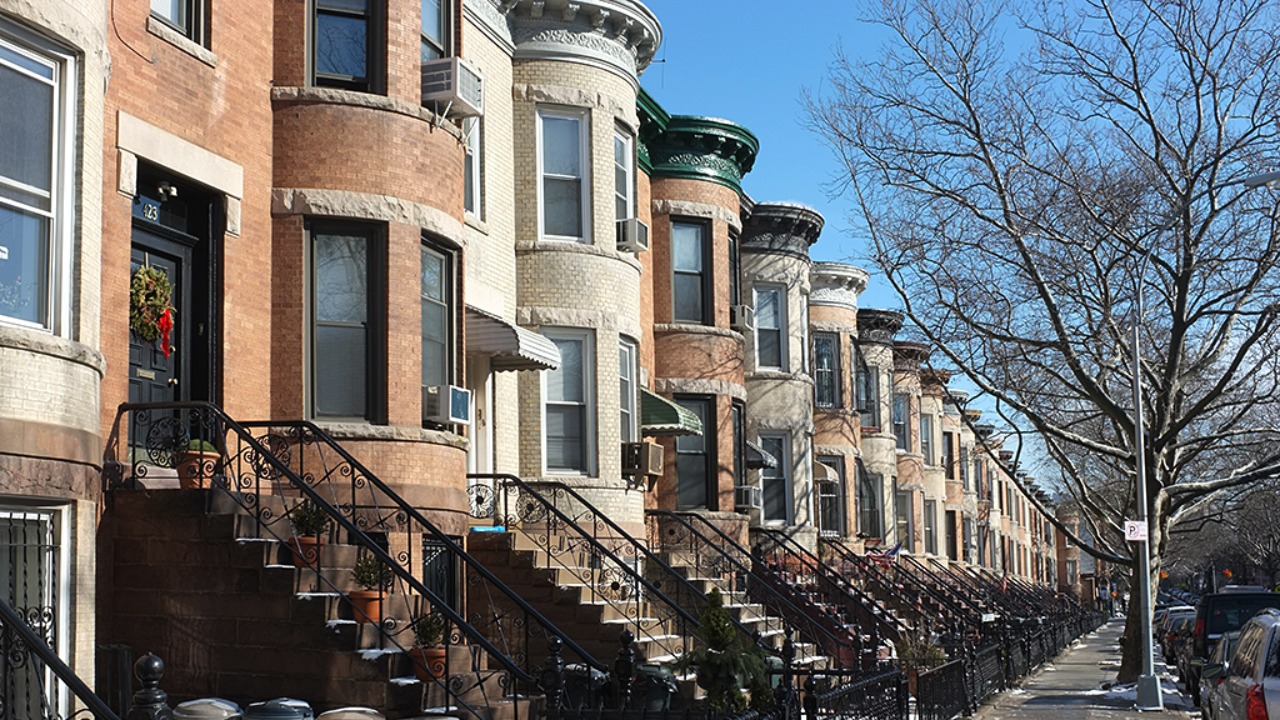
New York’s long running Bay Ridge condo scandal has reached a turning point, with a court ordering landlord Xi Hui “Steven” Wu to repay more than $4.2 M to the immigrant families he deceived. The ruling forces the man who “sold” nonexistent or illegal apartments to finally return $4.2 Million, plus interest, to buyers who thought they were securing stable homes in Brooklyn. For families who spent years fighting foreclosure and displacement, the decision is both a financial lifeline and a rare measure of accountability in a housing market that often leaves victims of fraud on their own.
The case centers on Chinese immigrant families who poured life savings into what they believed were legitimate condominium purchases, only to discover that the units were never properly created or could not legally be sold. After a lengthy investigation and civil trial, New York’s attorney general and state courts have now laid out in detail how the scheme worked, who was harmed, and what it will take to make them whole.
The Bay Ridge ‘condo’ dream that never existed
The story begins in Bay Ridge, a neighborhood in Brooklyn where homeownership has long been out of reach for many working class families. Nearly two dozen Brooklyn families were drawn in when Wu marketed apartments in a building there as affordable condos, promising them a path out of precarious renting and into long term stability. According to reporting on the early fallout, Nearly two dozen buyers, many of them Chinese immigrants, put down large deposits and made ongoing payments believing they were on track to receive deeds to their units.
In reality, the building was never properly converted into a condominium, and the buyers were left in a legal limbo that would later put them on the verge of losing their homes. As the mortgage on the property fell into trouble, the entire building was pushed toward a foreclosure auction, threatening to wipe out the families’ investments and leave them with nothing. That looming foreclosure, described in detail in coverage of the Bay Ridge dispute, turned what had been sold as a safe investment into a nightmare scenario where families faced eviction from homes they thought they already owned.
How Wu’s scheme targeted Chinese immigrant families
What set this case apart was not only the scale of the losses but the way Wu allegedly tailored his pitch to Chinese immigrant buyers. State officials say he and his companies, including TCJ Construction Inc., focused on families who were new to the New York housing system and more likely to trust a landlord who spoke their language and presented himself as a guide through a confusing process. In a detailed announcement, the state’s top law enforcement office described how he defrauded Chinese immigrant families in Brooklyn, explaining that Attorney General Letitia James secured a judgment requiring Wu to repay more than $4.2 M in restitution and penalties.
The order covers not only Wu personally but also his related companies, which were used to market and “sell” the units as if they were fully legal condos. In a separate description of the case, the attorney general’s office emphasized that the payout was framed as Attorney General James Wins More Than $4.2 Million For Chinese Immigrant Families Defrauded By Brooklyn Property Ow, underscoring that the victims were overwhelmingly Chinese families who had trusted Wu’s promises. That language, embedded in the state’s own materials under the heading Want To, reflects how central the immigrant community was to both the harm and the legal response.
The legal reckoning: fraud findings and the $4.2M order
The financial judgment against Wu did not appear overnight. It followed a civil enforcement case in New York County Supreme Court, where the state argued that Wu’s conduct violated key investor and consumer protection laws. In November, New York County Supreme Court Judge Anar Patel found that Wu had violated the Martin Act and Executive Law 63(12), a powerful combination that allows the attorney general to pursue broad remedies for deceptive practices. That ruling, described in a legal summary that notes In November New York County Supreme Court Judge Anar Patel concluded Wu had violated the Martin Act and Executive Law 63, cleared the way for a sweeping restitution order.
Following that liability finding, a separate decision set the financial terms, ordering Wu to pay $4.2M, plus interest, to the families he had misled. Coverage of the ruling explains that a New York court directed the landlord to return $4.2 to buyers who had been told they were purchasing condos, even though the units were never properly created or registered. One detailed breakdown of the case notes that a New York man who illegally “sold” condos was ordered to pay $4.2M, plus interest, to families, highlighting that the judgment is meant to restore what buyers paid and compensate them for years of financial strain.
Inside the fake condo sales and the foreclosure threat
At the heart of the case is a simple but devastating pattern: Wu took money for apartments he had no legal right to sell as individual condos. Buyers signed contracts, made down payments, and in some cases continued to pay monthly amounts as if they were servicing mortgages on their units. Yet, as later reporting made clear, Wu never completed the legal steps needed to create a condominium, and he kept control of the building’s underlying mortgage. One account of the scheme notes that, in reality, Wu never completed the condo conversion and instead left families exposed when the building’s debt went unpaid, a detail laid out in an analysis of how In reality the project was never finished.
As the mortgage defaulted, the lender moved to foreclose on the entire property, treating the building as a single asset rather than a set of individually owned homes. That meant the families, who had already paid hundreds of thousands of dollars collectively, were suddenly at risk of being evicted from apartments they believed they owned. Local coverage of the Bay Ridge fallout describes how a foreclosure auction was scheduled and how families scrambled to stop it, with one report explaining that the foreclosure auction of the Bay Ridge building threatened to wipe out buyers who had already paid hundreds of thousands of dollars. That looming sale became a key pressure point that eventually drew in state regulators and set the stage for the attorney general’s lawsuit.
Community fallout and what the ruling means for housing justice
The impact of Wu’s actions went far beyond balance sheets. Families who thought they had finally secured a foothold in Bay Ridge instead spent years in legal limbo, unsure whether they would be allowed to stay in their homes or ever see their money again. Local reporting from Jan described how a Bay Ridge landlord was ordered to pay restitution for defrauding dozens of immigrant families, quoting officials who said “Steven Wu preyed on hardworking” buyers and noting that the state had already begun pursuing claims against him in 2022. That account, which details how Bay Ridge families were targeted, underscores how the case became a symbol of broader concerns about exploitation in New York’s immigrant communities.
For many of the roughly 20 families involved, the new judgment is both vindication and a reminder of how fragile homeownership can be when legal protections fail. A detailed narrative of the case describes how a yearslong nightmare is finally over for the 20 families scammed into buying fraudulent condos in Bay Ridge, noting that On Friday, Attorney General Letitia James announced the payout and that families would finally have a path to get the money back. That account, which emphasizes the relief felt in Bay Ridge, frames the ruling as a rare example of the legal system catching up with a complex real estate scam.
More From TheDailyOverview
*This article was researched with the help of AI, with human editors creating the final content.

Grant Mercer covers market dynamics, business trends, and the economic forces driving growth across industries. His analysis connects macro movements with real-world implications for investors, entrepreneurs, and professionals. Through his work at The Daily Overview, Grant helps readers understand how markets function and where opportunities may emerge.