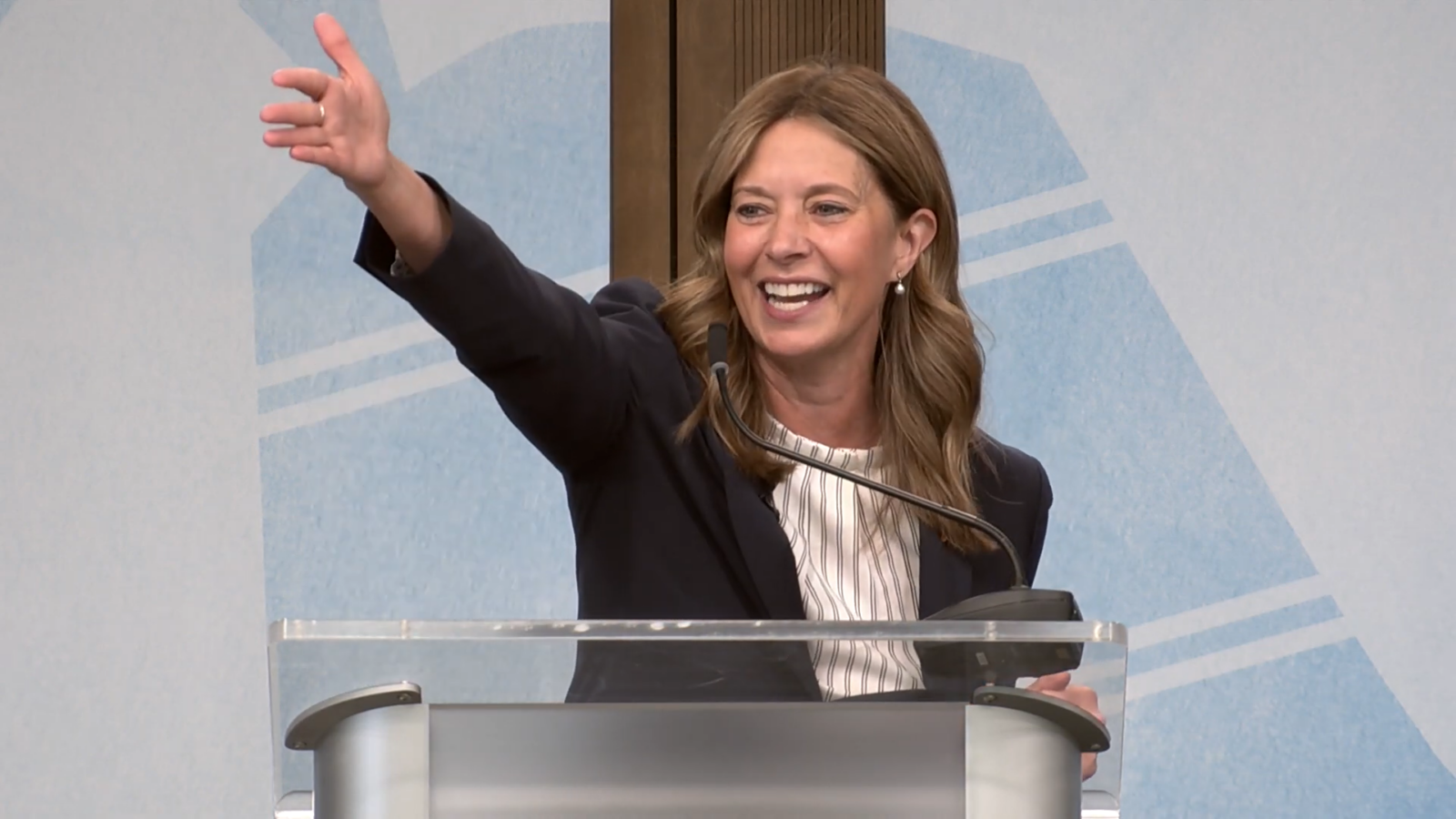
Dr. Amy Acton is stepping into Ohio’s 2026 governor’s race with a message that centers on economic pressure at the kitchen table and a call for faster action on property taxes. She is best known for helping lead Ohio’s early response to the COVID-19 pandemic, and she is now applying that crisis-era framing to the tax bills that arrive in homeowners’ mailboxes. Her argument, as framed in her campaign messaging, is that relief should come quickly and clearly, not as a distant promise buried in legislative fine print.
That stance drops her directly into an already crowded policy fight. Several Republican lawmakers are promoting their own property tax plans, each pitched as a fix for a different slice of the problem. The question for voters is whether Acton’s push for faster relief is meaningfully different from the bills already on the table, or whether the real divide is about timing, scope, and who benefits first.
Acton’s bid and her tax message
Acton’s political profile rests on her time as a public health leader, when she helped guide Ohio through the early stages of the coronavirus crisis according to an AP report. That experience gave her a reputation for moving quickly under pressure, and her campaign is now casting property taxes as an urgent pocketbook issue for homeowners. Her entry into the 2026 governor’s race, as described in the same reporting, signals that she intends to make economic stress a central test of leadership rather than treating it as a secondary issue behind culture-war fights.
In that context, her call for faster property tax relief functions as both a policy stance and a contrast with the legislature. While Republican senators have already drafted multiple tax bills, those efforts are structured as targeted programs and long-term adjustments, not as a single sweeping cut. By emphasizing speed and clarity, Acton is arguing that the existing menu of proposals may not move quickly enough for families who are struggling with their bills, even as any changes would still have to fit within fiscal and legal constraints.
Schaffer’s long-term savings pitch
One of the most prominent voices on the Republican side is Sen. Tim Schaffer, whose office has promoted what it describes as billions in long-term tax relief for Ohio property taxpayers according to an Ohio Senate release. That document lays out a package of specific property-tax reform bills and claimed savings, framing the effort as a structural reset rather than a one-off rebate. Schaffer’s message is that durable change requires careful rewrites of tax formulas, and that the payoff will accumulate over the years as assessments and bills adjust.
From an analytical standpoint, this creates a clear contrast with Acton’s framing. Schaffer is promoting a future benefit that depends on legislative follow-through and administrative execution, while Acton is emphasizing relief that homeowners can feel sooner. The difference is largely one of emphasis: long-run system design versus immediate household pain. Both approaches speak to real needs, but they answer different questions—Schaffer’s package focuses on stabilizing the tax system, while Acton’s message focuses on how quickly a family can see a smaller check written to the county treasurer.
O’Brien’s SB 66 and valuation spikes
Sen. Sandra O’Brien has taken aim at one of the most politically explosive pieces of the property tax conversation: sharp jumps in assessed values. Her office describes Senate Bill 66 as legislation to lower Ohioans’ property tax bills, with the rationale explicitly tied to valuation spikes according to a statement from her. By naming “66” in the bill title and centering it on assessments, O’Brien is emphasizing what many homeowners see first: the notice that their house is suddenly valued higher on paper, even if their income has not changed.
O’Brien’s focus on valuation mechanics is a reminder that property tax stress is not only about rates; it is also about how fast local governments and state rules allow taxable values to rise. Her approach aims to smooth those spikes, which could slow or limit future increases in bills for some owners. Acton’s call for faster relief, by contrast, is framed more around the bottom-line bill. O’Brien’s plan is a targeted fix aimed at a trigger that has angered many taxpayers, while Acton’s message is broader and centered on urgency, regardless of the underlying formula.
Patton and Cutrona target older homeowners
Another cluster of proposals zeroes in on older Ohioans, a group that often lives on fixed incomes and can feel property tax hikes acutely. Sen. Tom Patton has introduced property tax relief legislation described as a senior property-tax freeze, labeled Senate Bill 81 in an Ohio Senate release. The concept is straightforward: once homeowners meet age or other criteria, their property tax burden would be locked in place, insulating them from future jumps even if values or rates climb. That kind of freeze can be politically attractive because it focuses on a specific group and offers certainty rather than just slower growth.
Sen. Al Cutrona has moved in a similar direction with a bill described as providing property tax relief for older Ohioans, identified as Senate Bill 206 in an Ohio Senate explanation. SB 206 is presented as a concrete reduction proposal, again centered on age as the qualifying factor. Compared with these targeted senior plans, Acton’s broader call is aimed at a wider audience, though any specific tools would ultimately have to be negotiated with legislators who are currently prioritizing seniors and other narrower reforms.
Can Acton reshape the tax debate?
Because Acton is a candidate rather than a sitting lawmaker, she does not have a bill number next to her name the way O’Brien’s SB 66, Patton’s SB 81, or Cutrona’s SB 206 do. Her influence, at least for now, is rhetorical and electoral rather than procedural. According to the AP reporting that confirmed her entry into the race, she is positioning herself as someone who has already made hard calls under pressure. She is using that biography to argue that when families say their property taxes are too high, leaders should move with urgency rather than letting relief become a multi-year process.
The open question is whether that framing can move the legislature. Two plausible effects stand out. First, by elevating property taxes to a top-tier campaign issue, Acton could pressure lawmakers of both parties to show faster progress so they do not look unresponsive as the governor’s race draws attention. Second, her emphasis on speed could push Republicans who currently back separate bills—such as Schaffer’s long-term package and the senior-focused SB 81 and SB 206—to consider bundling ideas into a broader, more visible plan that reaches beyond older homeowners and valuation issues. That would not necessarily meet Acton’s standard, but it could narrow the gap between her rhetoric and the legislature’s reality.
There is also a risk for Acton. By setting expectations around speed, she invites scrutiny of how immediate cuts would be funded and what programs or local services might be affected. The official documents tied to Schaffer, O’Brien, Patton, and Cutrona describe various approaches to lowering bills, but they do not present a simple, cost-free path to relief. For now, the sourced record shows a candidate with crisis-management credentials calling for faster help, and a group of senators offering a mix of long-term reforms and targeted breaks. The next phase of the debate will test whether those tracks collide, converge, or simply talk past each other while homeowners wait for their next tax statement.
More From The Daily Overview
*This article was researched with the help of AI, with human editors creating the final content.

Julian Harrow specializes in taxation, IRS rules, and compliance strategy. His work helps readers navigate complex tax codes, deadlines, and reporting requirements while identifying opportunities for efficiency and risk reduction. At The Daily Overview, Julian breaks down tax-related topics with precision and clarity, making a traditionally dense subject easier to understand.

