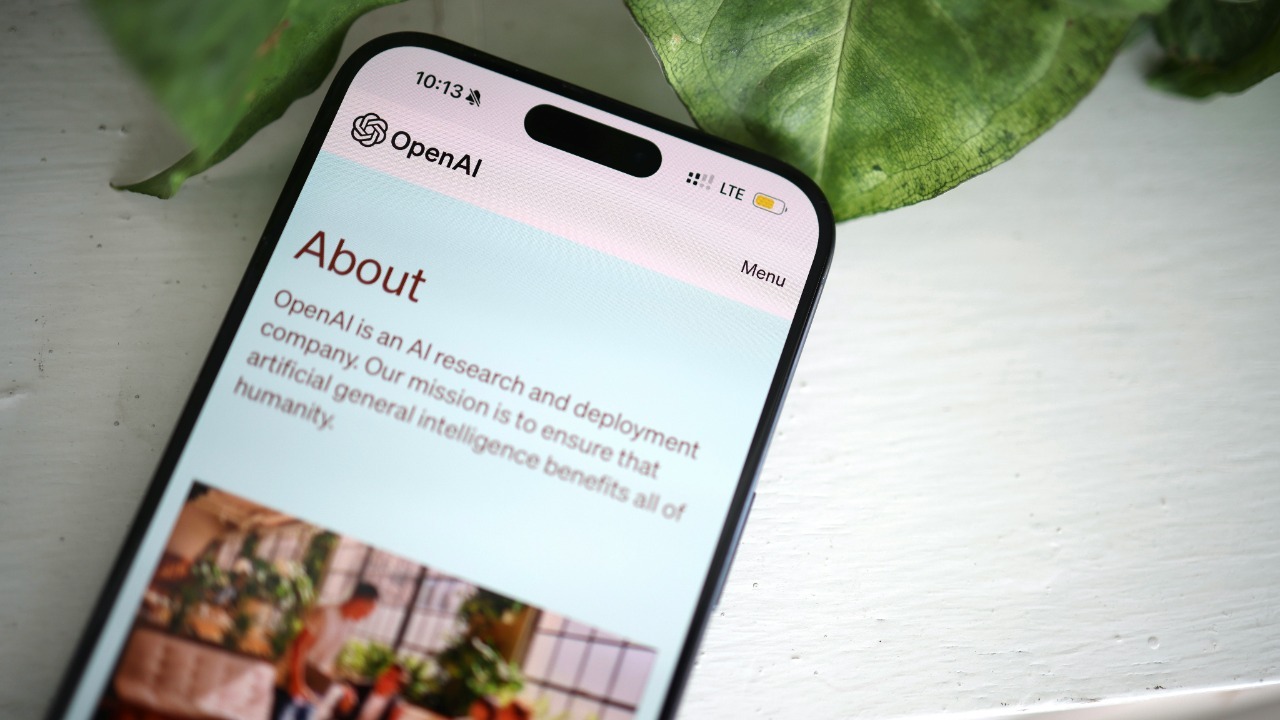
OpenAI leaders are signaling that the company’s future will not be confined to the browser window, with executives describing active hardware prototyping and a dedicated device effort they expect to surface publicly within about two years. The push reflects a belief that the next wave of AI adoption will depend on tightly integrated hardware and software, not just more powerful models in the cloud.
That timeline, paired with early details about form factors and partners, suggests OpenAI is moving from abstract platform ambitions to a concrete product roadmap that could reshape how people interact with its models in daily life.
OpenAI’s hardware ambitions move from concept to concrete timelines
OpenAI executives are no longer speaking about hardware as a distant aspiration, but as an active program with working prototypes and a clear launch horizon of roughly twenty-four months. I see that shift as a marker of maturity: the company is treating physical devices as a core strategic pillar rather than a side experiment, aligning its roadmap with the pace of model upgrades so that each new generation of GPT can be paired with a purpose-built interface in the real world. That framing turns hardware into an extension of the model stack, not a separate business line.
Executives have described internal device work that is already far enough along to involve industrial design, component tradeoffs, and user experience testing, with the expectation that a first product will be ready for consumers within about two years, supported by ongoing hardware prototyping. The company is positioning this schedule as aggressive but achievable, tying it to the cadence of its model releases and to the need for more natural, always-available access points for AI assistants. That combination of a defined window and active prototyping signals that the hardware effort has moved past exploratory research into a structured product program.
From screens to objects: what kind of device OpenAI is building
OpenAI’s leadership has been careful not to lock itself into a single product category in public, but the contours of the project point toward a dedicated AI companion rather than a traditional laptop or smartphone. I read the emphasis on ambient interaction, voice-first controls, and minimal friction as a sign that the company wants a device that fades into the background while the assistant takes center stage. That philosophy aligns with the broader trend toward wearables and home hubs that prioritize presence and responsiveness over raw compute on the device.
Reporting on the company’s industrial design explorations describes prototypes that range from compact tabletop hardware to wearable concepts, all centered on persistent access to OpenAI’s models with low-latency connectivity and far-field microphones, supported by early device concepts. Executives have also pointed to the limitations of current smartphones for long-form conversation and multimodal interaction, arguing that a purpose-built object can better support continuous listening, contextual awareness, and privacy controls tuned specifically for AI usage. That focus on form factor suggests the final product will be defined less by screen size and more by how naturally it can sit in a home, office, or pocket while staying connected to the cloud.
Partnerships, supply chains, and the race for AI-native hardware
Building a consumer device at scale requires far more than a clever prototype, and OpenAI appears to be structuring its hardware push around deep partnerships with established manufacturers and component suppliers. I see this as a pragmatic recognition that the company’s core strength is in models and software, not in running factories or negotiating display panel contracts. By leaning on experienced partners, OpenAI can focus on the AI experience while still hitting the cost, reliability, and certification thresholds that mainstream hardware demands.
Sources describe discussions with major consumer electronics players and contract manufacturers that would handle assembly, radio integration, and logistics, while OpenAI concentrates on the assistant layer, on-device optimization, and cloud orchestration, supported by reporting on manufacturing partners. The company is also weighing component choices such as low-power neural accelerators and microphone arrays that can support wake-word detection and local preprocessing, decisions that will shape both battery life and responsiveness. In parallel, OpenAI is mapping out a supply chain that can withstand demand spikes and component shortages, a lesson drawn from recent years of constrained chip availability and highlighted in coverage of its supply chain planning.
Why OpenAI wants its own device instead of relying on phones and PCs
OpenAI already reaches hundreds of millions of users through web and mobile apps, so the decision to invest in hardware reflects a belief that software alone cannot deliver the most natural or secure AI experiences. I interpret the company’s argument as twofold: first, that dedicated hardware can reduce friction by making the assistant instantly available without unlocking a phone or juggling apps; and second, that controlling the full stack allows for tighter privacy guarantees and more predictable performance. In other words, the device is meant to solve both usability and trust problems that are hard to fix inside someone else’s operating system.
Executives have pointed to scenarios like hands-free assistance in the kitchen, real-time language translation during travel, and continuous note-taking in meetings as use cases that are awkward on smartphones but well suited to a small, always-on AI companion, a vision detailed in coverage of OpenAI’s target use cases. They have also argued that owning the hardware layer lets OpenAI implement end-to-end encryption, on-device redaction, and customizable data retention policies that are harder to guarantee when the assistant is embedded inside third-party platforms, a theme underscored in reporting on its privacy approach. That combination of convenience and control is central to the company’s case for why a dedicated device is worth the investment.
Risks, competition, and what a two-year runway really means
A two-year runway in consumer hardware is both an opportunity and a risk, especially in a market where rivals are also racing to define what AI-native devices look like. I see OpenAI’s timeline as a bet that its models will continue to improve fast enough to justify a new class of hardware, but also as an acknowledgment that arriving too late could leave the field to incumbents that already ship phones, laptops, and smart speakers at massive scale. The company has to navigate that tension while avoiding the trap of overpromising on capabilities that depend on future model breakthroughs.
Analysts tracking the space have noted that OpenAI will be competing not only with standalone AI gadgets but with operating system vendors that are weaving assistants directly into Windows laptops, Android phones, and smart home ecosystems, a dynamic outlined in coverage of the broader AI hardware competition. The two-year horizon also leaves room for regulatory scrutiny around data collection, biometric sensing, and always-listening microphones, areas where OpenAI is already facing questions about how its models handle user information, as detailed in reporting on its regulatory challenges. How the company addresses those concerns in the design and marketing of its device will help determine whether the hardware becomes a mainstream fixture or a niche accessory for early adopters.
More From TheDailyOverview
- Dave Ramsey says these two simple questions show whether you’re rich or poor
- Retired But Want To Work? Try These 18 Jobs for Seniors That Pay Weekly
- IRS raises capital gains thresholds for 2026 and what’s new
- 12 ways to make $5,000 fast that actually work

Grant Mercer covers market dynamics, business trends, and the economic forces driving growth across industries. His analysis connects macro movements with real-world implications for investors, entrepreneurs, and professionals. Through his work at The Daily Overview, Grant helps readers understand how markets function and where opportunities may emerge.

