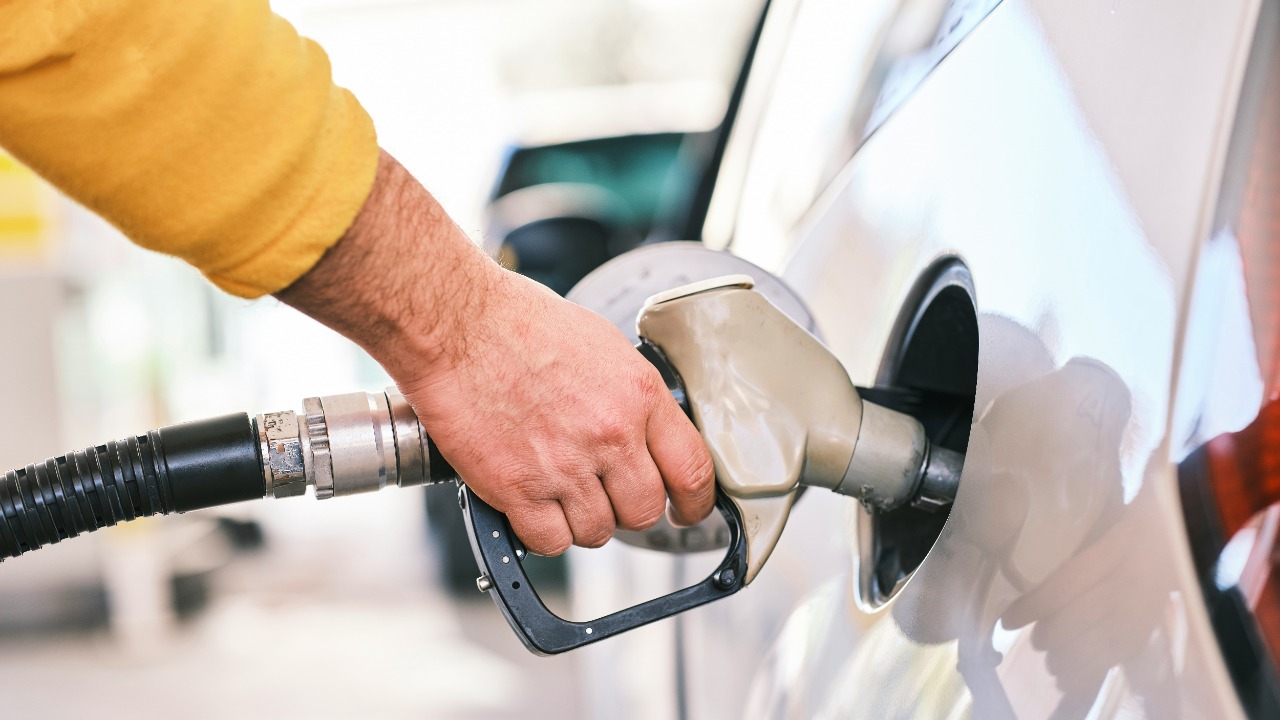
Cheaper fuel is quietly reshaping the economic mood in the United States, easing pressure at the pump and giving households a little more room to breathe. As gasoline prices retreat from their recent peaks, early signs point to a modest but meaningful lift in consumer confidence, even as inflation in other parts of the economy keeps shoppers cautious.
I see a fragile optimism taking hold, powered by lower energy costs, improving expectations and a labor market that still looks resilient. The question now is whether this momentum can outlast the headwinds of stubborn prices elsewhere, or if the relief at the gas station will prove to be a short-lived psychological boost.
Cheaper fuel and a tentative mood shift
The most visible change in the economic landscape is happening on roadside price boards, where falling fuel costs are starting to filter into household psychology. Drivers who watched gasoline climb month after month are now seeing the opposite, and that reversal is feeding into a broader sense that the worst of the price shock may be behind them. In televised remarks, Florida official Rep. Jimmy Patronis, R-Fla., framed the recent drop in fuel costs as a direct tailwind for household sentiment, arguing that lower prices at the pump are helping lift overall Economic optimism.
That view has been echoed in other coverage of the same trend, where the link between cheaper gasoline and a brighter outlook has been drawn in similarly direct terms. In another segment, the same dynamic was described as a clear example of how falling fuel costs can boost consumer confidence, with Rep. Jimmy Patronis again highlighting how relief at the pump is resonating with households in Economic discussions. When elected officials in a car-dependent state like Fla are talking about fuel prices in the same breath as confidence, it is a sign that the psychological impact of cheaper gas is starting to register well beyond the energy market itself.
What the confidence data is actually showing
Sentiment surveys are beginning to capture this shift, although the improvement is still modest and far from euphoric. A closely watched confidence index has ticked higher after a prior decline, with the expectations component rebounding even as the overall reading remains nearly six points below where it stood a year earlier. That pattern, a small rise from a depressed base, suggests that households are acknowledging better news on prices and jobs while still feeling the drag of a long inflation shock, a nuance reflected in the latest consumer confidence readings.
I read that combination as a classic early-cycle mood shift, where people are no longer bracing for things to get worse but are not yet convinced that conditions are truly good. The rebound in expectations matters because it often leads actual spending, especially on discretionary items like travel or home upgrades, yet the fact that the index is still significantly below last year’s level is a reminder that optimism is climbing from a low base, not from a position of strength. In other words, cheaper fuel is helping, but it is not erasing the memory of higher prices elsewhere.
Why gas prices punch above their economic weight
Fuel costs occupy a small share of total household spending for many families, but they loom large in how people feel about the economy. Academic work from the Federal Reserve has long argued that gasoline prices carry an outsized psychological punch, in part because they are so visible and so frequently encountered. In a detailed analysis titled Do Lower Gasoline Prices Boost Confidence, researchers concluded that cheaper gas tends to lift sentiment across a wide range of individuals, especially those with a higher marginal propensity to consume.
That finding helps explain why the current pullback in fuel prices is showing up so quickly in anecdotal reports of improved mood. When drivers see the cost of filling a 2022 Ford F-150 or a 2021 Toyota RAV4 drop by several dollars per tank, the savings are immediate and tangible, even if they are relatively small compared with rent or groceries. The visibility of those savings, combined with the sense that a volatile and politically charged price is finally moving in the right direction, can make people more willing to spend on other items, reinforcing the early signs of optimism that are now appearing in confidence surveys.
Households’ price pain threshold at the pump
There is also a clear sense of where consumers draw the line on what they consider acceptable fuel costs. In earlier survey work, drivers were asked how high gasoline prices would need to climb before they would seriously change their behavior, and the answer was strikingly precise. Respondents said prices would have to reach an average of $4.71, more than double the level at the time of that research, before they would consider cutting back on driving or making other major adjustments.
That threshold is important context for the current environment. Even if today’s prices are higher than they were a few years ago, they are still below the level that many households previously identified as their breaking point. As long as the national average remains comfortably under that $4.71 mark, I expect most drivers to treat the recent decline as a welcome relief rather than a reason to overhaul their routines. That helps explain why optimism can rise even if fuel costs are not exactly cheap by historical standards, as long as they are moving away from the pain threshold instead of toward it.
Policy, production and the politics of cheaper gas
Energy prices do not move in a vacuum, and the current easing at the pump is unfolding against a backdrop of aggressive production and active policy choices. Reporting on the national energy picture has highlighted how President Trump continues to push to increase oil and gas production even as the United States hits record output levels, a stance that has helped keep supply abundant and contributed to lower prices for Americans at the pump. That policy emphasis on domestic production has become a central part of the administration’s economic message, linking energy independence to household budgets.
The White House has also been explicit about the connection between fuel costs and consumer spending. In a broad list of recent achievements, officials pointed to the fact that the national average gas price fell as a development that lowers costs and supports consumer spending. That framing underscores how central fuel prices have become to the political narrative around economic success, with lower costs at the pump presented as both a policy win and a confidence booster.
Cooling inflation, markets and the confidence feedback loop
Cheaper fuel is arriving at the same time as broader signs that inflation is cooling, a combination that is feeding into financial markets and, indirectly, into household sentiment. Investors have responded to evidence that price pressures are easing and that the Federal Reserve may be nearing the end of its tightening cycle, with one recent analysis describing how Cooling inflation and Fed optimism have helped fuel a market rally. Rising stock prices and narrower credit spreads do not directly pay the bills for most families, but they contribute to a sense that the economic outlook is stabilizing rather than deteriorating.
That market mood can reinforce the psychological impact of cheaper gas. When people see their retirement accounts recovering on apps like Fidelity or Robinhood at the same time that their weekly fuel bill is shrinking, they are more likely to feel that the economy is moving in the right direction. I view this as a feedback loop: lower energy costs help cool headline inflation, which supports Fed optimism, which in turn lifts markets and, eventually, consumer confidence. The risk is that if any leg of that loop falters, for example if inflation reaccelerates or markets stumble, the fragile optimism now emerging could fade quickly.
The stubborn drag of non-fuel inflation
Even as fuel prices fall, households are still wrestling with higher costs in other parts of their budgets, and that tension is limiting how far confidence can climb. Reporting on the current environment has stressed that cheaper gas might not be enough to drive consumer sentiment significantly higher when inflation remains stubborn in categories like food, rent and services, a point captured in coverage that framed lower fuel costs as only a partial offset to broader price pressures in the latest economic News on sentiment.
That perspective is not limited to the United States. In Canada, analysts have noted that as fuel prices and headline inflation decline, they can have an opposite psychological effect compared with the earlier surge, but only if people feel that the underlying cost of living is truly stabilizing. One economist associated with the Conference Bo argued that while falling fuel prices can ease some of the anxiety that disturbed Canadian consumers, the effect on confidence will be limited if core inflation continues to climb. I see the same dynamic at work south of the border: cheaper gas is welcome, but it is competing with rent hikes, grocery bills and medical costs that have not retreated nearly as quickly.
Oil supply, price bands and what comes next
Behind the scenes, the structure of the oil market is also shaping how durable the current relief at the pump might be. Coverage of the energy sector has emphasized that oil production has remained at record levels and that there is no shortage of oil, gasoline or diesel on the market, according to federal data, a backdrop that has helped keep prices contained even as global demand holds up Meanwhile in energy markets. That abundant supply is one reason I expect fuel prices to stay relatively stable rather than snapping back to recent highs.
Energy economists are making a similar case. University of Houston expert Ed Hirs has argued that gasoline prices are expected to stay in a relatively narrow band, reflecting both strong production and a global market that is adjusting to shifting demand patterns. If that forecast holds, households may be able to count on a period of relative stability at the pump, which could help cement the recent improvement in confidence. The flip side is that a narrow band also limits the potential for further dramatic declines, so the psychological boost from falling prices may fade as the novelty wears off.
Winners, risks and the limits of optimism
Lower fuel costs create clear winners, particularly in sectors where gasoline and jet fuel are major line items, but they do not erase all the risks facing the broader economy. Airlines, for example, benefit directly when energy prices fall, yet investors remain wary of carriers with heavy debt loads and exposure to cyclical demand. A recent analysis of American Airlines Group Inc. noted that, However, sentiment remains cautious, reflecting concerns about leverage, climate-related pressures and operational issues such as engine groundings.
That caution mirrors the broader consumer mood. Even as people welcome cheaper gas, they are still processing a long list of economic worries, from housing affordability to geopolitical shocks. As Ed Hirs has warned, there are “so many bad things” associated with the current economic backdrop that lower gas prices alone cannot fully offset the broader drag on growth. I see the emerging optimism as real but conditional: it is climbing as cheaper fuel and cooling inflation give households some breathing room, yet it remains vulnerable to any renewed shock that reminds people how quickly those price boards at the gas station can swing the other way.
More From TheDailyOverview

Grant Mercer covers market dynamics, business trends, and the economic forces driving growth across industries. His analysis connects macro movements with real-world implications for investors, entrepreneurs, and professionals. Through his work at The Daily Overview, Grant helps readers understand how markets function and where opportunities may emerge.

