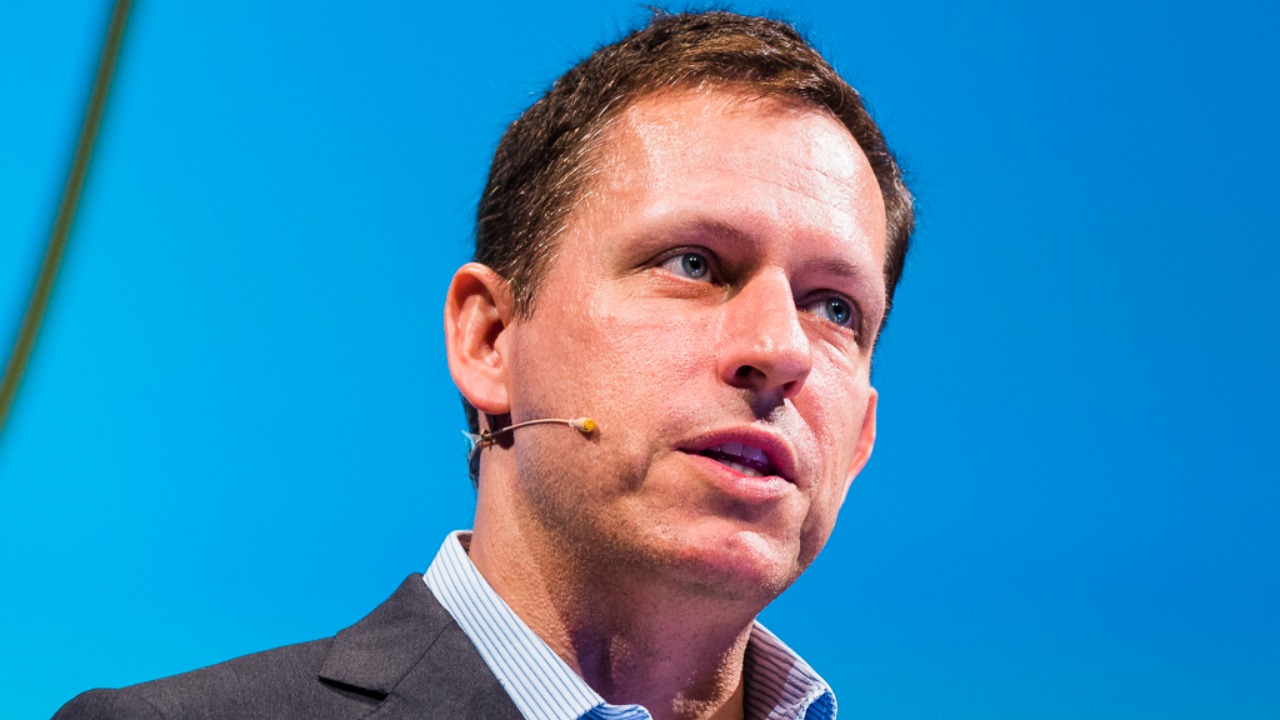
Peter Thiel is walking away from the market’s hottest artificial intelligence trade and toward the software giants that sit on top of it. By unloading his entire Nvidia position and redirecting capital into Microsoft and Apple, he is signaling that the next phase of the AI boom may reward platform scale and ecosystem control more than chip euphoria. The shift also raises a sharper question for investors: if one of Silicon Valley’s most famous contrarians is cashing out of the AI poster child, how late is the current party?
From AI darling to trimmed position
Thiel’s move starts with a blunt fact: he is out of Nvidia. Thiel Macro, the hedge fund led by the Palantir co-founder, sold its entire stake in Nvidia during the third quarter, exiting a position that had ridden the surge in demand for AI accelerators. At the same time, the fund also reduced exposure to Tesla, another market favorite tied to automation and advanced computing, underscoring a broader pullback from the most aggressively priced AI-linked names. In regulatory filings, the portfolio shift stands out not as a minor trim but as a clean break from one of the market’s most celebrated growth stories.
The decision did not occur in isolation. Earlier filings already showed that Billionaire Peter Thiel had been paring back exposure to what many investors now view as a crowded AI trade, stirring talk that a bubble may be forming around the sector’s top chip names. In that context, dumping a top AI stock looks less like a sudden change of heart and more like the culmination of a thesis that valuations have run ahead of fundamentals. When I look at the pattern across his holdings, I see a deliberate rotation away from pure hardware beneficiaries of AI hype and toward companies that can monetize AI through software, services, and devices over a longer horizon.
Why a legendary tech investor is rotating into Big Tech
To understand why this matters, it helps to remember who is making the call. Peter Thiel is a legendary figure in the tech world, a cofounder of PayPal and Palantir and an early backer of Face, whose track record has often involved taking the other side of consensus. When someone with that history abandons the market’s favorite AI chip stock, it sends a signal that the easy part of the trade may be over. In my view, his reputation for spotting inflection points is part of why this portfolio reshuffle is drawing so much attention across Wall Street and Silicon Valley.
The other part is where the money is going. Thiel did not simply retreat to cash. Instead, he used the proceeds from selling Nvidia and Tesla to buy into Microsoft and Apple, two of the largest companies on the planet and central players in the AI race. According to detailed breakdowns of his third quarter activity, Nvidia and Tesla had delivered impressive gains, and Thiel chose that moment of strength to rotate into Microsoft and Apple. I read that as a classic risk management move: harvest profits from the most speculative winners and redeploy into dominant platforms that can still benefit from AI, but with more diversified revenue streams and arguably more durable competitive moats.
Microsoft and Apple replace Nvidia at the core of the portfolio
The most striking detail in the filings is how decisively Thiel elevated Microsoft and Apple in his portfolio hierarchy. After the trades, Apple and Microsoft effectively replaced Nvidia as core holdings, absorbing billions of dollars that had previously been tied up in the chipmaker. One report on his third quarter positioning notes that Apple, Microsoft replace Nvidia as the main destinations for capital freed up by the sale. That is not a marginal tweak, it is a statement that the center of gravity in his AI strategy now lies with software ecosystems and consumer hardware rather than with the chips that power them.
Another detailed breakdown of his trades reinforces the same picture. It shows that Peter Thiel, Tesla and Nvidia, Microsoft and Apple, Nvidia are all intertwined in a single strategic pivot: he sold Tesla and Nvidia but purchased Microsoft and Apple in the same quarter. I see that as a bet that AI value will increasingly accrue to companies that can integrate models into productivity suites, operating systems, and devices, from Windows and Azure to iPhone and Mac. Instead of relying on one chip supplier’s pricing power, he is aligning with the platforms that decide how AI is packaged, distributed, and monetized for billions of end users.
Bubble fears and the search for durable AI exposure
Underneath the ticker symbols, Thiel’s trades reflect a deeper concern about where we are in the AI cycle. One report on his activity describes how he Peter Thiel Dumps Entire Nvidia Stake, Slashes Tesla Holdings Amid Growing AI Bubble Fear, Shifts Billions Toward Thes other names, explicitly tying his exit to worries that AI enthusiasm has inflated valuations to precarious levels. When I connect that to his long history of contrarian calls, it looks like a classic attempt to step aside before sentiment turns, even if the underlying technology remains transformative. He is not abandoning AI as a theme, he is changing how he wants to be exposed to it.
That nuance is crucial. Another analysis of his trades notes that he did not simply rotate into defensive sectors, he bought more of the very companies that are embedding AI into everyday tools and services. In that sense, his bubble concern seems focused on specific pockets of the market, particularly the most crowded chip names, rather than on AI as a whole. By favoring Microsoft and Apple, he is effectively saying that the safest way to ride the AI wave may be through diversified giants that can absorb volatility in one product line with strength in others, from cloud subscriptions to iPhone upgrades.
The overlooked AI bet hiding behind the Nvidia sale
There is another layer to Thiel’s repositioning that has attracted attention: his interest in a long-running AI winner outside the usual mega-cap suspects. One detailed breakdown of his trades highlights that he sold Nvidia and used part of the proceeds to buy an AI-related stock that has risen 476,900% since its IPO in March 1986. The report describes how Palantir Billionaire Peter Thiel Sells Nvidia and Buys, Stock Up, Since Its IPO, The Motley Fool, Pal, underscoring that his AI exposure is not limited to the obvious chip and platform plays. When I look at that choice, I see a preference for companies with long operating histories in data and analytics, where AI is an extension of an existing business rather than a brand new bet.
That same analysis, along with the separate note that Nov, Key Points, Thiel Macro, Peter Thiel, Nvidia are central to the story, suggests that Thiel Macro is building a layered AI strategy. At the top sit Microsoft and Apple, which control the operating systems, app stores, and cloud platforms where AI will be consumed. Beneath that are specialized AI and data companies that have already compounded value for decades. By exiting Nvidia at what could be a euphoric moment and reallocating across this stack, Thiel is effectively betting that the most sustainable AI returns will come from owning the rails and the data, not just the chips that process it.
More From TheDailyOverview
- Tennessee loses $2.6B megafactory and faces major layoffs
- Retired But Want To Work? Try These 18 Jobs for Seniors That Pay Weekly
- What to do with your pennies after the U.S. stops minting them
- Home Depot CEO warns of a troubling customer trend in stores

Elias Broderick specializes in residential and commercial real estate, with a focus on market cycles, property fundamentals, and investment strategy. His writing translates complex housing and development trends into clear insights for both new and experienced investors. At The Daily Overview, Elias explores how real estate fits into long-term wealth planning.

