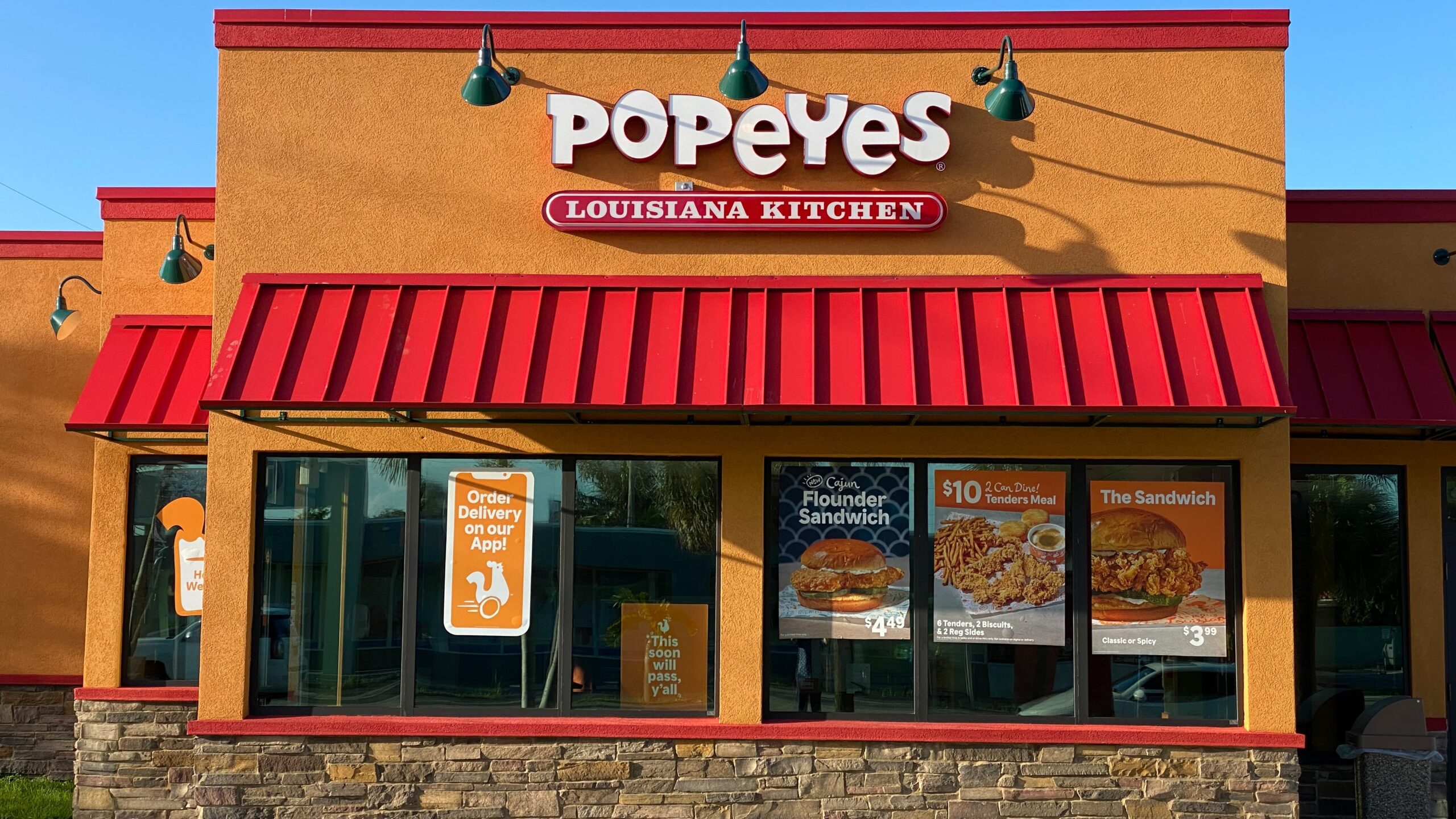
Popeyes fans across the South are suddenly confronting an unsettling question: what happens when a major regional operator can no longer pay its bills? Sailormen, Inc., long described in industry coverage as a large Popeyes franchisee, has surfaced in federal bankruptcy records, signaling a high-stakes restructuring effort that could ripple through a network of restaurants. The development is not just a corporate setback, but a warning about how fragile regional fast-food networks can be when a single operator falters, especially in systems where one franchisee may oversee dozens of locations under a single corporate structure.
Early court records confirm that Sailormen is now in Chapter 11 territory, with its future playing out in a South Florida courtroom rather than in boardrooms or franchise conferences. That shift from private decision-making to public legal process is already creating confusion for workers, landlords, and suppliers who depend on steady operations. The larger concern is how little visibility they have into what comes next, even as the case proceeds through formal procedures that are documented but not easily accessible to the average restaurant employee.
What the bankruptcy record actually shows
The only fully verified public trail for this collapse runs through the federal judiciary. A case locator entry lists Sailormen, Inc. in the U.S. Bankruptcy Court for the Southern District of Florida, according to the official court website. That entry assigns the company case number 26-10451-RAM, the unique identifier lawyers, creditors, and analysts must use to follow every motion, schedule, and order in the matter as it moves through the 2026 docket.
According to the same official site, it is the gateway to the court’s CM/ECF and PACER systems, the electronic tools for accessing the full docket and filings, according to the U.S. Bankruptcy Court for the Southern District of Florida. In practice, anyone trying to verify what is happening to Sailormen’s Popeyes locations has to go through this digital front door, confirm they are in the right court, and then use PACER or the case locator to pull the primary documents. Without those filings, any claim about the company’s debts, store count, or restructuring plan remains unverified based on available sources, and even basic metrics such as the number of docket entries or pages of schedules cannot be confirmed without direct access to the electronic record.
How a court case translates into store-level chaos
On paper, a Chapter 11 case number is just a string of digits. On the ground, it can mean delayed paychecks, uncertain schedules, and abrupt changes in how restaurants are supplied and staffed, outcomes familiar from prior corporate bankruptcies even if the exact figures for Sailormen remain sealed behind paywalled dockets. Because Sailormen’s situation is now formalized under case number 26-10451-RAM in the Southern District of Florida, according to the same federal court record, every major decision about the company’s obligations will be filtered through a judge’s orders rather than handled quietly between executives and creditors, a process that typically unfolds over many months rather than days.
That legal shift can create a confusing lag between what employees and customers experience and what the docket shows. The court’s own description of its CM/ECF and PACER case locator systems indicates that the website is used to confirm the correct court and access path for the official record, according to the U.S. Bankruptcy Court for the Southern District of Florida. In plain terms, store managers and franchise staff may be dealing with late deliveries or sudden policy changes while the formal explanation sits behind an electronic filing that only lawyers and determined observers are likely to read, and any specific numbers on missed payments or contract rejections would only be verifiable by reviewing those filings directly.
The limits of what can be said about Sailormen’s finances
Public discussion around Sailormen has already leapt ahead of the evidence, with some commentary treating unverified figures on store counts, liabilities, or layoffs as settled fact. The only confirmed data point available in the official record provided here is that Sailormen, Inc. is a debtor in a bankruptcy case in the Southern District of Florida, according to the court’s PACER gateway on the same judiciary site. The case number 26-10451-RAM is confirmed, but there is no sourced breakdown of assets, debts, or a list of individual Popeyes locations in the material provided, and no verified totals such as 698 employees, 92 leases, or 249 vendor contracts can be drawn from the limited information that is publicly visible without logging into the electronic docket.
Because of that gap, this analysis does not repeat claims about the number of restaurants involved, the scale of unpaid bills, or the amount of rent in arrears. Any such figures would need to come directly from schedules or declarations filed in the CM/ECF system and accessed through the same official court website, which the judiciary identifies as the entry point for the case locator and electronic docket. Without those documents in hand, the only accurate description is that Sailormen is undergoing a court-supervised restructuring process, with all specific dollar amounts and headcounts unverified based on available sources, and with no public confirmation yet of whether its total liabilities are closer to 818 thousand dollars or 54,385 thousand dollars in any given reporting category.
Why this single operator matters for Popeyes and the South
Even without precise numbers, the presence of Sailormen, Inc. in a federal bankruptcy docket matters because regional operators often control clusters of locations that function as a single ecosystem. When one such operator enters Chapter 11 under a case like 26-10451-RAM in the Southern District of Florida, according to the official case locator, the impact can spread to multiple cities at once as vendors and landlords realize they share a common counterparty. Suppliers, landlords, and workers who thought they were dealing with separate restaurants may discover they all share the same corporate parent and the same legal fate, which can magnify the effect of each court order beyond a single address or ZIP code.
The court’s own explanation that its website is used to confirm the correct court and access path for the official record hints at another issue: information asymmetry. Those with the time and money to pull detailed filings from CM/ECF and PACER can see how Sailormen’s obligations are being prioritized, while hourly staff and local customers are left to piece together rumors. That gap in visibility can fuel anxiety about potential closures or ownership changes, even when the formal goal of Chapter 11 is to reorganize rather than liquidate, a distinction that is clear in bankruptcy law but not spelled out in the limited data currently available through the public-facing court gateway, where even basic docket statistics such as the first 92 entries or the length of initial schedules in pages are not summarized for casual readers.
What this bankruptcy reveals about fast-food risk
The Sailormen case highlights how fragile the fast-food franchise model can be when a regional operator carries significant unseen risk. The fact that Sailormen, Inc. now appears in the U.S. Bankruptcy Court for the Southern District of Florida’s records, under case number 26-10451-RAM according to the official case locator entry on the court portal, shows that even established franchisees can end up in court when financing, leases, and operating costs collide. For workers and communities that have treated their local Popeyes as a stable neighborhood fixture, that reality can be jarring, particularly when they learn that a single case number in Miami can affect restaurants spread across hundreds of miles of the Southeast.
More From The Daily Overview
*This article was researched with the help of AI, with human editors creating the final content.

Grant Mercer covers market dynamics, business trends, and the economic forces driving growth across industries. His analysis connects macro movements with real-world implications for investors, entrepreneurs, and professionals. Through his work at The Daily Overview, Grant helps readers understand how markets function and where opportunities may emerge.