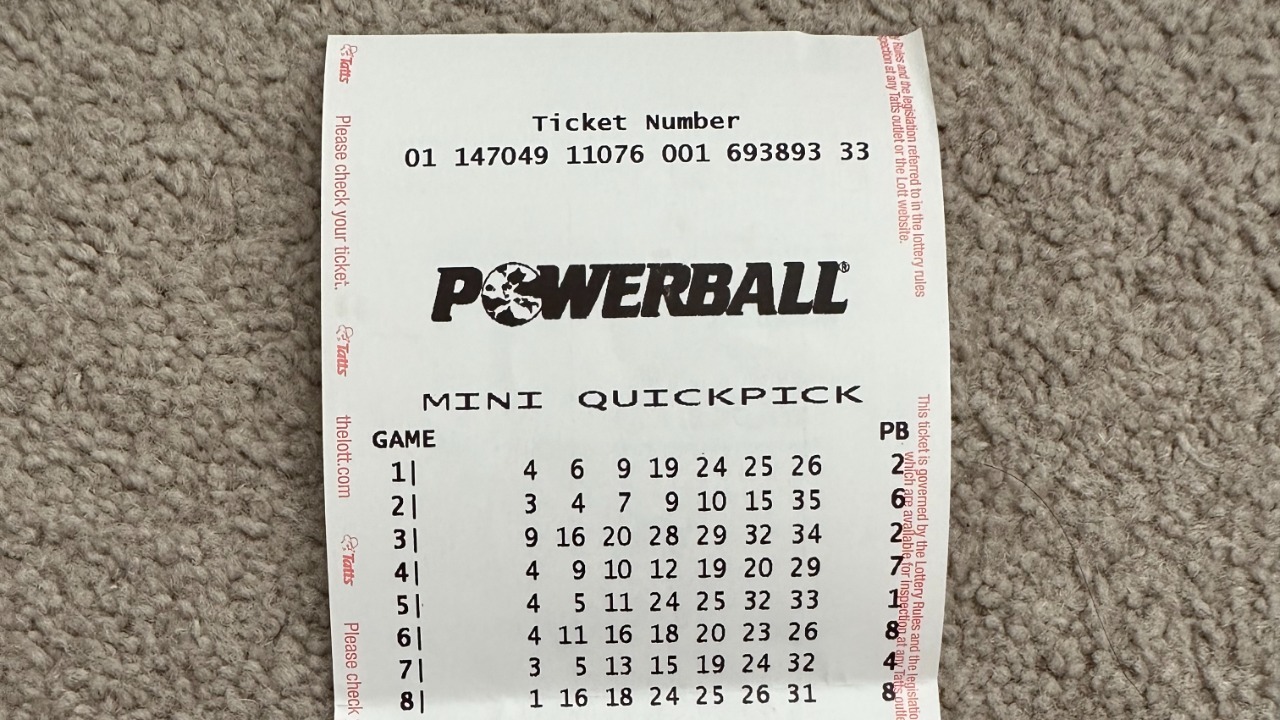
Powerball’s headline jackpots are designed to dazzle, but the number that really matters is what lands in a winner’s bank account after the IRS and state revenue departments take their share. A $740 million advertised prize sounds life changing, yet the actual payout can shrink dramatically once federal withholding, top tax brackets, and local rules are applied. I want to walk through how that transformation happens, step by step, so the real value of a nine-figure win is clear rather than mythical.
For a $740 million Powerball jackpot, the gap between the billboard number and the spendable cash can easily run into hundreds of millions of dollars. The choice between lump sum and annuity, the winner’s home state, and even how quickly they assemble a tax team all shape the final figure that survives the tax gauntlet.
How a $740 million Powerball jackpot is actually paid out
The first big haircut happens before taxes, when a winner chooses between the annuity and the lump sum. Powerball’s advertised $740 million figure reflects an annuity paid over 30 years, funded by a portfolio of bonds, not a pile of cash sitting in a vault. The cash value is typically much lower, often in the range of 50 to 60 percent of the headline amount, which means a $740 million jackpot might translate into a lump sum somewhere around the mid $300 million to low $400 million range, depending on interest rates and the specific draw structure, as illustrated in prior jackpot analyses.
Most winners historically opt for the immediate cash, trading a larger theoretical annuity for control and flexibility. That choice locks in the lower cash value as the starting point for tax calculations, not the $740 million headline. The annuity, by contrast, would spread payments over decades, with each annual installment taxed in the year it is received, a structure that can change the timing of tax bills but not the reality that the IRS treats lottery winnings as ordinary income, as detailed in federal tax guidance on gambling and prize income.
Federal taxes: the first and largest bite
Once the lump sum is determined, federal taxes move in quickly. Lottery operators are required to withhold 24 percent of large prizes for the IRS, so a hypothetical $380 million cash option on a $740 million jackpot would immediately lose about $91.2 million to mandatory withholding. That initial cut is only a down payment, because the top federal income tax rate on high earners is higher than the flat withholding rate, a gap that becomes clear when comparing the 24 percent withholding to the 37 percent top bracket in current IRS tables.
In practice, nearly the entire lump sum sits in the highest federal bracket, so the winner’s true federal bill is closer to 37 percent of the taxable amount, minus any deductions and credits. Using that same $380 million example, a rough federal liability at 37 percent would be about $140.6 million, meaning the winner could owe an additional tens of millions of dollars at tax time beyond the initial withholding. The IRS treats lottery winnings as ordinary income, not capital gains, so there is no preferential rate, a point reinforced in official lottery income FAQs that spell out how these windfalls are reported on a federal return.
State and local taxes: where you live can cost tens of millions
After the federal government, state and sometimes city tax rules determine how much more of the jackpot disappears. Some states, including Florida and Texas, do not tax lottery winnings at the state level, which means a winner living there only faces federal income tax on the prize. Others, such as New York and California, impose high marginal rates that can add double digit percentages on top of the federal bill, a difference that can swing the after tax outcome by tens of millions of dollars according to state by state income tax comparisons.
State rules also vary on where the tax is owed, which can depend on where the ticket was purchased, where the winner resides, or both. In some cases, a nonresident who buys a winning ticket in a high tax state can face withholding there and then claim a credit back home, a complexity that shows up in multi state lottery tax summaries. Local income taxes, such as those in New York City or certain Ohio municipalities, can further trim the payout. For a $380 million lump sum, a combined state and local rate in the 10 percent range would mean roughly $38 million more in taxes, while a winner in a no tax state would keep that entire slice.
Running the numbers: what a $740 million winner might actually keep
Putting the pieces together, the path from a $740 million headline to the money a winner can actually spend is stark. If the cash value is roughly $380 million and the winner lives in a state with no income tax on lottery prizes, the 37 percent federal rate would cut the haul by about $140.6 million. After subtracting that from the lump sum, the winner would be left with around $239.4 million before any planning moves, a figure consistent with prior large jackpot after tax breakdowns that show winners keeping a bit more than half of the cash option.
Shift the same $380 million cash prize to a high tax state and the picture changes again. Layering in a combined state and local rate near 10 percent would remove another $38 million, dropping the take home to roughly $201.4 million. In some jurisdictions, top marginal rates climb even higher, and certain cities add their own income taxes, which can push the total effective rate on the lump sum into the mid 40 percent range. These scenarios mirror the range of outcomes seen in past Powerball and Mega Millions wins, where winners in low tax states have kept substantially more than peers in places with aggressive lottery tax regimes.
Planning, pitfalls, and how winners can protect what is left
Once the tax math is clear, the next challenge is not losing additional millions to poor planning. A sudden nine figure windfall can trigger estate tax issues, family disputes, and fraud risks if a winner rushes in without professional help. Many financial planners recommend assembling a team that includes a tax attorney, a certified public accountant, and a fiduciary financial adviser before claiming the prize, a strategy that has become common in high profile wins documented in detailed winner case studies. That team can help decide whether to claim as an individual or through a trust, how to structure gifts, and how to invest the remaining funds in a diversified portfolio instead of a handful of speculative bets.
There are also behavioral pitfalls that can quietly erode the after tax fortune. Large purchases such as multiple homes, luxury cars like a 2025 Mercedes AMG GT, or a fleet of boats bring ongoing property taxes, insurance, and maintenance costs that compound over time. Friends and relatives may expect loans or gifts, and poorly structured generosity can create additional tax liabilities or legal exposure. Financial counselors who have worked with past lottery winners often point to disciplined budgets, conservative withdrawal rates, and clear boundaries with family as the difference between a jackpot that lasts for generations and one that evaporates within a decade, themes echoed in long term planning guidance for sudden wealth.
More From TheDailyOverview
- Tennessee loses $2.6B megafactory and faces major layoffs
- Retired But Want To Work? Try These 18 Jobs for Seniors That Pay Weekly
- What to do with your pennies after the U.S. stops minting them
- Home Depot CEO warns of a troubling customer trend in stores

Julian Harrow specializes in taxation, IRS rules, and compliance strategy. His work helps readers navigate complex tax codes, deadlines, and reporting requirements while identifying opportunities for efficiency and risk reduction. At The Daily Overview, Julian breaks down tax-related topics with precision and clarity, making a traditionally dense subject easier to understand.

