Artificial intelligence has turned into the market’s favorite story, lifting everything from chipmakers to obscure software vendors. If that enthusiasm cracks in 2026, the damage is unlikely to be evenly spread. The most vulnerable names are the ones priced for perfection, loaded with debt, or dependent on AI demand that may not materialize on the timetable investors expect.
I see three clusters of stocks that could be hit hardest if the AI trade reverses: overleveraged infrastructure plays, richly valued “AI platforms,” and speculative quantum computing names. Each group has benefited from the same narrative tailwind, and each could face a brutal reset if investors decide the AI boom has run ahead of economic reality.
Why AI bubble risks are rising into 2026
Market optimism around artificial intelligence has been building for years, but the tone shifted as investors headed into 2026. As trade tensions eased and policy uncertainty faded, capital rotated aggressively into growth themes, with AI at the center of that shift, a pattern highlighted in analysis of whether we are entering 2026 in an Are bubble. That enthusiasm has pushed valuations in parts of the sector to levels that assume years of uninterrupted growth, even as executives and regulators warn that AI adoption will be uneven and politically sensitive.
Evidence is piling up that at least some of this exuberance looks like classic bubble behavior. One detailed review of AI-linked stocks described how revenue growth, while impressive, is increasingly being used to justify extreme multiples and aggressive capital spending, raising the question of An AI bubble rather than a measured investment cycle. That same work stresses that some AI leaders may still justify their prices over the long haul, but it also underscores how fragile sentiment could become if growth slows or capital costs rise.
Oracle and the debt-fueled AI infrastructure race
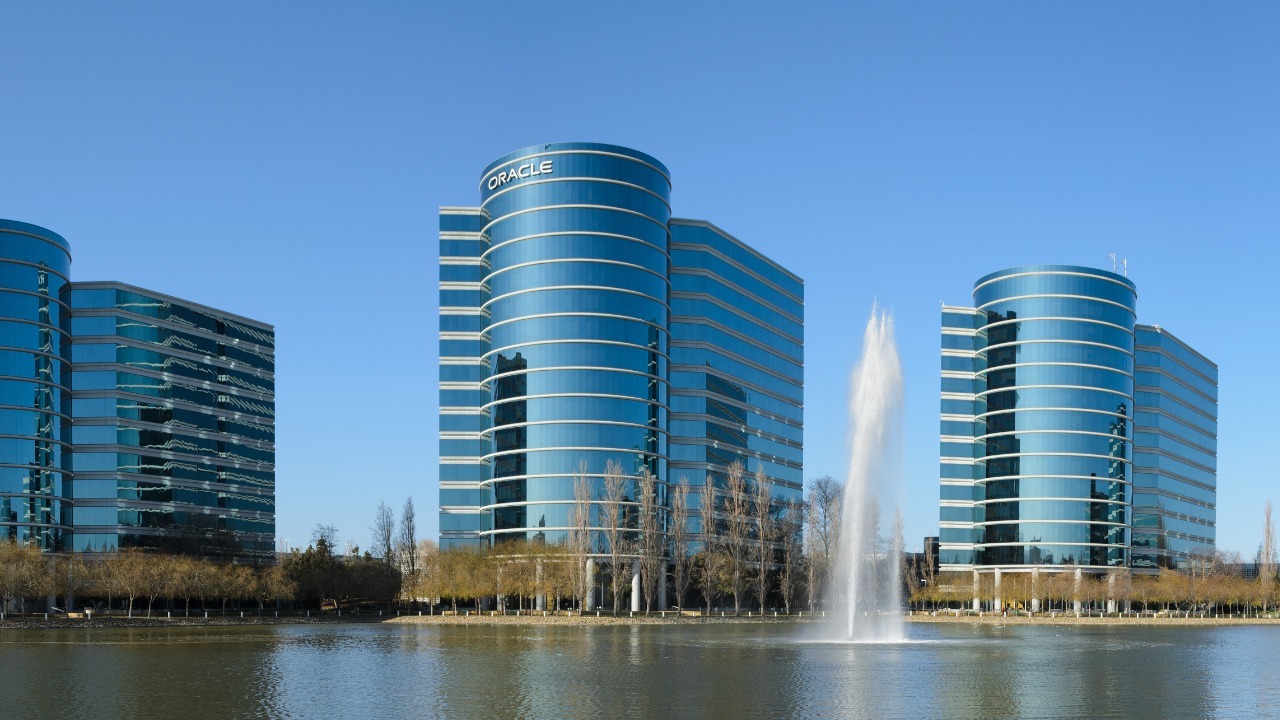
Among large incumbents, Oracle stands out as a company that has bet heavily on AI infrastructure while leaning on its balance sheet. The company’s all-out push into data centers and AI capacity has been financed in part with borrowing that has pushed its debt into Key Points that analysts describe as junk bond territory. That kind of leverage can amplify returns when demand is booming, but it also leaves little margin for error if customers slow their AI spending or shift workloads to rivals.
If the AI buildout cools, Oracle would be stuck with expensive capacity and a heavier interest burden, a combination that could compress margins and force cutbacks just as competitors press their advantage. Commentators who have modeled potential downside scenarios argue that the stock’s current valuation leaves it exposed to a sharp repricing if investors decide the AI infrastructure race will not deliver the cash flows implied by today’s prices, a concern echoed in broader lists of AI names that could collapse if sentiment turns.
CoreWeave: overleveraged in the AI data center boom
While AI data center operator CoreWeave has become a poster child for the new “neocloud” providers, its capital structure makes it particularly sensitive to any slowdown. Analysts note that While AI demand has helped CoreWeave, listed as NASDAQ: CRWV, roughly triple its revenue over the past year, the company has also taken on substantial debt to fund rapid expansion, a dynamic that has led some to describe CoreWeave as While AI overleveraged. That combination of fast growth and heavy borrowing is exactly what tends to unravel when a hot theme cools.
If the AI bubble truly bursts, the implications for CoreWeave would be existential, because its business is so tightly tied to training and inference workloads that could shift back to hyperscalers or slow altogether. Even without a full-blown collapse, analysts warn that a modest pullback in AI spending or a move by large cloud providers to internalize more of their own GPU capacity could squeeze CoreWeave’s margins and undermine its growth story, a risk spelled out in scenarios that begin with the phrase If the AI bubble truly bursts and extend to cases where hyperscalers simply eliminate the middleman.
Quantum computing darlings: Rigetti, D-Wave, and IonQ
Beyond AI infrastructure, some of the most stretched valuations sit in quantum computing, a field that has been swept up in the same speculative fervor. Quantum computing stocks Rigetti Computing, which trades as NASDAQ: RGTI, along with D-Wave and IonQ, have generated what one analysis described as “monster returns” in the last three years, with Rigetti, D-Wave, and IonQ advancing as much as 1,290%, a surge documented in coverage of Quantum computing stocks. Those gains have come long before the technology is commercially mature, which leaves these companies acutely exposed if investors lose patience.
Some pundits have already argued that, since useful quantum computers are likely a decade away, buying Rigetti, Wave, or IonQ at current prices could be a recipe for steep losses if the broader market bubble bursts. That skepticism is captured in commentary that begins with “I’ve heard some pundits argue” and goes on to warn that a crash could happen in 2026, particularly for speculative names like Rigetti and Wave that have raced ahead of fundamentals, as highlighted in a detailed breakdown of Rigetti and Wave. If the AI and broader tech bubble deflates, these quantum names could see some of the sharpest reversals as investors rotate back into companies with near-term cash flows.
Speculative AI “platforms” and the Palantir warning
Another weak link sits in software companies that have rebranded themselves as AI platforms and now trade more on narrative than on cash generation. One widely watched example is Palantir, which has been pitched as a core beneficiary of AI adoption in government and industry. As a result, Palantir is trading at a valuation that some analysts argue is difficult to justify by its quick growth rates alone, a concern flagged in a review of how this popular AI’s stock bubble could burst in 2026 that notes, “As a result, Palanitr is” priced aggressively relative to fundamentals, a phrase preserved in the discussion of Two words that have often been associated with each other, AI and bubble.
These kinds of stocks are particularly vulnerable because they sit at the intersection of hype and hope. If customers delay AI projects, or if competitors undercut pricing, the market could quickly reassess how much it is willing to pay for each dollar of Palantir’s revenue. Analysts who have mapped out potential downside scenarios for AI-linked names often group such software platforms alongside infrastructure and quantum plays in lists of companies that could collapse if the AI trade unwinds, precisely because their valuations leave little room for disappointment.
Meta’s Reality Labs and other costly side bets
Even among mega-cap tech companies, not every AI-adjacent project looks equally resilient. One must keep in mind this is a company whose Reality Labs has racked up over $70 billion in cumulative losses, driving Meta Platf to pour enormous sums into virtual and augmented reality alongside its AI investments, a figure cited verbatim in analysis of the One of the weakest links within the AI bubble. While Meta’s core advertising business remains highly profitable, that scale of investment in side bets raises questions about how patient investors will be if the broader tech trade stumbles.
If AI enthusiasm fades, shareholders may become less willing to subsidize long-duration projects that do not clearly contribute to near-term earnings. That could force companies like Meta to rein in spending on Reality Labs and other experimental units, potentially crystallizing losses and reducing the optionality that once justified premium valuations. Analysts who scan the AI ecosystem for fragile points often highlight these costly side bets alongside more obvious high-flyers, grouping them with other names that could be hit hard if the AI bubble pops, as seen in curated rundowns of Honorable mentions that extend beyond the headline names.
How a broader market bubble could magnify the damage
The risk for AI-linked stocks is not just that their own fundamentals disappoint, but that they are sitting inside a larger market bubble. Some strategists have argued that the entire stock market is stretched, with one detailed forecast warning that a broad stock market bubble will burst in 2026 and that at least one popular stock will crash, a scenario laid out in analysis that begins with “Prediction: This Stock Market Bubble” and goes on to note that, However, looking at its percentage gain does not reveal much about the company’s underlying valuation, a caution captured in the discussion of However valuations. If that broader bubble bursts, high-multiple AI names would likely be among the first to re-rate.
Commentary on whether investors should worry about an AI bubble in 2026 emphasizes that the sector’s fate is tied to macro conditions as well as to its own growth trajectory. Analysts who have sifted through the evidence conclude that while some AI leaders may be worth holding for the long haul, others look like classic late-cycle excesses that could see their share prices cut dramatically if risk appetite fades, a view summarized in work that asks whether you should worry about an AI bubble and concludes that the evidence is piling up, as seen in the discussion of So what all of this evidence suggests. In that kind of environment, the overleveraged and the overhyped would be the first casualties.
More From The Daily Overview

Grant Mercer covers market dynamics, business trends, and the economic forces driving growth across industries. His analysis connects macro movements with real-world implications for investors, entrepreneurs, and professionals. Through his work at The Daily Overview, Grant helps readers understand how markets function and where opportunities may emerge.

