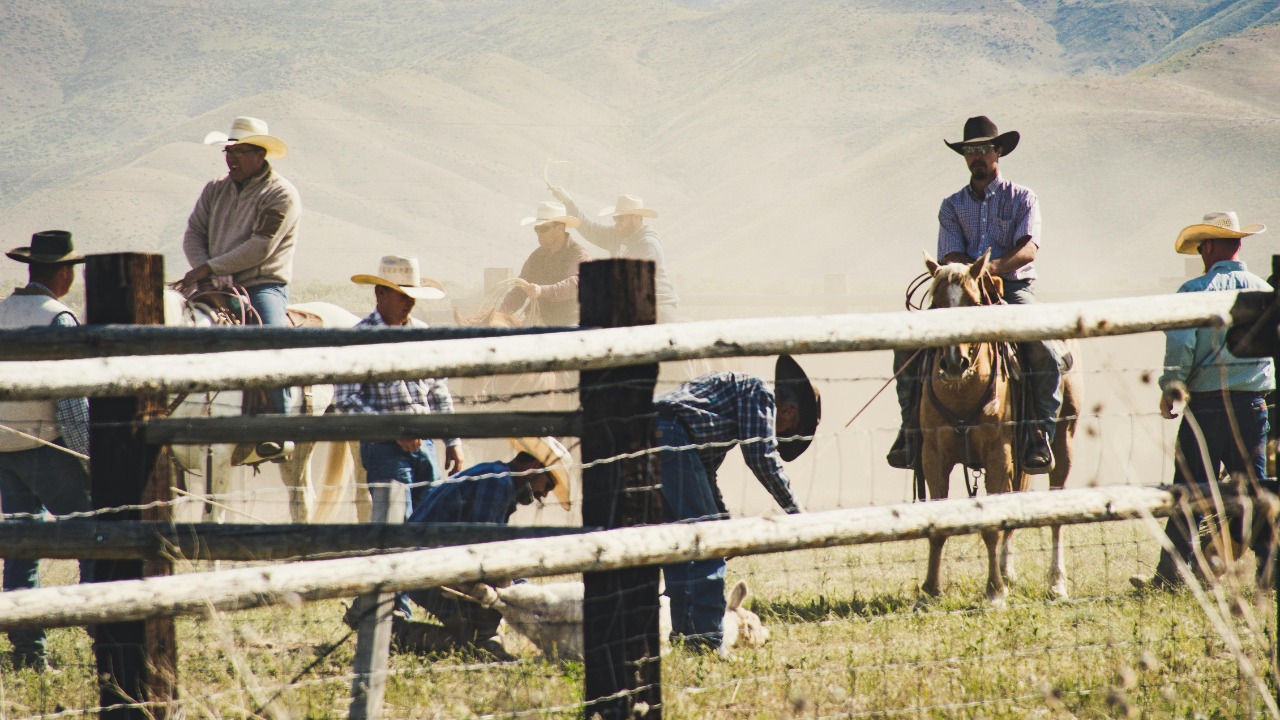
Beef has become one of the most volatile items in the American grocery cart, with prices swinging sharply even as ranchers say they are barely breaking even. The political push to make steaks cheaper for families is colliding with the hard math of raising cattle, leaving producers squeezed and shoppers facing a confusing mix of discounts and record highs. I set out to trace how that tension is reshaping the beef economy, from the pasture to the meat case.
Behind the headlines about lower prices is a deeper story about power, timing, and who absorbs the risk when Washington leans on the food system. Ranchers are watching their margins evaporate just as consumers are told relief is on the way, and the result is a system that looks less stable for everyone who depends on it.
Political pressure meets ranch country reality
When President Donald Trump publicly pressed for cheaper beef, the message landed like a thunderclap in cattle country. Futures markets reacted quickly, with reports that cattle contracts dropped after his comments about lowering beef prices, a signal to ranchers that the value of their animals could fall even as their costs stay high. For producers who had already endured drought, shrinking herds, and volatile feed bills, the idea that federal pressure might push prices down further felt less like consumer relief and more like a direct hit to their livelihoods, a point that has been underscored as Ranchers voiced anger at Trump’s intervention.
The political calculus is straightforward, cheaper steaks are popular with voters who have watched grocery bills climb. The economic reality on the ground is far more complicated. Ranchers argue that they are already price takers in a concentrated meatpacking industry, and that when the White House leans on the supply chain, the pressure tends to flow backward onto them rather than onto processors or retailers. That is why many in cattle country saw Trump’s push as a move that might win points in suburban supermarkets while deepening the financial strain in rural communities that depend on cattle checks to pay their own rising bills.
Record highs, then a sudden push down
To understand why ranchers are so alarmed by the current push for lower prices, it helps to look at the roller coaster they have just ridden. Earlier in 2025, Beef prices hit record highs as the national cattle herd shrank and demand at restaurants and grocery stores stayed strong. For a brief moment, it looked as if ranchers might finally claw back some of the income they had lost during years of drought and pandemic disruptions. Instead, the spike triggered a political backlash, with Trump promising to bring those prices down and framing the issue as a matter of fairness for consumers.
Ranchers say that sequence, record highs followed by a public campaign to push prices lower, left them exposed on both ends. Many had already locked in higher costs for feed, fuel, and labor, betting that strong cattle prices would last long enough to cover those commitments. When the president then signaled that his administration was “working to lower beef prices,” producers feared that packers and retailers would use that rhetoric as leverage to negotiate cattle prices down more aggressively. The result is a sense in rural communities that they are being whipsawed by forces far beyond their control, punished first for high prices they did not fully capture and then again when the political system demands a correction.
Why shoppers still see expensive steaks
From a shopper’s perspective, the story can be baffling, they hear that ranchers are hurting and that Washington wants cheaper beef, yet the ribeye in the case still carries a premium price tag. One reason is that the supply of cattle remains historically tight, with the United States experiencing its lowest cattle count in 60 years after years of herd liquidation. At the same time, demand for high quality cuts has not gone away, especially for premium labels like USDA Prime and Wagyu, which continue to command top dollar even as some ground beef specials get cheaper.
There are also new biological and logistical pressures that keep costs elevated. Experts have pointed to an infesting parasite that was thought to have been eradicated from the United States in the 1960s but has now been detected again in cattle, spreading from certain regions and adding veterinary and management costs for producers who must protect their herds. That complication, combined with strong consumer appetite for steaks and burgers, helps explain why premium beef and steak have seen some of the highest year over year cost increases, even as political leaders talk about bringing prices down.
Herd rebuilding is slow, and relief will not be quick
Even if political pressure eases and weather conditions improve, the biology of cattle production means that any meaningful increase in supply will take years. Livestock economists note that it can take several years from the birth of a calf to the moment that animal becomes market ready beef, a lag that makes the sector far less nimble than, say, poultry or pork. When ranchers cut back their herds during drought or in response to low prices, the effects ripple forward for a long time, which is why experts warn that shoppers are unlikely to see sustained relief at the meat counter in the near term, regardless of short term promotions.
That slow clock is especially important now that herd sizes have shrunk so dramatically. With fewer breeding animals on the ground, any effort to rebuild requires ranchers to hold back heifers that could otherwise be sold, sacrificing immediate income in the hope of future gains. Analysts who track the sector say this dynamic is one reason relief from rising beef prices could take years, particularly for higher end products such as USDA Prime and Wagyu that require more time and careful feeding to produce. As one livestock economist explained in a recent analysis, the combination of smaller herds and strong demand means the market will remain tight, a point underscored in reporting that relief could take years as herd sizes shrink.
Input costs climb while cattle checks shrink
At the same time that political leaders are urging lower beef prices, the cost of producing that beef is rising. Fertilizer, a key input for growing the hay and grain that cattle rely on, has become significantly more expensive, with recent analysis noting that Fertilizer prices range from 10 to 15 percent higher than in 2025 depending on the region. Those increases come on top of higher fuel costs for running equipment and transporting cattle, as well as higher living costs that push up wages for ranch hands and feedlot workers. The result is a widening gap between what it costs to raise an animal and what producers receive when they sell it.
That gap has reached a 10 year high according to farm policy analysts, who track the spread between farm level costs and the prices farmers and ranchers are paid. For cattle producers, this means that even if the headline price of beef in the grocery store looks strong, the share that flows back to the ranch can be surprisingly thin. When political pressure or market shifts push cattle prices down, that margin can disappear entirely, forcing some operations to borrow more heavily, delay equipment upgrades, or in the worst cases, sell off land and leave the business. It is this squeeze, rising inputs paired with volatile cattle checks, that fuels the sense among ranchers that they are being asked to subsidize cheaper steaks for everyone else.
Labeling reforms and the fight over “Product of USA”
While prices dominate the headlines, ranchers are also watching a quieter regulatory shift that could reshape how beef is marketed. As of January 1, 2026, federal rules now require that any meat labeled “Product of USA” must come from animals that were born, raised, slaughtered, and processed within the United States. For years, imported cattle or beef that underwent only minimal processing domestically could still carry that label, a practice that many American ranchers argued misled consumers and diluted the value of their own animals. The new standard is meant to align the label with what shoppers reasonably assume it means, that the beef truly comes from U.S. ranches.
Advocates for independent producers see this change as a long overdue correction that could help ranchers capture more of the premium that consumers are willing to pay for domestic meat. They argue that when shoppers pick up a package stamped “Product of USA,” they should be supporting local jobs and local herds, not a global supply chain that only finishes the product on American soil. The updated rule, described in detail by farm advocacy groups that note how As of January “Product of USA” Finally Means What You Think It Means, is expected to tighten that link. Whether it will translate into higher ranch gate prices remains uncertain, but it adds another layer to the debate over how value is shared along the beef chain.
Aid packages and who they really help
In response to broader farm sector stress, Trump has touted federal aid as proof that his administration is standing with rural America. Earlier this winter he unveiled a $12 billion aid package that was intended mostly for crop growers, a move that underscored how policy often prioritizes corn and soybeans over cattle. For ranchers, the announcement was a reminder that even when Washington opens the spigot, the money does not always flow to the parts of agriculture that are under the most pressure from political price campaigns. Many cattle producers say they feel doubly overlooked, targeted by rhetoric about high beef prices but left on the sidelines when relief is handed out.
The disconnect is especially stark in communities where cattle are the dominant economic engine. Reports from the field describe ranch families who watched Cattle prices reach record levels only to see local processing plants threatened with closure, cutting off a key market for their animals. In those places, a crop focused aid package does little to address the structural vulnerabilities in the beef supply chain, from limited processing capacity to the bargaining power of a few large packers. Ranchers argue that if Washington is serious about stabilizing beef prices for consumers, it should invest more directly in the infrastructure and risk management tools that keep cattle operations viable.
Investors, packers, and the pricing power imbalance
While ranchers and shoppers wrestle with uncertainty, investors are being told to expect continued tightness in the beef market. Projections from agricultural analysts suggest that beef production will fall another 2 percent in 2026 after an estimated 4 percent decline in 2025, a trend that would normally support higher prices. At the same time, some forecasts say retail beef prices in 2026 are likely to remain near the elevated levels seen in 2025, maintaining pressure on household budgets even if cattle prices soften. That divergence, lower production and steady consumer prices, raises questions about who is capturing the value created by scarcity.
For the large meatpacking companies that dominate slaughter and processing, a scenario of firm retail prices and weaker cattle markets can be highly profitable. They can pay less for animals while charging shoppers roughly the same, widening their margins in the middle. Financial commentary aimed at investors has highlighted this dynamic, noting that Meanwhile, USDA projections point to lower output but continued high prices. Ranchers see those same numbers and conclude that the system is tilted, with political leaders demanding cheaper beef, investors betting on strong packer profits, and the people who raise the animals left with the thinnest slice.
Consumers want bargains and transparency, not a race to the bottom
For shoppers, the tension between lower prices and a healthy ranching sector is not an abstract policy debate, it shows up in the weekly decision of whether to buy ground beef, chicken thighs, or a plant based alternative. Many families are trading down within the meat case, choosing cheaper cuts or smaller portions, even as they say they care about animal welfare, local sourcing, and fair treatment of farmers. That is where labeling reforms and origin claims become more than fine print, they are one of the few tools consumers have to align their purchases with their values without blowing up the household budget. When a package clearly states that it is a genuine Product of USA, some shoppers are willing to pay a bit more, especially if they believe that premium reaches the ranch.
I have heard from consumers who say they feel caught between sympathy for struggling ranchers and frustration at high grocery bills. They want policymakers to tackle bottlenecks and market concentration so that efficiency gains and cost savings flow through to them, not just to corporate balance sheets. They also want clearer signals about what they are buying, whether that is a steak from a local cow or a burger blended from imported trim. Until the system delivers both transparency and a fairer distribution of value, the current push for lower beef prices risks becoming a zero sum game, one where ranchers are squeezed, shoppers still pay plenty, and the real winners sit in the middle of the supply chain.
More From TheDailyOverview

Grant Mercer covers market dynamics, business trends, and the economic forces driving growth across industries. His analysis connects macro movements with real-world implications for investors, entrepreneurs, and professionals. Through his work at The Daily Overview, Grant helps readers understand how markets function and where opportunities may emerge.

