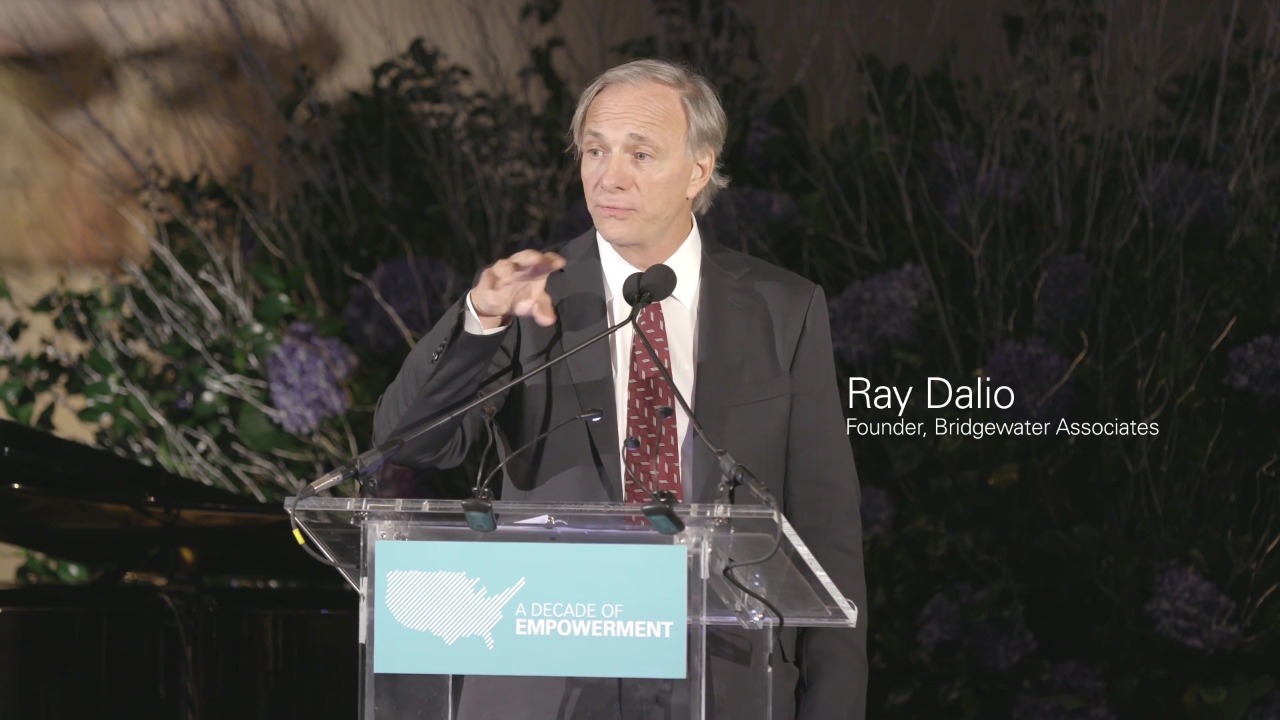
Ray Dalio is challenging one of the hedge fund industry’s most powerful trends, warning that the dominant “pod shop” model may be brilliant at generating returns today but poorly suited to surviving for decades. His skepticism lands at a moment when multi‑manager platforms are attracting capital at scale and reshaping how talent, risk and fees are shared across Wall Street.
I see his critique as less a dismissal of the strategy and more a stress test of whether these sprawling trading factories can evolve into durable institutions. The tension between short‑term performance incentives and long‑term culture, governance and client trust sits at the heart of his doubts about how long this structure can last.
What pod shops are really selling
To understand Dalio’s warning, it helps to be precise about what a pod shop is actually offering investors and traders. In the standard setup, a central firm allocates capital to multiple small teams, or “pods,” each run by a portfolio manager with a distinct mandate and their own investment strategy, while the platform tightly manages overall risk and leverage. As one primer on the structure explains, these firms allocate capital to multiple portfolio managers to enhance risk‑adjusted returns, with each pod operating semi‑independently but under a shared risk and infrastructure umbrella, so a single team’s losses do not sink the entire fund, a design that has helped define the modern Pod Shop model.
From the outside, what investors are buying is diversification and industrial‑scale execution rather than the singular vision of a star stock picker. The central platform provides technology, compliance, financing and risk controls, while pods compete internally for capital based on performance and drawdown discipline. In theory, this structure should smooth returns and reduce blow‑up risk, which is why advocates pitch it as a more resilient alternative to the traditional single‑manager hedge fund and why the question is not whether the model works in the short run, but whether it can support the kind of institutional longevity Dalio prizes.
Dalio’s core critique of the multi‑manager model
Dalio’s skepticism focuses on the gap between a structure that is excellent at producing quarterly returns and one that can endure for generations. In a recent conversation, he argued that while the multi‑manager setup might be “a totally fine way for investment management,” it is “not a fine way for building a 50-year-old” business, adding that he thinks “it’s not going to last.” That distinction between a performance engine and a lasting institution is central to his critique, because it raises questions about whether a firm built on aggressive internal competition can maintain a cohesive culture and client relationships over multiple market cycles.
He also highlights how dependent these platforms are on constant flows of talent and capital. In one detailed discussion of the structure, he notes that the model relies on recruiting and retaining elite portfolio managers who can be tempted away by better deals, and that the economics of paying out large shares of profits to pods can strain the stability of the management company itself, especially once founders start to sell down their remaining stake in the firm, a dynamic described in depth in an analysis of how Ray Dalio Says the economics play out. In Dalio’s view, that fragility makes it hard to imagine these firms compounding trust and culture over half a century the way more centralized managers have tried to do.
Why pod shops conquered the hedge fund landscape
Dalio’s doubts are colliding with an industry that has already been transformed by the very model he questions. Over the past several years, multi‑manager platforms have grown into some of the largest and most influential hedge funds in the world, with names such as Balyasny, Citadel, Millennium and Point72 now dominating the sector, the associated headlines and, seemingly, the recruiting market for top trading talent. Their pitch is straightforward: by spreading risk across dozens or even hundreds of pods, they can deliver smoother returns with tight control of exposures and drawdowns, while giving portfolio managers institutional‑grade infrastructure they would struggle to build on their own.
The success of this model has not been limited to the original pioneers. As performance and asset growth attracted attention, such funds proliferated, with veteran names including Bobby Jain and Michael Gelband launching their own multi‑manager platforms that follow the same basic template of centralized risk and decentralized alpha generation. One detailed industry account even framed the shift as “The Death of the Single‑Manager Hedge Fund,” arguing that pod shops are consuming the industry and describing “The Pod Shop Ascendancy” as a new era in which multi‑manager structures pull capital and talent away from traditional funds, a trend chronicled in an essay on How Pod Shops Are Consuming the Industry. Against that backdrop, Dalio’s warning reads less like a prediction of imminent collapse and more like a challenge to an orthodoxy that has become almost unquestioned.
The psychological and structural fault lines Dalio sees
Beyond economics, Dalio is fixated on the human dynamics inside these firms. In one televised discussion, he and his interlocutors touched on how, from the investor perspective, the model raises questions about whether it will be psychologically sustainable for portfolio managers to operate under constant pressure, with tight risk limits and the knowledge that a short losing streak can lead to a swift cut in capital or even termination, a concern explored when they noted that “we touch from the investor perspective” and asked whether that environment is “quite the motivation” for long‑term stability in a segment titled So we touch. That kind of high‑frequency accountability can sharpen performance, but it can also foster burnout, short‑termism and a transactional relationship between traders and the platform.
At the same time, Dalio is careful not to paint every firm with the same brush. He has acknowledged that not all pod shops are made the same and that there are enough variations in how they structure risk limits, compensation and culture to matter, even if they all share the same basic multi‑manager DNA, a nuance captured in a segment that opened with “Having said that, you have to realize not all pot shops are made the same. There are enough variations. Yes, they all … Right.” His point seems to be that while some platforms may evolve more durable cultures and governance, the structural incentives of the model, with its intense internal competition and rapid capital reallocation, make it harder to build the kind of cohesive, principle‑driven organization he spent decades constructing at Bridgewater.
Short‑term alpha versus long‑term resilience
Dalio’s most pointed concern is that the very features that make pod shops effective at generating short‑term alpha could undermine their resilience in a crisis. In one discussion of his comments, the hosts summarized his view that many of these multi‑strategy “so‑called pot shops” might be great at making money in normal conditions, but that the way they are structured, with crowded trades and similar risk models, could create vulnerabilities in a severe downturn, a worry captured when they said “his point seems to be that a lot of these multi stretch so‑called pot shops, they might be great at making money” but that there are aspects of the shops that will not work, a segment labeled And his point seems. If multiple platforms are running similar market‑neutral strategies with comparable stop‑loss rules, a shock could trigger simultaneous deleveraging and “stampede‑selling,” amplifying volatility rather than dampening it.
That risk is not theoretical. Analysts who have studied the rise of these firms note that, as such funds have proliferated, the concentration of similar strategies has increased the chance that a single market event could force many of them to cut risk at the same time, raising the risk of stampede‑selling across crowded positions, a scenario flagged in a detailed look at how Such funds might behave under stress. Dalio’s argument is that a model optimized for tight daily risk control and rapid capital reallocation may not be the one best suited to navigate rare, nonlinear shocks, especially if the same playbook is being run across a large share of the industry.
Can the pod shop evolve into a 50‑year institution?
For all his skepticism, Dalio is not predicting that multi‑manager platforms will disappear overnight. Instead, he is forcing a debate about what it would take for them to become the kind of enduring institutions that can survive leadership transitions, regulatory shifts and technological upheaval. In one set of takeaways summarizing his remarks, he framed the issue as whether the multistrat model is a fine way for building a long‑lived business, arguing that while it may excel at investment management, it falls short as a blueprint for a half‑century‑old firm, a distinction highlighted in a summary of Takeaways from his comments. The question is whether these platforms can adjust their incentive structures, governance and client relationships enough to close that gap.
From my vantage point, the answer will hinge on whether pod shops can move beyond being pure trading machines and develop deeper institutional identities. That could mean moderating the most extreme internal competition, investing more in shared research and culture, and building governance that is not overly dependent on a single founder or a handful of star portfolio managers. Dalio’s critique, sharpened in conversations that began around Nov 23, 2025 and echoed across multiple analyses of the model, is ultimately a challenge to an industry that has optimized for speed and scale to prove it can also deliver durability. Whether the pod shop can evolve into a true 50‑year institution will be one of the defining tests for hedge funds in the decades ahead.
More From TheDailyOverview
- Dave Ramsey says these two simple questions show whether you’re rich or poor
- Retired But Want To Work? Try These 18 Jobs for Seniors That Pay Weekly
- IRS raises capital gains thresholds for 2026 and what’s new
- 12 ways to make $5,000 fast that actually work

Grant Mercer covers market dynamics, business trends, and the economic forces driving growth across industries. His analysis connects macro movements with real-world implications for investors, entrepreneurs, and professionals. Through his work at The Daily Overview, Grant helps readers understand how markets function and where opportunities may emerge.

