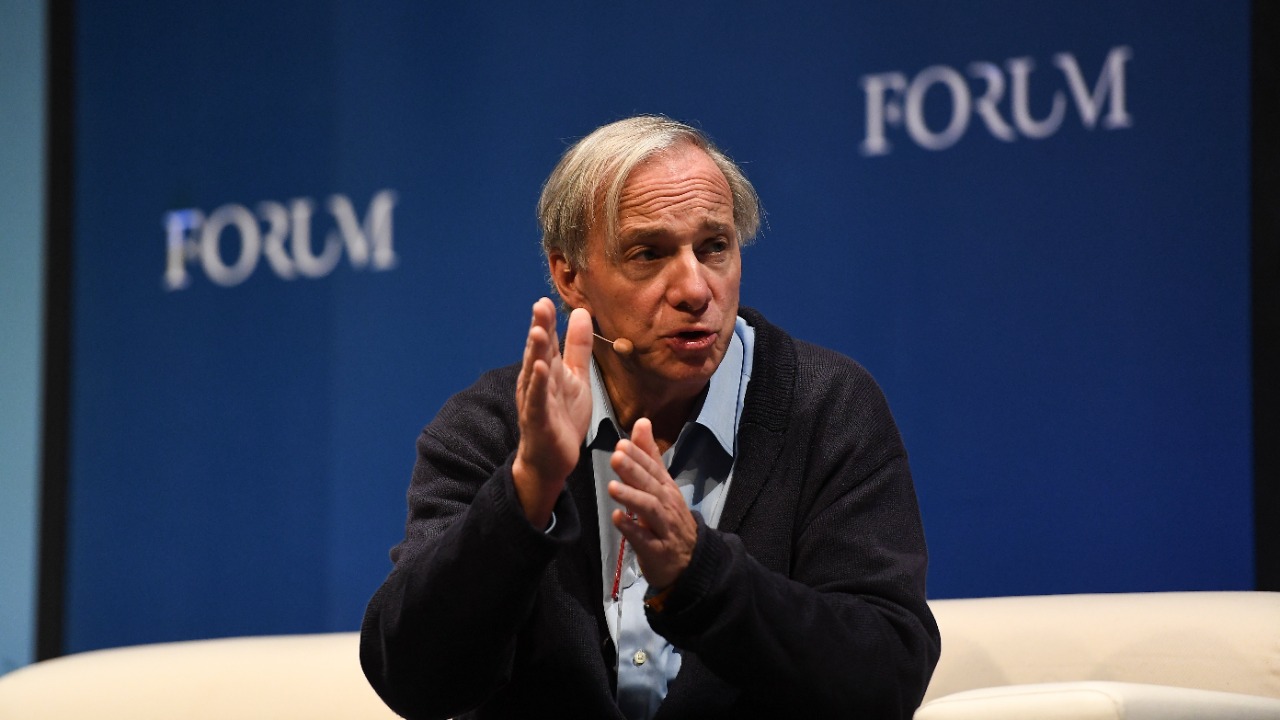
Ray Dalio turned a simple phrase into a global debate when he warned that holding too much cash could quietly erode wealth. His argument was never just about paper bills, it was about how inflation, interest rates and policy choices can turn “safe” money into a risky long term bet.
Over the past few years, I have watched Dalio move from declaring that cash is “trash” to saying that, in the right environment, cash can be “good,” and his evolution offers a practical roadmap for anyone trying to decide how much to keep in the bank versus in markets.
How Dalio’s “cash is trash” mantra took off
Dalio’s warning landed at a moment when investors were already nervous about how to protect their savings from low interest rates and rising asset prices. At the World Economic Forum in Davos, he argued that holding large cash balances was a losing strategy compared with owning a diversified mix of assets, a view that quickly became shorthand for a broader critique of sitting on the sidelines while markets climbed. His message was that in an environment of easy money and rising valuations, Investors who stayed in cash were likely to fall behind those who owned a global portfolio of stocks, bonds and other assets, a stance that was widely reported after his comments in Jan 20, 2020 and helped cement his reputation as a blunt market realist.
That same period saw a wave of commentary unpacking what “cash” really means in an investing context, distinguishing between physical currency, checking accounts and short term instruments that behave like cash. One analysis published on Jan 21, 2020 broke down how cash, from both an economic and financial perspective, tends to lag productive assets over time and highlighted how it is usually connected to low or even negative real returns once inflation is factored in, a point that echoed Dalio’s concern that idle balances can quietly lose purchasing power, as detailed in a piece titled cash is trash.
Why he argued cash was a bad long term bet
When Dalio said cash was a poor choice, he was not attacking emergency savings or short term liquidity, he was targeting the idea of parking long term wealth in bank accounts while inflation chipped away at its value. In his framework, investors needed to think in “real” terms, asking whether their money would buy more or less in the future, and he believed that in a world of aggressive monetary policy and rising asset prices, the answer for cash holders was often less. That logic underpinned his call for investors to own a diversified mix of global assets instead of clinging to nominal safety.
He later defended this stance in detail, explaining that his view came from decades of studying how different asset classes perform across cycles and how inflation interacts with interest rates. In an analysis dated Apr 12, 2020, he laid out how he evaluates various markets and argued that data on historical performance showed cash consistently lagging behind portfolios that blended stocks, bonds and other assets, reinforcing his belief that long term savers should not rely on deposits alone, a case he made while Ray Dalio, Trades and Portfolio manager, publicly defended his cash is trash stance.
The Davos moment and the 2020 market backdrop
Dalio’s phrase caught fire partly because of where and when he said it. At Davos, he was speaking as markets were surging and speculative assets were drawing in new money, and his warning about cash came alongside a broader push for investors to think globally rather than concentrate in a single country or sector. He argued that Investors should hold a diversified portfolio that could weather different economic outcomes, and his skepticism about cash was framed as a call to participate in growth rather than watch from the sidelines while others piled into everything from blue chip stocks to more speculative investments like bitcoin.
That context matters, because his message was not delivered in a vacuum but against a backdrop of strong equity markets and ultra low interest rates that left savers earning very little on deposits. Coverage of his Davos appearance on Jan 20, 2020 emphasized how his declaration that cash was a poor choice for investors was tied to his broader view that policy and market dynamics were favoring risk assets, and it noted that Ray Dalio was urging Investors to think beyond domestic markets and consider a global mix of holdings, a position captured in reports on his Davos comments.
Reinforcing the message: interviews and follow up commentary
Dalio did not let the phrase fade after Davos, he repeated and refined it in interviews that reached a broad retail audience. In a widely shared conversation on Jan 23, 2020, he told CNBC viewers that cash was trash in 2020 and going forward, and he advised people to think carefully about how much of their portfolio sat idle in low yielding accounts. The clip, which circulated widely online, showed Ray Dalio pressing the point that inflation and policy choices could make cash a deceptively risky holding, even as some commentary misheard his name as “Dahlia” while repeating his warning.
That televised moment helped translate a macroeconomic argument into a simple rule of thumb that everyday savers could understand, even if the underlying logic was more nuanced than the slogan suggested. By telling a mass audience that cash was a bad place to hide, he pushed viewers to reconsider whether their savings accounts were truly safe from erosion in 2020, a message that was amplified in a video titled Why Ray Dalio Says “Cash Is Trash” where his CNBC remarks were replayed and dissected for retail investors.
“Cash is still trash”: the inflation shock of 2022
Dalio’s skepticism about cash did not disappear when inflation spiked, in fact, he doubled down on the idea that leaving money in the bank could be dangerous. As prices rose and central banks scrambled to respond, he argued that the real value of savings held in traditional accounts was being eroded even faster, and that investors needed to think about assets that could better keep pace with inflation. His view was that in a high inflation environment, nominal yields on deposits often failed to compensate for the loss of purchasing power, making cash an even weaker store of value.
In May 26, 2022 coverage, he was quoted saying that cash was still trash and warning that keeping money in a savings account was not safe, a line that underscored his belief that inflation was outpacing the returns on deposits. The same reporting noted that some people still insisted that cash was king, but contrasted that with the perspective of Billionaire Ray Dalio, who was positioning his own holdings in ways that he believed would better protect against rising prices, a stance captured in an analysis that described how cash is still trash in that environment.
Why Dalio later said cash could be “good”
Over time, Dalio’s message shifted from an absolute rejection of cash to a more conditional view that recognized how changing interest rates can alter the calculus. As central banks raised rates and yields on short term instruments climbed, he began to argue that cash like vehicles could sometimes offer a reasonable return relative to risk, especially when compared with richly valued assets. The key, in his telling, was to judge cash not in isolation but against what other investments were offering after inflation and taxes.
He laid out this updated thinking in a detailed note where he described himself as Founder of Bridgewater Associates and explained that his recent comments that cash is good were the opposite of what he had said before, but were grounded in the same framework of comparing expected returns across asset classes. In that analysis, dated Sep 28, 2023, he walked through the measures he uses to decide when cash is now good and not trash, emphasizing that the attractiveness of cash depends on the level of interest rates, inflation expectations and the pricing of risk assets, a perspective he shared in a piece titled The Thinking Behind Why Cash Is Now Good.
From trash to “good”: Dalio’s own explanation
Dalio later addressed the apparent contradiction in his messaging head on, acknowledging that his earlier slogan needed context. He explained that sometimes cash is good and sometimes cash is bad, and that the difference comes down to a set of indicators he tracks, including real interest rates and the relative pricing of other assets. In his view, when yields on safe instruments rise enough and risk markets look stretched, holding more cash like exposure can be a rational choice rather than a mistake.
He elaborated on this shift in an interview published on Oct 4, 2023, where he said that Sometimes cash is good and sometimes cash is bad, and that he wanted to pass along the measures he uses so that others could judge when a cash vehicle is much more attractive. That explanation, which walked through how he had gone from saying cash is trash to saying cash is good, underscored that his core principle had not changed, he was still comparing expected returns and risks across the spectrum, a process he described in detail when he explained why he went from cash is trash to cash is good.
The 2022 rethink: when others said cash was not trash
Dalio’s evolving view also sparked a broader debate among professional investors about when cash deserves a place in portfolios. Some commentators argued that while his original warning captured a real risk, the surge in interest rates and volatility in markets meant that cash and short term fixed income investments had become more attractive than before. They pointed out that higher yields and the potential for a weakening of the dollar could change the balance between holding cash and owning longer duration assets.
One detailed critique published on Nov 6, 2025, for example, stressed that the author had never disagreed with the basic academic premise behind Dalio’s original proclamation calling cash trash, but argued that by 2022 the landscape had shifted enough that cash was not trash in the same way. That analysis highlighted how rising rates had improved returns on short term fixed income investments and suggested that investors needed to weigh those opportunities against the risks in equities and longer bonds, a perspective laid out in a piece that discussed how cash is not trash in 2022 and how that view intersected with concerns about a weakening of the dollar, which the same source linked to Dalio’s evolving commentary in a separate discussion of a weakening of the dollar.
What Dalio’s journey means for everyday investors
For individual savers, the most useful part of Dalio’s journey is not the slogan but the process behind it. His shift from calling cash trash to saying it can be good shows that no asset is inherently right or wrong, it depends on inflation, interest rates and what alternatives are available. The real lesson is to think in real terms, compare what your cash is earning to what you could earn elsewhere after inflation and risk, and adjust your mix as conditions change rather than clinging to a single rule.
Dalio’s own explanation, from Davos to his later essays, underscores that cash is a tool, not a permanent refuge or a permanent villain. I read his evolution as an invitation for investors to build flexible strategies that can move between cash, short term instruments and risk assets as the numbers shift, instead of treating any one phrase as timeless gospel. In that sense, understanding why he once said cash is trash, and why he later said cash is good, can help investors make more deliberate choices about how much to keep in the bank and how much to put to work elsewhere.
More From TheDailyOverview
- Dave Ramsey says these two simple questions show whether you’re rich or poor
- Retired But Want To Work? Try These 18 Jobs for Seniors That Pay Weekly
- IRS raises capital gains thresholds for 2026 and what’s new
- 12 ways to make $5,000 fast that actually work

Elias Broderick specializes in residential and commercial real estate, with a focus on market cycles, property fundamentals, and investment strategy. His writing translates complex housing and development trends into clear insights for both new and experienced investors. At The Daily Overview, Elias explores how real estate fits into long-term wealth planning.

