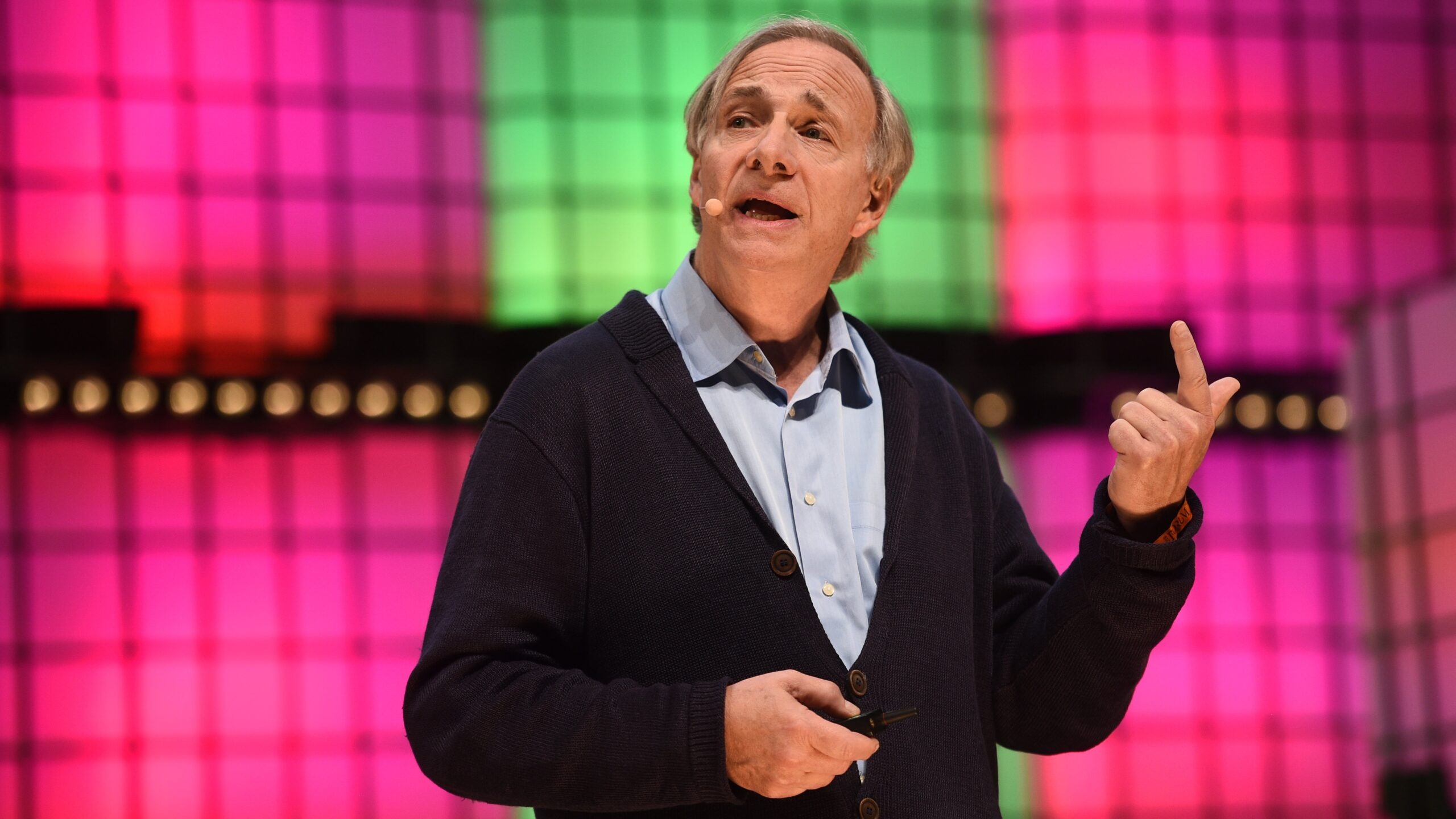
Ray Dalio has spent decades mapping how empires rise and fall, and he now argues that the United States is entering a dangerous phase where its economic, political, and geopolitical systems are starting to malfunction at the same time. He sees the breakdown of the monetary order, the erosion of global rules, and mounting internal conflict as part of one larger story. I see his message as less a doomsday call than a practical checklist for households and investors who want to stay solvent, and sane, if the next decade looks very different from the last.
Protecting yourself in that world, in Dalio’s view, means accepting that the old playbook is fading and building resilience into everything from your portfolio to your career. That starts with understanding why he thinks the system is fraying, then translating his high-level warnings into concrete moves you can make now.
Dalio’s breakdown thesis: debt, conflict and a fading rulebook
Dalio’s core worry is that the United States has combined extreme debt levels with rising internal and external conflict, a pattern he has seen end badly in past empires. In a recent conversation about economic trends, he argued that when debt service costs rise faster than income, it strains not just households and companies but the government itself, and history shows trouble tends to arrive when those two lines converge, a point he underlined in a Jan interview. He has tied that macro picture to a sense that social cohesion is weakening, pointing to flashpoints like the conflicts in Minneapolis and Greenland as symptoms of a deeper breakdown that is catching “Many” people off guard.
On the geopolitical front, Dalio has warned that the global monetary and political order that favored the United States is no longer reliable. He has described a world of “capital wars,” where countries weaponize money flows and sanctions, and has explicitly framed the current moment as one where the monetary order is “breaking down” as fiat currencies are manipulated and trust erodes, a view he expanded on in a discussion about how to Invest and protect yourself. At the World Economic Forum in Davos, Switzerland, he told political leaders and CEOs that the United States is losing its singular dominance as capital and influence shift toward a system less centered on Western institutions, a shift that raises the odds of miscalculation and “capital wars” between rival blocs.
The monetary order is “breaking down” – what that means for your money
Dalio’s most pointed warnings focus on the global monetary system and the U.S. dollar’s role at its core. He has said bluntly that when he talks about the monetary order breaking down, he means a world where fiat currencies are repeatedly devalued to manage unpayable debts, and where investors can no longer assume that contracts and reserves will hold their value in real terms, a concern he laid out while answering a question about How to avoid being a victim in this environment. He has also highlighted that Countries holding US dollars and Treasury bonds are already rethinking how much American debt they want to own, even as The United States keeps issuing more, a combination that can undermine confidence in the currency over time.
At the household level, Dalio connects that macro picture to the $38 trillion U.S. national debt and what it implies for savers. He has argued that governments rarely solve such debt loads with painful spending cuts or outright defaults, and instead rely on a mix of money printing and currency devaluation that quietly shifts the burden onto future generations, warning that his own grandchildren will be paying in “devalued dollars,” a point he made while discussing the $38 trillion figure. He has also stressed that any form of tax, including inflation, is politically contentious, and that those who simply sit in cash or long-term fixed income denominated in a weakening currency will “probably be the loser,” a phrase he used to underline how savers can be quietly drained even if they never miss a payment.
From rule-based order to “jurisdiction questions”
Dalio’s geopolitical diagnosis is that the postwar rules-based order that gave multinational companies and investors a predictable backdrop is already “gone.” He has urged leaders to stop assuming that treaties, trade rules, and international courts will protect their assets, and instead to focus on “jurisdiction questions,” meaning where their contracts are enforced and which governments ultimately control their money, advice he distilled when he said that reliance on an assured legal framework is ending and that decision makers should prioritize jurisdiction over abstract rules. When asked directly whether this rupture should scare corporate boards and CEOs who built strategies on stable global rules, he answered that they should not be naive, because the era of automatic, cross-border legal protection is ending, a warning he delivered while fielding a When question about the implications.
For individuals, that shift translates into practical choices about where to keep savings, how to structure businesses, and which passports or residencies to pursue. Dalio has framed the emerging landscape as one of “capital wars,” where governments can freeze, tax, or redirect flows in ways that would have been unthinkable when the rules-based order felt solid, a theme he returned to at Davos. He has also commented on how new technologies like Bitcoin fit into this picture, noting that the U.S. Nears Crisis Point even as Bitcoin Trapped by American Selling Pressure shows how digital assets can be constrained by policy and market structure, a reminder that no asset is fully outside the reach of state power.
Dalio’s playbook: diversify, own gold, and rethink “safe” assets
When Dalio turns from diagnosis to prescription, his first rule is diversification across currencies, countries, and asset classes. He has warned that the next major debt crisis is unlikely to come from banks alone, and has recommended that investors and households diversify internationally rather than rely on a single currency or jurisdiction, keep a mix of asset types, and maintain flexibility with both capital and career options, guidance he summarized in a list of ways to Diversify. He has also cautioned that “Speculating” is a zero sum game where retail traders will “probably be the loser,” arguing that most people should focus on durable, diversified portfolios rather than trying to outguess markets, a point he made when he said Most investors do not need to guess.
Gold sits at the center of his defensive toolkit. Dalio has called it “prudent” to hold 10% or 15% of a portfolio in Gold, describing it as “the only asset” that has consistently preserved value when paper currencies are being devalued, a stance he reiterated while discussing the national debt and why Gold belongs in the mix. He has also emphasized that gold is a form of money and a diversifier that tends to perform when other assumptions break, noting that during stress events it often rises as other assets fall, an observation he shared while explaining how to build a more resilient portfolio in a Jan discussion. In parallel, he has suggested that a balanced mix of Treasuries can still play a role, recommending 15% in immediate term seven to ten year Treasuries and 40% in long duration bonds as part of a broader allocation, a structure he outlined while saying that Then investors need long-term government bonds, even as they hedge currency risk.
More From TheDailyOverview
*This article was researched with the help of AI, with human editors creating the final content.

Grant Mercer covers market dynamics, business trends, and the economic forces driving growth across industries. His analysis connects macro movements with real-world implications for investors, entrepreneurs, and professionals. Through his work at The Daily Overview, Grant helps readers understand how markets function and where opportunities may emerge.

