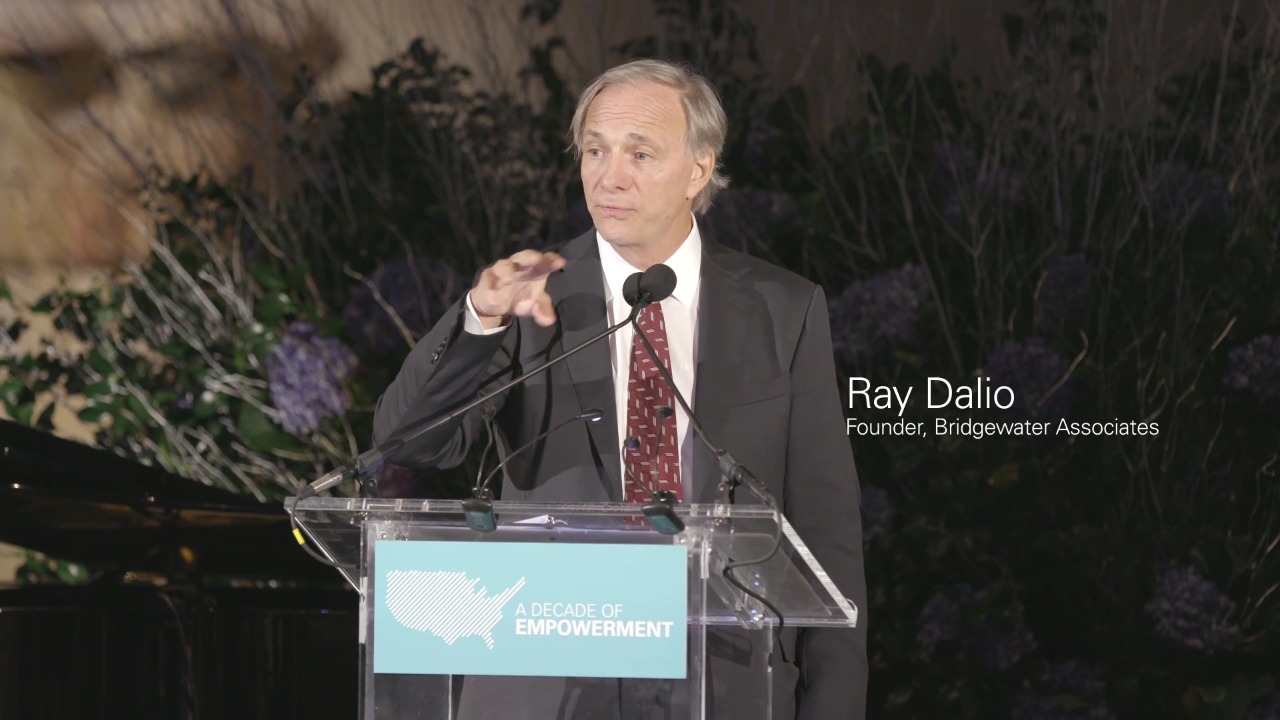
The billionaire investor Ray Dalio has been warning that the United States is moving into a period of profound strain, with monetary, political and geopolitical systems all under pressure at once. When someone who has spent decades mapping economic cycles calls the current environment a “once in a lifetime” breakdown, it is not a cue for panic, but for preparation. The question for households and investors is how to translate that big-picture alarm into practical steps they can take right now.
Dalio’s “order breakdown” and why it matters for your money
Ray Dalio argues that the United States is suffering a breakdown in what he calls the monetary, political and geopolitical “orders,” meaning the basic rules that have governed money, power and alliances are becoming unstable. He has described the global economic environment as a “classic breakdown of the world order,” with rising debt burdens, intensifying great power rivalry and domestic political conflict all feeding into each other. In his view, this is not a normal business cycle, but a transition phase in which old arrangements stop working and new ones have not yet formed, which is why he has framed it as a once in a generation shift that will shape returns, taxes and even basic financial security for years.
Dalio has warned that the United States is experiencing a deterioration in its monetary system at the same time that its political and geopolitical positions are under strain, a combination he links to growing deficits, contentious elections and strategic competition with major lender-creditors such as China. He has said that the global economic system is in a “classic breakdown of the world order,” language that underscores how he sees the current mix of high debt, rising interest costs and geopolitical tension as unusually dangerous for investors who assume the past few decades will simply repeat, a point he has made while describing a breakdown of monetary, political and geopolitical orders.
A “once in a lifetime” shift in debt, power and markets
When Dalio calls the current environment a “once in a lifetime” breakdown, he is pointing to a cluster of forces that rarely line up together: very high public debt, rising interest costs, and a shift in power between debtor nations and their creditors. He has highlighted that the world is undergoing a classic breakdown of the world order, in which heavily indebted countries like the United States must navigate their relationships with major lender-creditors such as China while also managing domestic political polarization. For individual investors, that means the assumptions that underpinned the bond and stock bull markets of the past generation, including ever-lower interest rates and relatively predictable geopolitics, can no longer be taken for granted.
In that context, Dalio has described the current situation as a “once in a lifetime” breakdown that affects currencies, trade flows and the safety of government debt, not just stock prices. He has tied this to the way the United States interacts with key trading partners and creditors, warning that the combination of high borrowing needs and strategic rivalry can unsettle markets and lead to abrupt repricing of risk. His characterization of a Once in a Lifetime Breakdown is meant to signal that investors should expect more volatility and regime change in markets, not a smooth continuation of the old pattern.
From “economic heart attack” to personal action plan
Dalio has gone so far as to liken the current financial stresses to an “economic heart attack,” a phrase that captures how quickly conditions can deteriorate when confidence in debt and money weakens. He has emphasized that everyone’s financial situation is different, but the common thread is vulnerability to sudden tightening in credit, falling asset prices or currency swings. In his public comments, he has urged people to think in terms of resilience, asking whether their savings, income sources and debts could withstand a sharp downturn or a spike in borrowing costs, rather than assuming that central banks will always be able to smooth over shocks.
In that same warning about an “economic heart attack,” Dalio has suggested that households should consider how much of their wealth is tied to a single country, currency or asset class, and whether they have enough liquidity to ride out a period of market turmoil without being forced to sell at the worst moment. He has framed this as a practical checklist, not an abstract theory, encouraging people to stress test their finances against scenarios in which asset values drop or inflation erodes purchasing power. His description of an economic heart attack is meant to push investors to act before a crisis, not during it, when options are limited.
Dalio’s core playbook: diversify, cap risk, stay liquid
At the center of Dalio’s advice is a simple principle: do not let any single bet, asset class or country dominate your financial life. He has repeatedly stressed the importance of diversification, arguing that in an environment of monetary and political strain, the biggest risk is concentration in assets that depend on a single policy regime or currency. That means spreading exposure across different types of investments, including stocks, bonds, real assets and cash, and being deliberate about how much of your net worth is tied to one government’s fiscal and monetary choices.
Dalio has been explicit that diversification should include assets that can hold value if fiat currencies are debased or if debt markets come under pressure, which is why he has recommended that investors consider holding some gold and Bitcoin as part of a broader portfolio. He has cautioned, however, that this exposure should be capped, advising that people not exceed a 15 percent allocation to such diversifiers so that they do not simply replace one concentration risk with another. In his view, gold and Bitcoin can serve as hedges against a debt crisis and monetary instability, but only within a balanced strategy that still relies on a mix of traditional assets, a point he has made while emphasizing the need for diversification and a capped allocation.
Where Bitcoin, gold and even stablecoins fit in
Dalio has been clear that he does not see Bitcoin or gold as magic bullets, but as tools that can help hedge against the specific risk that government debt and currencies come under severe strain. He has recommended that investors hold diversifiers like Bitcoin or gold, up to 15 percent of their portfolios, as protection against what he views as the core risk in today’s environment, namely a debt-driven disruption to the monetary system. In practice, that might mean a household with a balanced portfolio allocating a modest slice to a physically backed gold ETF, a reputable Bitcoin exchange-traded product or direct holdings, while keeping the majority of assets in more traditional investments.
Some analysts have extended Dalio’s logic to the world of digital dollars, asking whether stablecoins and other crypto-linked instruments are hedges or amplifiers of a potential debt crisis. In that discussion, Dalio has been cited as recommending that investors use assets like Bitcoin and gold as part of a diversified hedge, rather than relying on dollar-pegged tokens that still depend on the same underlying system of government debt and bank reserves. The key, in his view, is to recognize that the monetary order itself is the point of vulnerability, and to hold a mix of assets that are less directly tied to it, a perspective that has informed debates about whether stablecoins are a hedge or fuel for a debt crisis.
Practical steps you can take right now
Translating Dalio’s warnings into action starts with an honest audit of your own balance sheet. I would begin by listing every asset and liability, then asking how each would behave if interest rates stayed high, inflation reaccelerated or markets sold off sharply. That means looking at your mortgage terms, credit card balances and student loans, and considering whether you can refinance, pay down or at least cap variable-rate exposure so that a monetary shock does not turn into a personal crisis. It also means checking how much of your savings is in a single stock, sector or country, and gradually rebalancing toward a more even mix that does not depend on any one outcome.
From there, I would build a deliberate diversification plan that reflects Dalio’s emphasis on capped risk and multiple return streams. For many households, that could involve maintaining a core portfolio of broad index funds, high quality bonds and cash reserves, then adding a measured allocation to gold and Bitcoin within the 15 percent ceiling he has suggested, while keeping enough liquidity to handle several months of expenses without forced selling. It is also worth paying attention to the broader context Dalio has described, including the breakdown of monetary, political and geopolitical orders and the “once in a lifetime” nature of the current shift, which he has outlined in detail when explaining how the global economic system is undergoing a classic breakdown. The goal is not to predict every twist in that story, but to ensure your finances are robust enough to withstand it.
More From TheDailyOverview

Grant Mercer covers market dynamics, business trends, and the economic forces driving growth across industries. His analysis connects macro movements with real-world implications for investors, entrepreneurs, and professionals. Through his work at The Daily Overview, Grant helps readers understand how markets function and where opportunities may emerge.

