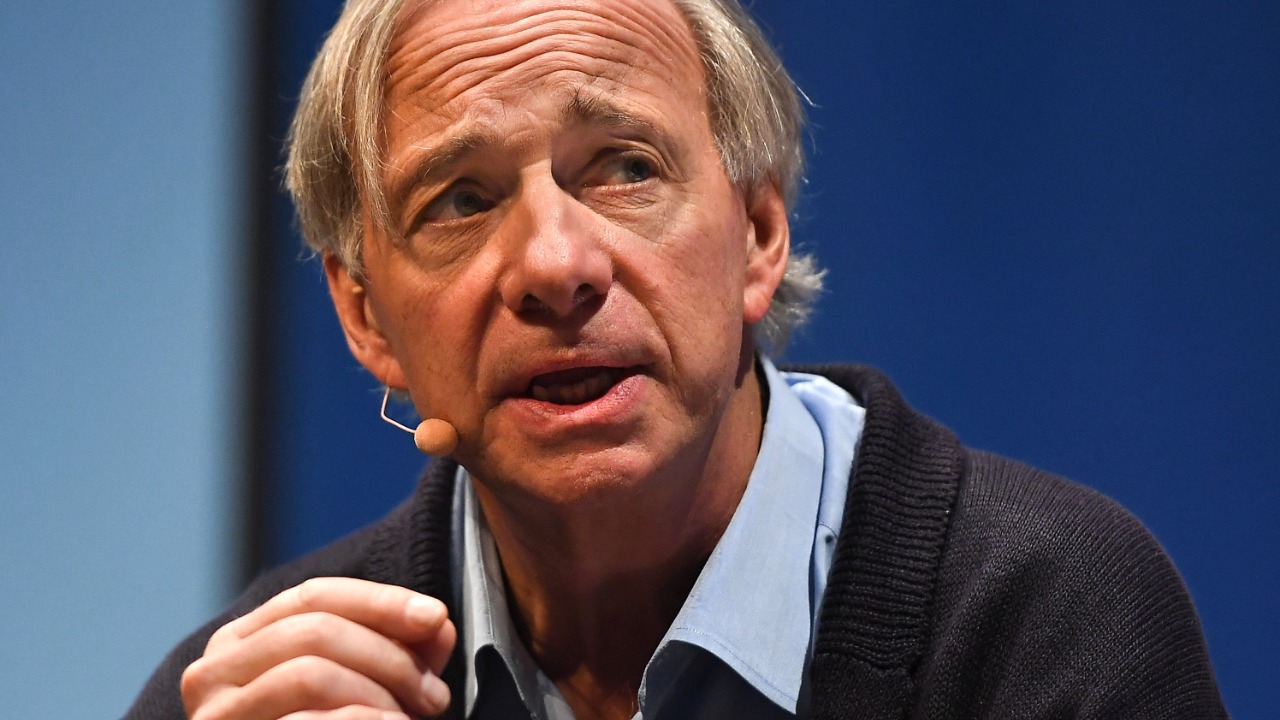
Global markets are no longer just reacting to interest rates and earnings. They are increasingly moving on fears that money itself is becoming a weapon, and that the world’s biggest powers are preparing to use capital flows the way they once used tariffs or tanks. Legendary hedge fund founder Ray Dalio is now warning that the international system is edging toward a full-blown “capital war,” in which governments and central banks fight for financial advantage by controlling where money can go and what it can buy.
Dalio’s alarm is not about a single policy or a bad quarter for stocks. It is about a structural shift in how nations compete, from trade disputes to battles over currencies, reserves, and debt markets. If he is right, investors, companies, and even ordinary savers will have to rethink what is safe, what is risky, and how politics can suddenly redraw the map of global finance.
Dalio’s stark warning: from trade skirmishes to capital conflict
When Ray Dalio describes the world as being “on the brink” of a capital war, he is arguing that the next phase of geopolitical rivalry will be fought through money rather than merchandise. At the World Governments Summit in Dubai, the legendary investor framed the risk as a progression, from trade tensions to restrictions on investment, sanctions, and controls on cross-border flows, with central banks and sovereign wealth funds at the center of the struggle. In his view, the same forces that produced tariff battles are now pushing countries to weaponize their balance sheets and their currencies, a concern he has repeated in multiple recent interviews and at high-profile gatherings such as Davos in Switzerland, where he spoke as a hedge fund billionaire warning about “capital wars.”
Dalio’s language is unusually blunt for a figure who has spent decades studying long-term cycles in debt, power, and markets. He has said that the world is getting “very close” to what he calls a capital war, stressing that mutual fear between major powers is eroding trust in the existing financial order. He has linked that anxiety to the behavior of central banks and sovereign investors, which he expects to act more defensively with their reserves and portfolios as geopolitical risks rise, a theme he underscored in his comments about gold as a hedge and in his broader investing outlook for 2026, where he described an era of global financial conflict that could reshape how capital moves.
What a “capital war” actually means
To understand what Dalio is warning about, it helps to unpack what a capital war would look like in practice. Rather than tanks crossing borders, the front lines would be in bond auctions, currency markets, and regulatory decisions about who is allowed to own what. Dalio has described a world in which countries that hold large amounts of U.S. dollars and Treasurys become less willing to finance American deficits if they no longer trust Washington, and in which governments use their control over reserves, banking systems, and payment networks to pressure rivals. In that scenario, capital flows are no longer just the outcome of market decisions, they are tools of statecraft.
He has also tied the idea of capital wars to a breakdown in the rules that once governed globalization. Dalio has argued that the rules-based global order is already “gone,” and that it is naive to assume that financial relationships will stay apolitical when trade and security ties are fraying. He points to the way U.S. Treasurys have become a focal point in debates about sanctions and reserve diversification, and to the growing use of financial restrictions as a substitute for direct military confrontation. In his telling, the shift from trade disputes to capital confrontation is not hypothetical, it is the logical next step in a world where trust between major powers is eroding and where money can be frozen, redirected, or blocked at the stroke of a pen.
Trump’s aggressive stance and the erosion of trust
Dalio’s warnings are not occurring in a political vacuum. He has explicitly linked the risk of capital wars to the policies of President Donald Trump, arguing that aggressive moves on tariffs, sanctions, and foreign policy could push other countries to rethink their exposure to U.S. assets. In a recent interview, Ray Dalio told CNBC that he is concerned countries holding large amounts of U.S. dollars and Treasurys may become less willing to keep financing American deficits if trust erodes, especially if they feel that Washington is willing to use the dollar system as a weapon. He has suggested that in normal times, investors assume their holdings are safe, but in a more confrontational environment they may start to ask whether their capital could be targeted.
In his broader investing outlook, Ray Dalio has said he thinks an era of global financial conflict could be approaching, and he has tied that directly to Trump’s posture toward allies and rivals. He has warned that Trump’s actions could unleash what he calls “capital wars,” in which countries respond to U.S. pressure by dumping U.S. assets or by building alternative systems that reduce their dependence on the dollar. Against that backdrop, Dalio has used high-profile forums such as the World Economic Forum in Davos, Switzerland to argue that investors need to think about how political decisions in Washington might accelerate a shift away from U.S. bonds, stocks, or currency, and how that could feed back into higher borrowing costs and more volatile markets at home.
The crumbling rules-based order and the new geopolitics of money
At the heart of Dalio’s concern is the idea that the postwar rules-based order, which once provided a relatively stable framework for trade and finance, is already broken. He has said that the global rules-based order is “gone,” and that it is dangerous to pretend otherwise when making investment or policy decisions. In his analysis, the transition from trade disputes to capital wars is a symptom of that deeper shift, as countries no longer feel bound by shared norms and instead prioritize national advantage. He has pointed to the way U.S. Treasurys have become entangled in debates over sanctions and reserve diversification as evidence that even the safest assets are now part of geopolitical bargaining.
Dalio’s comments resonate with a broader pattern of rising geopolitical risk, from tariff threats out of Washington that have rattled Treasury prices on a Tuesday trading session, to renewed fears of trade conflict with Europe and Asia. He has argued that when Treasury prices fall in response to political headlines, it is a sign that investors are starting to price in not just economic data but also the possibility that capital flows could be disrupted by policy. In Jakarta, where U.S. Treasury yields surged and local markets watched developments in Washington closely, legendary billionaire investor Ray Dalio reiterated that the world is now on the brink of a capital war, underscoring how far beyond Wall Street these concerns now reach.
How markets are already reacting: Treasurys, gold, and diversification
Financial markets have begun to reflect some of the dynamics Dalio is describing, even if a full-scale capital war has not yet broken out. He has highlighted the behavior of U.S. Treasurys as a key barometer, noting that yields have surged at times when investors reassessed the safety of American debt in light of political risk. On a recent Tuesday, Treasury prices fell as markets digested renewed tariff threats from Washington, reviving fears of a trade war and hinting at how quickly sentiment can shift when policy risk rises. For Dalio, those moves are early signals of what could happen if major holders of Treasurys decide they no longer want to be as exposed to U.S. deficits.
At the same time, Dalio has been vocal about the role of gold and diversification as defenses against this new environment. In his Dubai remarks, he described gold as a hedge in a world where central banks and sovereign wealth funds might use their portfolios as instruments of competition, and where fiat currencies could be caught in the crossfire. He has reiterated the importance of diversification, arguing that investors should not rely too heavily on any single country, asset class, or currency, and has suggested that a prudent allocation to gold might be between 5 percent and 15 percent of a typical portfolio. Without saying so explicitly, Dalio has also hinted that he prefers international assets outside of the United States, including exposure that could benefit from a continuing decline in the U.S. dollar, a stance that aligns with his broader expectation of capital tensions.
Dalio’s playbook for investors facing capital wars
For individual and institutional investors, Dalio’s warnings are not just abstract geopolitical commentary, they amount to a playbook for navigating a more hostile financial landscape. He has urged investors to think in terms of resilience rather than precision, accepting that it is impossible to forecast exactly how a capital war would unfold but essential to prepare for a range of outcomes. In his conversations about the economy in 2026, he has said that in normal times, one can rely on historical relationships between growth, inflation, and asset prices, but in a period of capital conflict those relationships can break down as policy decisions override market logic. That is why he keeps returning to the themes of diversification, risk parity, and holding assets that are less vulnerable to political interference.
Dalio’s specific guidance includes spreading exposure across countries and currencies, maintaining a meaningful allocation to gold, and avoiding overconcentration in U.S. debt or equities that could be directly affected by foreign selling. He has also suggested that investors pay close attention to how central banks and sovereign wealth funds behave, since their moves can signal shifts in the underlying geopolitical balance. In his interviews and at events where he has discussed Trump, Greenland, and U.S. debt, Ray Dalio has framed these choices as part of a broader strategy to survive what he calls capital wars, emphasizing that the goal is not to predict every twist but to avoid being wiped out by a sudden change in the rules of the game.
Why Dalio thinks the risk is rising now
Dalio’s sense of urgency reflects a convergence of factors that he believes are making the system more fragile. He has pointed to high levels of debt, widening fiscal deficits, and growing political polarization as ingredients in a volatile mix, especially when combined with a more assertive U.S. foreign policy under Trump. In his view, when a country with large deficits relies on foreign buyers of its debt, and at the same time signals that it is willing to use its financial system as a tool of pressure, it invites those buyers to look for alternatives. That is why he has warned that countries could respond to Trump’s actions by dumping U.S. assets, and why he sees the risk of capital wars as higher now than in previous cycles.
More From The Daily Overview
*This article was researched with the help of AI, with human editors creating the final content.

Grant Mercer covers market dynamics, business trends, and the economic forces driving growth across industries. His analysis connects macro movements with real-world implications for investors, entrepreneurs, and professionals. Through his work at The Daily Overview, Grant helps readers understand how markets function and where opportunities may emerge.

