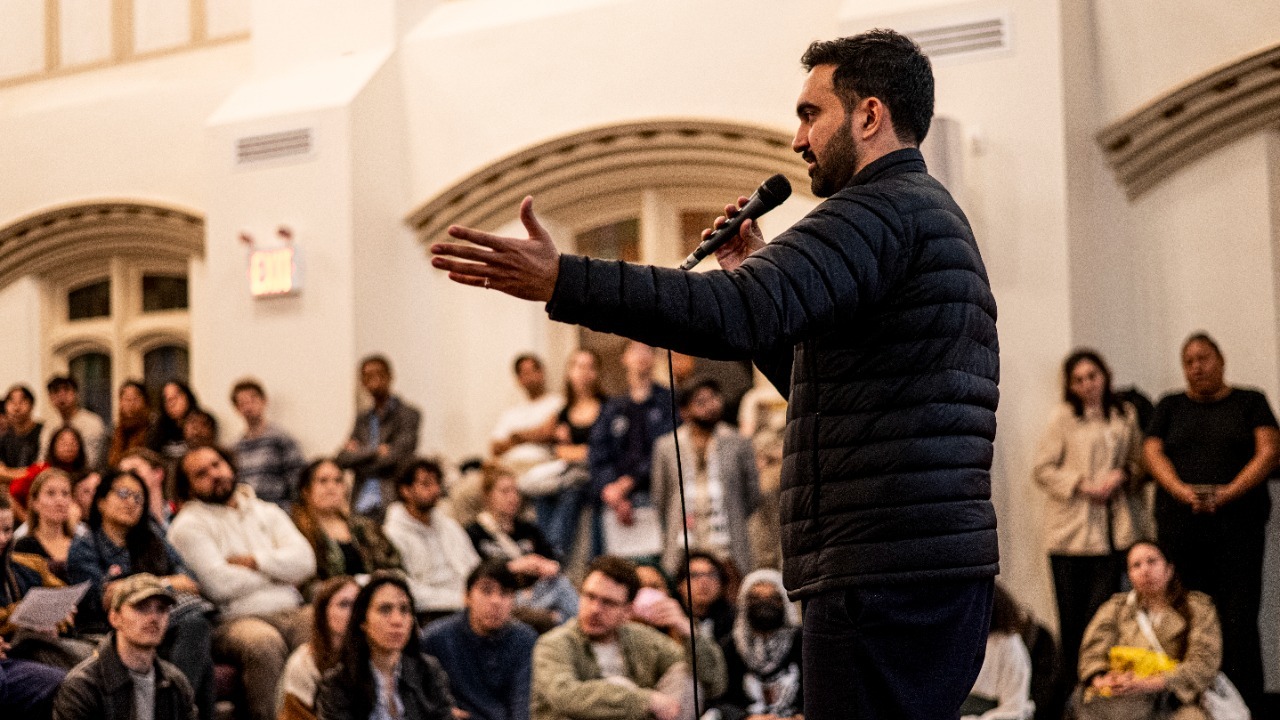
New York’s latest housing fight has turned a state-level policy proposal into a neighborhood-level identity clash, pitting tenants who feel squeezed by rising rents against homeowners who fear their equity and control are on the line. At the center is Assemblymember Zohran Mamdani’s push to reshape how the state treats landlords and renters, a plan that has become a proxy battle over who cities are really built for. As I trace the arguments on both sides, what emerges is less a simple landlord‑versus‑tenant story than a collision between two different visions of stability and fairness in a tightening housing market.
The core of Mamdani’s housing agenda
Mamdani’s housing agenda is built around the idea that New York’s affordability crisis is not a temporary spike but a structural failure that demands aggressive tenant protections. He has framed housing as a right that should not depend on a landlord’s business model, pushing for policies that limit rent hikes, curb evictions, and shift leverage away from property owners toward people who live in the units. In his telling, the current system treats housing primarily as an asset class, and his plan is an attempt to rebalance that toward long‑term residents who are increasingly priced out of their own neighborhoods, a concern reflected in reporting on his broader tenant-first politics.
Central to that agenda is support for “good cause” eviction protections and tighter limits on how much landlords can raise rents on existing tenants, especially in fast‑gentrifying areas of Queens and across New York City. Mamdani has aligned himself with tenant unions and housing organizers who argue that without statewide guardrails, speculative buying and short‑term profit strategies will keep displacing lower income renters. Coverage of his work in Astoria and surrounding neighborhoods shows him repeatedly siding with organized tenants against landlords in disputes over rent increases and building conditions, reinforcing his image as a lawmaker who sees housing policy as a tool to redistribute power in favor of renters rather than owners, as detailed in profiles of his housing activism.
Why renters see the plan as a lifeline
For renters, especially in high‑cost districts like western Queens, Mamdani’s proposals read less like an ideological project and more like a survival strategy. Tenant groups describe a pattern of landlords using steep rent hikes, non‑renewals, or aggressive buyout offers to cycle through tenants and reset rents to market peaks, a dynamic that has been documented in organizing campaigns across Astoria and Jackson Heights. In that context, codifying stronger protections against eviction and arbitrary increases is seen as the only way to keep long‑time residents from being pushed out, a theme that surfaces repeatedly in reporting on Mamdani’s close work with tenant unions.
Many of those renters also connect their personal struggles to a broader critique of how New York’s housing market has been financialized. They point to corporate landlords, private equity ownership of multifamily buildings, and speculative investment in “up‑and‑coming” neighborhoods as drivers of both rent inflation and deteriorating conditions. Mamdani’s alignment with left‑wing organizations that prioritize decommodifying housing, including his ties to the Democratic Socialists of America and local socialist organizers, reinforces tenants’ sense that his plan is one of the few serious attempts to confront those structural forces rather than just subsidize them. Reporting on his campaigns notes that he has repeatedly foregrounded stories of tenants facing harassment or sudden rent spikes to argue that the status quo is untenable without stronger legal protections.
Homeowners’ fears about equity and control
Homeowners, particularly small property owners and co‑op residents, often read the same proposals as a direct threat to the financial security they built through real estate. Many bought homes or small rental buildings with the expectation that they could adjust rents to cover rising taxes, maintenance, and mortgage costs, and they now worry that tighter rent and eviction rules will lock them into unworkable margins. In neighborhoods where family‑owned three‑ and six‑unit buildings are common, owners argue that being treated like large corporate landlords ignores the thin line between solvency and foreclosure, a concern that surfaces in coverage of how Mamdani’s left‑wing agenda has unsettled more moderate and older homeowners in his Queens district.
There is also a cultural and political dimension to those fears. Some homeowners see Mamdani’s housing push as part of a broader ideological project that sidelines people who spent decades building equity in favor of newer, more transient residents. Reporting on intra‑Democratic Party tensions in Queens describes how older, more centrist homeowners have bristled at being cast as obstacles to justice simply for wanting to preserve property values and neighborhood character. In that narrative, the housing plan is not just a policy disagreement but a symbol of a political movement that, in their view, undervalues the sacrifices they made to buy and maintain homes, a sentiment that has fueled primary challenges and public criticism of Mamdani’s left‑wing platform.
The political backlash and primary pressure
The clash over housing has not stayed confined to community meetings or tenant‑landlord disputes; it has spilled directly into electoral politics. Mamdani’s aggressive tenant‑first stance has made him a lightning rod within the Queens Democratic establishment, which includes many elected officials who rely on homeowner turnout and donor networks tied to real estate. Reporting on his political trajectory notes that party leaders and more moderate Democrats have grown increasingly frustrated with his willingness to buck leadership on housing and other issues, seeing his approach as a challenge to the traditional coalition that kept the borough’s machine in power, a tension that has shaped efforts to recruit primary opponents to his Assembly seat.
That backlash has been sharpened by Mamdani’s broader foreign policy positions, particularly his outspoken criticism of Israel’s conduct in Gaza and his support for a cease‑fire, which have alienated some Jewish voters and pro‑Israel donors who might otherwise align with his economic populism. Coverage of his role in New York’s left wing documents how opponents have tried to fuse those foreign policy stances with local grievances over housing, painting him as too radical and divisive for a district that includes both working‑class renters and middle‑class homeowners. The result is a primary landscape in which housing policy, foreign affairs, and intra‑party power struggles are tightly intertwined, with Mamdani’s housing plan serving as a shorthand for a broader realignment inside the Queens Democratic Party.
What the clash reveals about New York’s housing future
The fight over Mamdani’s housing agenda ultimately exposes a deeper question about what kind of stability New York is prepared to guarantee, and for whom. Renters are asking the state to treat housing security as a baseline right, even if that means constraining how much value owners can extract from their property, while homeowners are asking lawmakers to respect the role that equity and control over one’s building play in middle‑class life. Reporting on Mamdani’s rise shows that these are not abstract debates but live conflicts playing out in Astoria apartment buildings, Queens co‑ops, and party meetings, where each side sees the other’s preferred version of stability as a direct threat to its own future in the city.
As I weigh those competing claims, what stands out is how little room the current market leaves for compromise. Without a significant increase in housing supply, deeper public investment, or new models of social and cooperative ownership, any gain in security for one group tends to feel like a loss for another. Mamdani’s plan has become a flashpoint precisely because it forces that trade‑off into the open, asking whether New York will prioritize the rights of people who live in homes or the expectations of those who own them. The intensity of the response from both renters and homeowners suggests that whatever shape the final policy takes, the underlying conflict over who the housing system is meant to serve will define New York politics for years to come, a trajectory already visible in the coverage of his ongoing battles with party leaders and neighborhood power brokers.
More From TheDailyOverview
- Dave Ramsey warns to stop 401(k) contributions
- 11 night jobs you can do from home (not exciting but steady)
- Small U.S. cities ready to boom next
- 19 things boomers should never sell no matter what

Elias Broderick specializes in residential and commercial real estate, with a focus on market cycles, property fundamentals, and investment strategy. His writing translates complex housing and development trends into clear insights for both new and experienced investors. At The Daily Overview, Elias explores how real estate fits into long-term wealth planning.

