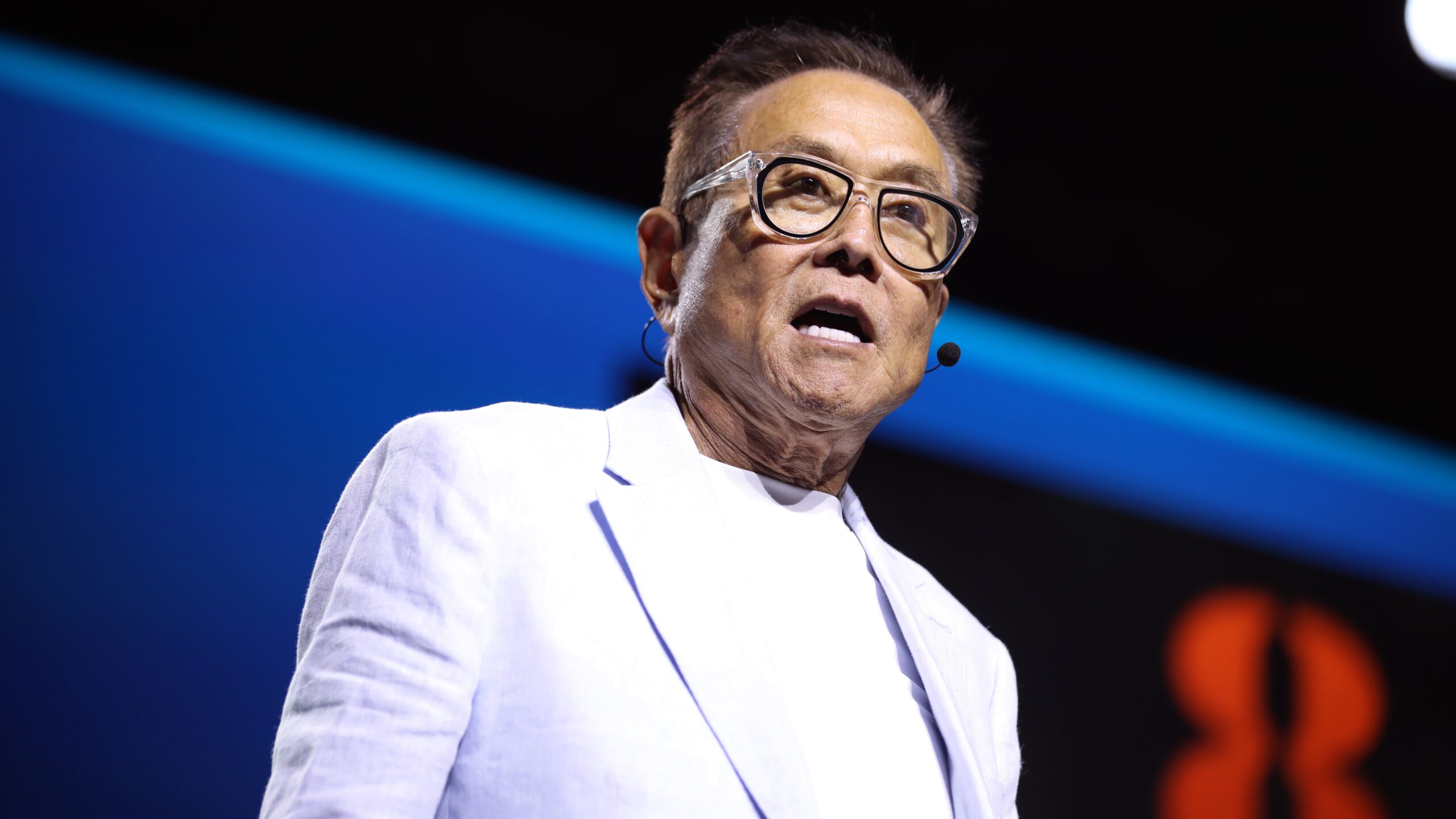
Robert Kiyosaki, the outspoken investor behind the bestseller Rich Dad Poor Dad, is not chasing the latest rally in Bitcoin or gold. Instead, he is openly waiting for both assets to carve out fresh lows while warning that a swelling mountain of government obligations poses an even greater danger to ordinary savers. His message heading into 2026 is blunt: price dips in Bitcoin and bullion may be opportunities, but the real threat is a system weighed down by debt, unfunded promises, and a looming jobs shake‑up.
That stance matters because Kiyosaki has spent decades telling readers to move away from wage dependence and paper assets and toward what he calls real money and real businesses. Now, as he talks about new bottoms in Bitcoin and gold and flags risks like massive unemployment and record national liabilities, he is effectively updating the Rich Dad Poor Dad playbook for a more volatile decade.
From ‘Rich Dad Poor Dad’ to crisis playbook for 2026
Kiyosaki’s current warnings build on the philosophy that made Rich Dad Poor a global touchstone for personal finance. In that book and its follow‑ups, he contrasts a “poor dad” mindset of relying on salaries and savings with a “rich dad” focus on assets that generate cash flow and hedge inflation. That framework now underpins his preference for Bitcoin, gold and silver over traditional retirement accounts and long‑term bond holdings, which he sees as vulnerable in an era of aggressive money printing and rising obligations.
On social media, he has framed 2026 as a turning point, arguing that the coming turbulence will be “the greatest financial opportunity of our lifetime” for those who prepare. In one post, he wrote under the heading Why Some Will that people are still “Saving cash,” “Chasing wages,” and “Hoping prices come down,” even as structural pressures build. For him, that behavior is the modern version of the “poor dad” approach, and he is urging followers to pivot before the next downturn exposes how fragile those habits can be.
Why Kiyosaki is sitting out the latest Bitcoin and gold rallies
Despite his reputation as a long‑time advocate of hard assets, Kiyosaki has been unusually patient in recent months. He has said he stopped buying Bitcoin when it was around $6,000, gold when it was about $300, and silver at roughly $60, locking in positions long before the latest surge. More recently, he acknowledged selling some Bitcoin and gold into strength, a move that surprised followers who assumed he would simply hold through every cycle. The shift does not signal a loss of faith in those assets, but rather a belief that the market has run ahead of itself and will eventually offer better entry points.
Reports on his recent comments note that he has paused new purchases of gold, silver and Bitcoin at current levels and is waiting for what he calls new bottoms before stepping back in. In one interview, he warned against overconfidence during sharp rallies and suggested that investors who pile in late risk becoming what he calls “hogs” that get punished when momentum reverses. A detailed breakdown of his stance on timing shows that he has effectively moved to the sidelines, with one analysis explaining that he has paused buying and is watching for more attractive prices before committing fresh capital.
The ‘bigger problem’: debt, liabilities and a fragile middle class
While headlines tend to focus on his Bitcoin calls, Kiyosaki has been explicit that the real danger he sees is not a crypto crash but the scale of government obligations. In a recent post on X, he described the U.S. national debt and long‑term liabilities as the biggest risk facing investors, arguing that the numbers have grown so large that traditional promises about pensions and benefits may not hold. One report on his remarks notes that he is especially worried about obligations tied to Social Security and Medicare, which he sees as part of a broader bigger problem than any single asset bubble.
His concern is amplified by the pace at which federal borrowing has climbed. One analysis of his recent trades points out that he has been selling some Bitcoin and gold at the same time that the national debt has surpassed $38 trillion, a figure he cites as evidence that the system is stretched. In his view, the middle class, which he often describes as building its house out of illusions, is especially exposed because it relies on job security, employer benefits and government programs that may be forced to adjust if servicing that debt becomes too costly.
Massive unemployment and the ‘biggest change’ in history
Kiyosaki’s warnings are not limited to balance sheets. He has also been sounding the alarm about what he calls the biggest change in history for the labor market, predicting that new technologies and economic shifts could trigger “massive unemployment.” In one widely shared analysis of his comments, he is quoted warning that large numbers of workers could find themselves displaced and asking, Are you at risk in 2026. The question is not rhetorical; he argues that people who cling to a single paycheck and high fixed expenses are the most vulnerable.
A follow‑up breakdown of his remarks emphasizes that he sees this shift as part of a broader wealth transfer, where those who own productive assets and adaptable skills benefit while those with heavy debts and stagnant wages struggle. In that context, he has highlighted how many households still carry obligations like student loans even as they face rising living costs. One report on his comments notes that he has been quoted through Moneywise as warning that many people still have student loan debt even as they face this new wave of disruption, a combination he believes could be devastating if job losses accelerate.
Crash calls, sky‑high targets and how he says to prepare
Kiyosaki’s decision to wait for lower prices comes against a backdrop of bold forecasts about where markets could eventually go. In one interview, he reiterated his view that a major market crash is still ahead, even as he laid out ambitious upside targets for his favored hedges. A detailed report on those remarks notes that Robert Kiyosaki, described as the best‑selling author of Rich Dad Poor Dad, has talked about gold eventually reaching $27K and Bitcoin climbing to 250K, figures he attributes in part to research he says he “got this from Tom Lee.” Those numbers are not price targets for the next quarter, but rather his way of illustrating how extreme he believes the long‑term consequences of monetary expansion could be.
At the same time, he insists that 2026 “isn’t about panic” but about positioning. In another social media post, he wrote that Because when the biggest wealth transfer in history happens, “you want to be on the receiving end, not the paying end,” adding that “That’s the opportunity.” His own approach, as he describes it, involves holding cash and patience while waiting for distressed prices in assets he understands, rather than stretching for yield in overheated markets. That is also why he has been willing to trim positions in Bitcoin and gold after strong rallies, even though he still sees them as long‑term winners.
More From The Daily Overview
*This article was researched with the help of AI, with human editors creating the final content.

Grant Mercer covers market dynamics, business trends, and the economic forces driving growth across industries. His analysis connects macro movements with real-world implications for investors, entrepreneurs, and professionals. Through his work at The Daily Overview, Grant helps readers understand how markets function and where opportunities may emerge.

