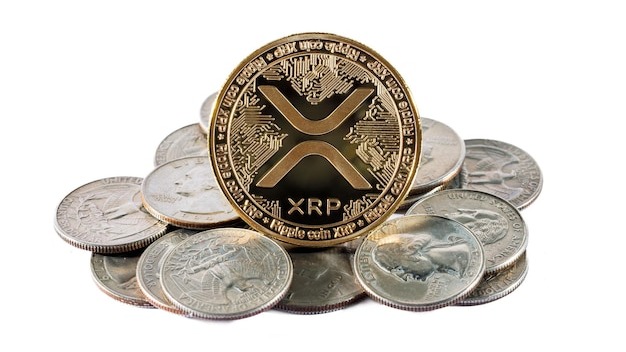
Ripple’s ascent into the ranks of mega-valued private fintechs has turned a once-niche payments startup into a hypothetical $50 billion Wall Street debut story, even as its native token XRP trades near $1.90 and sits roughly 50% below prior peaks. The gap between that lofty equity narrative and the token’s muted price is where the real drama lies for investors. The core question is not simply whether Ripple ever lists, but how a public valuation on that scale would reshape demand, regulation and narrative around XRP itself.
Right now, XRP lives in a strange limbo: Wall Street analysts float 2026 targets between $3 and $8, yet the token continues to lag broader crypto optimism and the company has publicly walked back near-term IPO plans. That disconnect suggests XRP’s next big move may depend less on a calendar date for a listing and more on how markets digest Ripple’s legal clarity, business traction and eventual access to public capital.
Ripple’s $50 billion IPO dream meets a colder 2026 reality
On paper, Ripple looks like a textbook candidate for a blockbuster float, with one analysis ranking it the ninth Largest IPO Candidate at a valuation of $50. That same assessment framed Ripple as a potential $50 billion giant, a scale that would instantly place it alongside the biggest fintech listings of the past decade. The logic is straightforward: a company that powers cross-border payments, sits at the center of a major token ecosystem and has survived a bruising regulatory fight is exactly the kind of story public markets like to price aggressively.
Reality, however, has intervened. Earlier this year, Ripple Ditches IPO Plans in a Surprise Pivot became the operative phrase inside the company, with President Monica Long stating that Ripple has no plans to go public in 2026. That Surprise Pivot effectively put a near-term ceiling on IPO speculation, even as private-market chatter still circles that $50 billion figure. For XRP holders, the message is mixed: the equity rocket launch is delayed, but the underlying business is signaling it prefers to consolidate legal and operational footing before stepping onto an exchange.
What past listings and price targets imply for XRP
To understand what a future Ripple IPO could do to XRP, it helps to look at how markets have reacted when adjacent fintech names hit public exchanges. In one recent example, Webull’s stock soared more than 500% after its SPAC merger, a reminder that fresh listings can unleash speculative energy far beyond fundamental earnings. Ripple Is Now Ranked the kind of candidate that could trigger similar enthusiasm, and if equity investors chase that story, some of that risk appetite is likely to spill into the token tied to its ecosystem. The key difference is that XRP is already liquid and globally traded, so any IPO-driven repricing would be layered on top of an existing, volatile market rather than starting from zero.
Analysts are already sketching out that bridge between equity and token. One forecast argues that a successful Ripple IPO at $50 billion could help push XRP toward a range between $3.00 and $5.00 as institutional interest migrates from the stock into the token. That view, laid out in a piece on 3 Reasons to, effectively treats the IPO as a marketing event that validates the network and draws in new capital. It is a useful benchmark, but it also assumes that equity buyers will see XRP as a complementary bet rather than a competing one, which is far from guaranteed.
The legal firewall between Ripple and XRP
Any discussion of IPO-driven upside for XRP has to start with a legal nuance that often gets lost in retail hype. In the ongoing regulatory saga, Ripple (the company) and XRP (the asset) are treated as separate entities, a distinction that has been central to how courts and regulators frame the case. One detailed explainer on the dispute spells out that Ripple and XRP are seen as distinct for legal purposes, and that the analysis of whether XRP is a security does not automatically hinge on Ripple’s corporate status. That separation, highlighted in a breakdown of Ripple v SEC, is critical for understanding why an IPO is not a magic wand for the token.
Paradoxically, that firewall can be bullish for XRP over the long run. If regulators and courts continue to affirm that XRP is not simply a proxy for Ripple equity, then the token’s value will increasingly be tied to network usage, liquidity and cross-border settlement demand rather than the company’s revenue multiple. In that world, a future IPO becomes a secondary catalyst: it might improve transparency, governance and brand recognition, but the real driver of XRP’s price would be whether banks, remittance firms and fintech apps actually route payments through its rails. That is a much harder story to trade on headlines, yet it is ultimately more sustainable.
Price predictions, current malaise and the IPO “halo effect”
Despite the legal and strategic complexity, price targets for XRP have become a cottage industry. One widely cited analysis suggests that if Ripple’s IPO succeeds and regulatory issues are resolved, XRP could climb into a $5 to $10 band, while also warning that more modest or even bearish outcomes are possible if those conditions are not met. That scenario analysis, laid out in an XRP price prediction, essentially prices in an IPO “halo effect” on top of regulatory clarity. It treats the listing as both a capital event and a reputational upgrade that could draw in new classes of buyers.
For now, the market is not trading as if that halo is imminent. XRP currently sits near $1.90, roughly 50% below its previous highs, even as Wall Street analysts float 2026 targets between $3 and $8. Those figures, cited in a breakdown of XRP price prediction, highlight a striking disconnect between forward-looking optimism and present-day pricing. The simplest explanation is that markets are discounting both regulatory risk and execution risk, effectively saying: show us the settlement volumes and legal clarity first, then we will pay up for the story.
Why shelving the IPO could still be bullish for XRP
At first glance, Ripple’s decision to delay any 2026 listing looks like a bucket of cold water on the token’s narrative. Many speculative models had baked in a near-term IPO as a catalyst, and some investors treated the equity event as a kind of shortcut to legitimacy. Yet there is a credible counterargument emerging in more nuanced coverage of Ripple IPO speculation. One analysis of Potential Positive Impacts on XRP Price notes that Many believe that a Ripple IPO would be a net positive for XRP because it reduces uncertainty and fear, which in turn can increase buying pressure. That same logic can be flipped: if the company is not racing to list, it may be prioritizing regulatory clean-up and ecosystem growth, which are the very conditions that long-term holders should want before any public debut.
There is also a structural angle that tends to be overlooked. By staying private a bit longer, Ripple can deepen partnerships with banks, payment processors and fintech apps without the quarterly earnings spotlight that public markets impose. In practice, that could mean more real-world integrations that drive on-chain activity, even in the absence of an IPO. If those integrations show up as rising transaction counts and liquidity, they will eventually be visible in the kind of market data aggregated by platforms like Google Finance, and traders will not need a listing to notice. In that sense, shelving the IPO might slow the hype cycle but accelerate the fundamentals that ultimately matter for XRP’s valuation.
More From The Daily Overview
*This article was researched with the help of AI, with human editors creating the final content.

Grant Mercer covers market dynamics, business trends, and the economic forces driving growth across industries. His analysis connects macro movements with real-world implications for investors, entrepreneurs, and professionals. Through his work at The Daily Overview, Grant helps readers understand how markets function and where opportunities may emerge.

