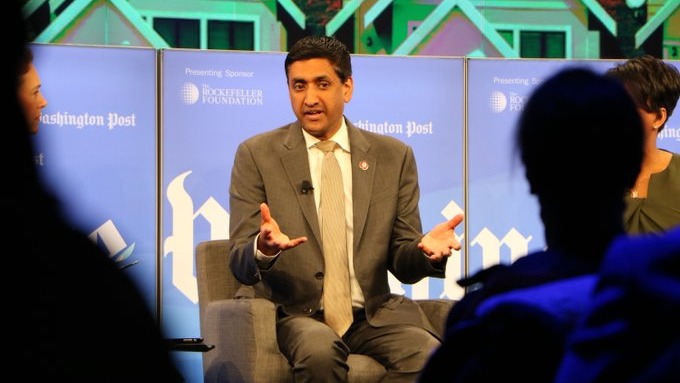
Representative Ro Khanna has become one of the most prominent national voices backing California’s proposed wealth tax on billionaires, aligning himself with organized labor even as some of his own Silicon Valley constituents revolt. Rather than brokering a formal deal between billionaires and unions, he is using his platform to pressure both sides in public, urging tech leaders to accept higher taxes while also demanding that labor-backed advocates tighten up the measure’s design and oversight. The result is a rare, high‑stakes clash that pits a Democratic Rep from the heart of the tech industry against some of the richest people in the world over who should pay for California’s future.
At the center of the fight is the 2026 Billionaire Tax Act, a proposed ballot initiative that would impose a one‑time levy on the ultra‑rich to shore up state finances and expand social programs. Khanna’s gamble is that a populist message, rooted in the language of President Franklin Roosevelt and New Deal‑style fairness, can survive a ferocious campaign from tech founders who are threatening to leave the state rather than pay.
The Billionaire Tax Act and a new Democratic fault line
The 2026 Billionaire Tax Act is designed as a one‑time hit on extreme wealth, targeting fortunes that ballooned in the long bull market and pandemic tech boom. Advocates are gathering signatures to place the proposal on the 2026 ballot, with reports describing a one‑time 5% tax on those with the largest holdings as the core of the plan, a structure that supporters argue would raise substantial revenue without creating a permanent annual levy on assets. To qualify, Supporters of the initiative must collect exactly 875,000 valid signatures, a threshold that underscores how much organizing muscle unions and progressive groups will need to bring to the table.
The measure has quickly exposed deep divisions inside the Democratic Party in California, with some leaders warning that a poorly designed levy on wealth could accelerate an exodus of high earners and create even larger budget problems if capital and tax bases flee. Reporting on the emerging battle lines in California describes moderates and some statewide officials worrying that the Billionaire Tax Act could destabilize long‑term revenues, while progressive lawmakers and labor groups insist that the state’s ultra‑rich can afford a one‑time contribution to close deficits and fund services. Those tensions have turned the initiative into a proxy fight over what modern Democratic economic policy should look like in a state that depends heavily on tech wealth.
Khanna’s alliance with unions and his fraud‑probe push
Ro Khanna has planted himself firmly on the side of labor and progressive activists, embracing the Billionaire Tax Act as a test of whether the party is willing to confront concentrated wealth. The proposed ballot measure, dubbed the 2026 Billionaire Tax Act, is being pushed by the Service Employees International, and Khanna has framed his support as standing with workers and communities that saw public services squeezed even as tech fortunes soared. His backing gives unions a nationally recognized surrogate who can speak the language of the tech sector while arguing that those who benefited most from California’s growth should help stabilize its finances.
At the same time, Khanna has signaled that he wants the measure to withstand legal and political scrutiny, not just serve as a protest. After a wave of criticism and confusion around how the wealth tax would be calculated, he called for a fraud probe into some of the messaging and fundraising around the initiative, pressing for clarity on how valuations of assets like private company shares and restricted stock would be handled. In coverage of that firestorm, he raised concerns that The California wealth tax proposal could be vulnerable if it did not spell out how to treat complex holdings such as restricted stock, a sign that he is trying to harden the policy details even as he champions the broader goal.
Silicon Valley backlash and FDR‑style rhetoric
Khanna’s stance has triggered a fierce backlash from some of the very tech founders who helped turn his district into an economic powerhouse. California’s Ro Khanna, a Rep from Calif who represents part of Silicon Valley, is facing criticism from wealthy entrepreneurs and investors who argue that a one‑time wealth tax would punish success and push innovation out of the state. In one account, California’s Ro Khanna faces Silicon Valley backlash after embracing the wealth tax, with some donors warning that they will fund a primary challenge and reminding him that Silicon Valley money has long underwritten his campaigns, a sign of how personal and high‑stakes the dispute has become for both sides of the relationship.
Rather than retreat, Khanna has leaned into a populist argument that echoes President Franklin Roosevelt, casting the fight as a choice between entrenched oligarchy and a more broadly shared prosperity. Democratic Rep Ro Khanna, who represents part of Silicon Valley, flagged a story on X and invoked President Franklin Roosevelt to argue that concentrated economic power should not dictate public policy, even if it threatens his own political future. In that same reporting, California tech founders unload on the proposed state wealth tax, warning that the state could seize a billionaire’s home and garnish wages if they tried to leave, but Khanna has used those dire scenarios to sharpen his case that the ultra‑rich are overreacting to a limited, one‑time levy rather than engaging with the underlying question of fairness.
Designing a tax that leaves billionaires “little way out”
What makes the Billionaire Tax Act uniquely explosive is not just who it targets, but how aggressively it tries to prevent avoidance. The Billionaire Tax Act would impose a one‑time tax on the wealth of California’s richest residents and is structured so that billionaires have little way out, with provisions that look at residency and asset location to limit the ability to simply move on paper. Reporting on the California wealth tax proposal notes that the measure is written to make it harder for the ultra‑rich to establish tax residency elsewhere, a direct response to years of high‑profile relocations to states like Texas and Florida that followed earlier hikes on income and capital gains.
Critics argue that such tight rules could backfire by encouraging billionaires to restructure their holdings or leave before the tax takes effect, potentially shrinking the base the state hopes to tap. Some coverage of the California wealth tax proposal leaves billionaires with little way out has highlighted concerns that aggressive enforcement could trigger legal challenges over interstate commerce and constitutional limits on taxing former residents. Those warnings have been amplified by business groups and some Democratic officials who fear that a confrontational approach could undermine long‑term investment, even as Khanna and union allies counter that the state has already watched wealth slip away without capturing a fair share for public needs.
Exit threats, gubernatorial skepticism, and the stakes for California
The political backdrop to Khanna’s push is a drumbeat of threats from the ultra‑rich to leave California altogether if the wealth tax passes. In one widely discussed segment, california’s ultra rich are described as threatening to leave the state over a proposed billionaire tax, with opponents warning that the departure of a small number of extremely wealthy households could blow a hole in the state budget that dwarfs any one‑time windfall. That same coverage notes that the proposed billionaire tax faces opposition from the governor, who has signaled skepticism about relying on such a volatile revenue source, underscoring that Khanna is not only at odds with tech donors but also with parts of his own party’s leadership as he presses the case for the measure.
More From TheDailyOverview
This article was researched with the help of AI, with editors refining and creating the final content.

Grant Mercer covers market dynamics, business trends, and the economic forces driving growth across industries. His analysis connects macro movements with real-world implications for investors, entrepreneurs, and professionals. Through his work at The Daily Overview, Grant helps readers understand how markets function and where opportunities may emerge.

