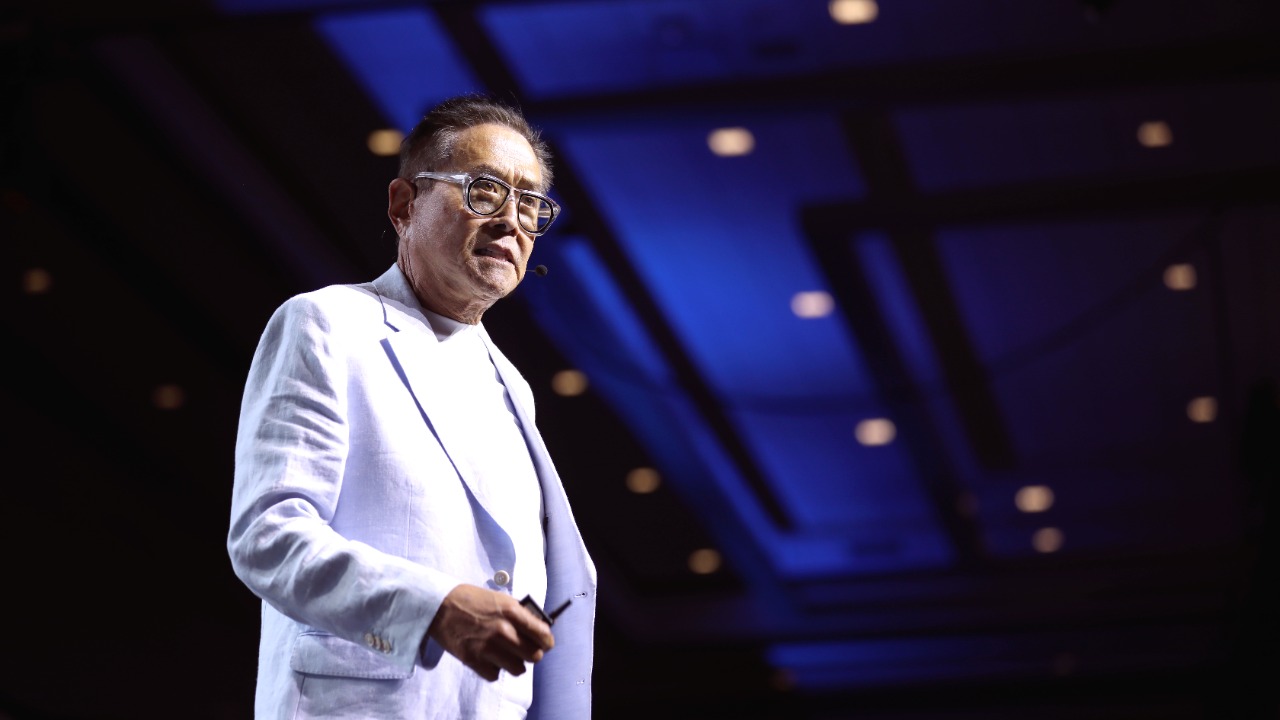
Robert Kiyosaki has spent decades arguing that most people work hard yet never escape the treadmill because they buy liabilities instead of true assets. His answer is a focused set of investments that generate cash flow, protect purchasing power and, in his view, offer a path to financial independence. Rather than chasing the latest fad, he keeps returning to four core plays that he believes can steadily build wealth over time.
Those ideas are landing in a market where speculation is everywhere, from crypto tickers to meme stocks. On Nov 20, 2025, for example, financial pages were filled with Trending Tickers like BTC at 84055.69 with a move of 2.12%, ETH at 2732.62 with a shift of 2.32%, and XRP at 1.93 against the USD, numbers that highlight how quickly prices can swing even in assets many now treat as mainstream. Kiyosaki’s framework is less about those day‑to‑day moves and more about building a portfolio of four investment types that can keep paying you regardless of what the market does next.
Why Kiyosaki’s four investments start with a different definition of “asset”
Before I can make sense of Kiyosaki’s four favored investments, I have to start with his definition of an asset, which is far stricter than what most people hear from banks or brokers. In his world, an asset is anything that reliably puts money into your pocket, while a liability takes money out, even if it looks impressive on a balance sheet. That lens comes straight out of the mindset popularized in Rich Dad, Poor Dad, where the “rich dad” teaches that financial freedom comes from owning income‑producing assets instead of relying on a paycheck, a lesson that has been distilled in many a Rich Dad Poor Dad Book Summary that emphasizes how Robert contrasts the two fathers’ beliefs about money.
That same philosophy is spelled out in more technical terms in his own educational material, where he explains that an asset may be a rental property that has a positive cash flow or a business that distributes profits, while anything that consistently drains your bank account is not an asset at all. The key test is simple: if it does not generate cash flow, it fails his definition, no matter how prestigious it looks on paper. In one breakdown of assets versus liabilities, he notes that an asset may be a rental property or a business investment, but if money is only flowing out of your pocket, it is not an asset, a distinction he uses to push readers away from consumer debt and toward cash‑flowing holdings that can eventually replace their salary.
Real estate: rental income and house flipping as cash‑flow engines
Real estate is the first pillar in Kiyosaki’s four‑investment playbook, and it fits his asset test neatly because it can generate rent every month while also offering the possibility of long‑term appreciation. In practice, that usually means buying properties that produce more in rental income than they cost to own, or improving and reselling homes at a higher price, a strategy that has been summarized in social posts that list Real Estate, Rental and House Flipping as the opening items in a four‑asset list. One widely shared breakdown from Nov 8, 2025, for example, highlights Real Estate, including Rental properties and House Flipping, as the first category in a set of assets that “make people rich,” underscoring how central property is in his framework for building wealth through assets.
In my view, what makes this approach distinctive is not just the focus on owning property, but the insistence that each building must pay for itself and then some. Kiyosaki often points to rental units that throw off positive cash flow as textbook examples of assets, because they can cover their own mortgages, taxes and maintenance while still leaving surplus income for the owner. That logic also explains why he is wary of treating a primary residence as an investment if it only generates expenses. When he talks about real estate, he is usually talking about properties that behave like small businesses, with tenants as customers and rent as revenue, a model that aligns with his broader insistence that an asset must put money into your pocket, not just sit on a spreadsheet looking impressive.
Businesses and paper assets: owning systems, not just paychecks
The second and third investments in Kiyosaki’s four‑part strategy are closely linked: owning businesses and holding paper assets such as stocks, bonds and mutual funds. In his hierarchy, a business is the ultimate asset because it can scale beyond the owner’s time, turning systems and employees into a machine that generates income even when the founder is not present. That idea shows up in social posts that list Businesses, including Brick and Mortar operations and online ventures, as a core wealth‑building asset alongside real estate and financial instruments, reflecting his belief that entrepreneurship is a primary path out of the wage‑earner mindset. When he talks about Businesses and Brick and Mortar companies, he is pointing to enterprises that can be bought, built or invested in so they produce ongoing cash flow instead of a single paycheck.
Paper assets, by contrast, are the stocks, bonds and mutual funds that most retirement savers already know, but Kiyosaki treats them as only one of several asset classes rather than the entire game. In one popular breakdown of his philosophy, a creator notes that Robert Kiyosaki breaks wealth down into four powerful asset classes, listing businesses, real estate, paper assets and commodities as the categories where “real freedom begins,” a summary that captures how he slots traditional securities into a broader four‑asset framework. I see his stance on paper assets as pragmatic rather than dismissive: he acknowledges that stocks and bonds can provide dividends and interest, which fit his asset test, but he repeatedly warns that relying only on market‑priced paper can leave investors exposed to volatility and inflation in ways that ownership of operating businesses and hard assets may help offset.
Commodities and hard assets: hedging inflation and currency risk
The fourth investment in Kiyosaki’s model is commodities, especially hard assets like precious metals that he believes protect purchasing power when currencies weaken. He has been explicit that he prefers tangible stores of value over cash, arguing that metals such as silver do not erode under inflation the way the dollar can. Earlier this year, for instance, he reiterated that preference by explaining why he favors hard assets over cash, describing how silver, in his view, holds up better against inflation than the U.S. currency, a point that has been summarized under the banner of Why Kiyosaki Prefers Hard Assets Over Cash. In practical terms, that translates into buying physical metals or other commodities that he expects to hold intrinsic value even if financial markets stumble.
That focus on hard assets is also tied to his skepticism about the safety of fiat money and certain financial products he labels “fake assets.” In one of his more pointed commentaries from Oct 13, 2025, he poses the question of what is truly safe if the dollar is not, and answers that the short list includes cash flowing assets and holdings that tend to rise when the dollar falls, a category that clearly includes the commodities he favors. The phrase All of this begs the question appears in that discussion as he walks through why he believes many conventional investments are riskier than they look, and why he prefers assets that can both generate income and potentially climb when currencies lose ground, a stance he reinforces in his guidance on avoiding fake assets that only appear solid on paper.
How Kiyosaki’s four investments fit together in a cash‑flow strategy
When I put these pieces together, what stands out is how integrated Kiyosaki’s four investments are rather than how different they look on the surface. Real estate, businesses, paper assets and commodities each play a distinct role, but they are all judged by the same standard: do they produce cash flow, and do they help protect or grow purchasing power over time. His own educational material on assets versus liabilities drives that point home by repeating that an asset may be a rental property or a business that gives you income, while anything that only drains your resources is not an asset, a definition that underpins his entire cash‑flow‑first philosophy. In that light, paper assets are useful when they pay dividends or interest, commodities are valuable when they hedge inflation, and businesses and properties are prized when they spin off steady income.
The broader context matters too. On Nov 20, 2025, when markets were fixated on Trending Tickers like BTC, ETH and XRP, with BTC at 84055.69 moving 2.12%, ETH at 2732.62 shifting 2.32% and XRP at 1.93 against the USD, Kiyosaki’s framework was not about predicting the next price spike but about owning assets that can keep paying regardless of those swings. In interviews around that time, he reiterated that his preferred investments are those that generate cash flow and possibly capital gains, a stance reflected in coverage of how he approaches four core investments to build wealth. For investors trying to navigate a noisy market, the takeaway is straightforward: instead of chasing every new asset class, Kiyosaki urges people to master a small set of proven categories, apply a strict definition of what counts as an asset and let cash‑flowing holdings, not speculation, do the heavy lifting over time.
More From TheDailyOverview
- Dave Ramsey warns to stop 401(k) contributions
- 11 night jobs you can do from home (not exciting but steady)
- Small U.S. cities ready to boom next
- 19 things boomers should never sell no matter what

Cole Whitaker focuses on the fundamentals of money management, helping readers make smarter decisions around income, spending, saving, and long-term financial stability. His writing emphasizes clarity, discipline, and practical systems that work in real life. At The Daily Overview, Cole breaks down personal finance topics into straightforward guidance readers can apply immediately.
