Investors are staring at a rare pairing of big numbers and bigger promises: a global robotaxi market projected to reach $105 billion by 2035 and forecasts that Tesla could be worth as much as $3 trillion as soon as 2026. The stakes are obvious, but the path from today’s experimental fleets to that kind of value creation is anything but straightforward. I see a story driven by aggressive autonomy bets, intense infrastructure demands, and a market that is already crowded with trillion‑dollar contenders.
The core question is whether today is the right moment to buy into that vision, particularly through Tesla, or whether expectations have sprinted ahead of what the technology, regulators, and consumers can realistically deliver. To answer that, it helps to separate the robotaxi opportunity from the Tesla narrative, then bring them back together through risk, execution, and valuation.
Robotaxis: from niche pilots to a projected $105B market
The commercial pitch behind robotaxis is simple: replace human drivers with software, cut costs, and turn ride‑hailing into a higher‑margin, always‑on utility. Analysts now expect the Global Robotaxi Market to Reach $105 billion by 2035, a figure that reflects both rapid software progress and the sheer size of today’s taxi and ride‑share spending. Growth is described as being driven by Advances in AI and machine learning that make fully autonomous driving a viable alternative to traditional taxis, as well as cost efficiency that could undercut services like Uber and Lyft.
Other forecasts echo that trajectory. One Robotaxi Market Summary estimates the global robotaxi market size at USD 0.61 billion in 2025, with a compound annual growth rate of 99.1% from 2026 to 2033, a classic “hockey stick” curve. Industry leaders describe the sector as Bolstered by market enthusiasm and expansion strategies, arguing that once safety and regulatory hurdles are cleared, adoption could accelerate quickly as fleets scale and per‑mile costs fall.
Behind the hype: technology, safety and infrastructure friction
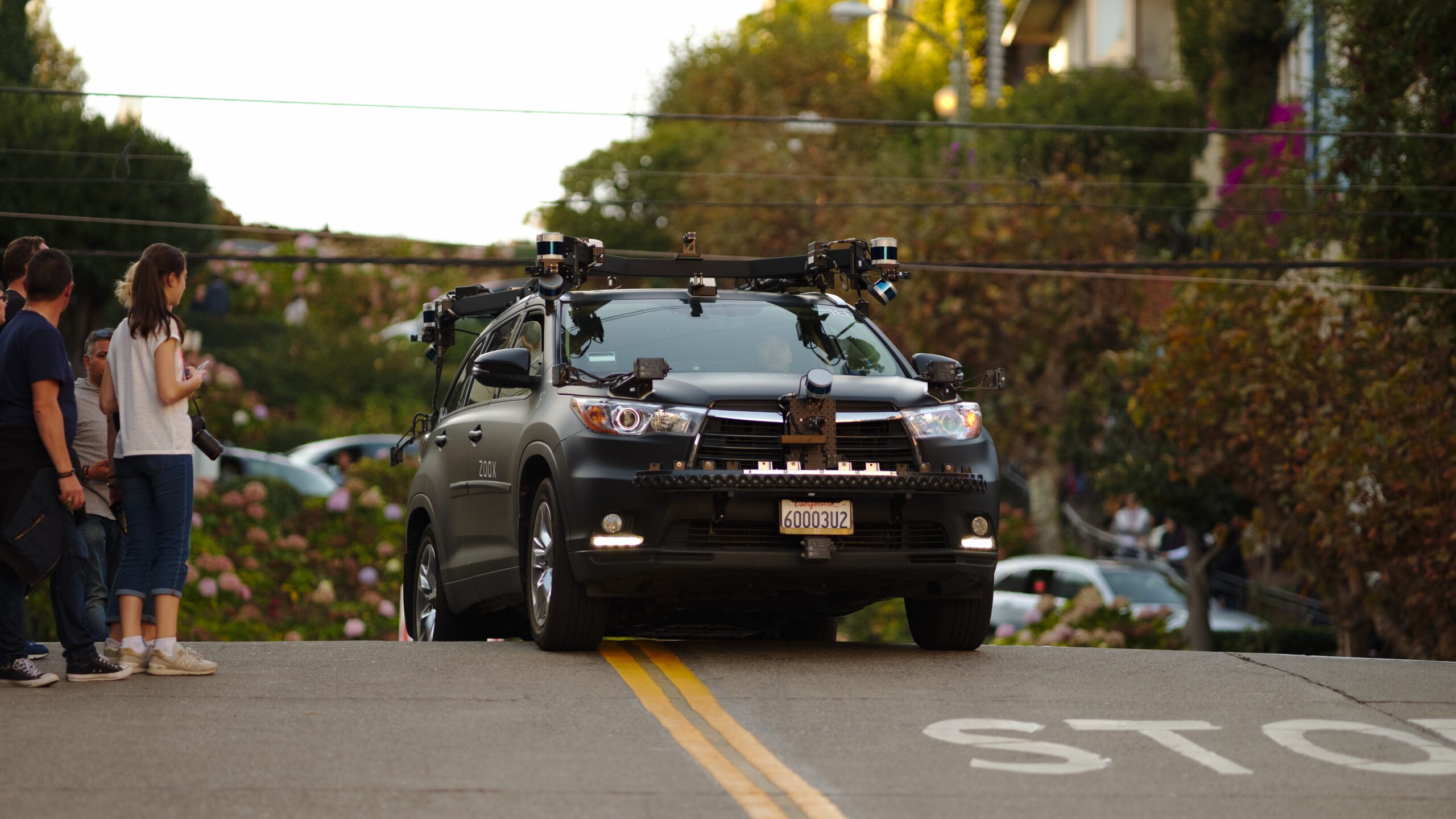
Under the hood, Robotaxis rely on a dense stack of hardware and software that is still evolving. Commercial services integrate LiDAR, radar, high‑density cameras and other sensor systems, fused with real‑time mapping and AI models trained on millions of miles of driving data. Analysts argue that this complexity is precisely why the autonomous vehicle market has been slower to materialize than early boosters predicted, even as they still expect reduced emissions and increased safety over time. The same research notes that Robotaxis are positioned as driverless vehicles for ride‑hailing, but the path from pilot to mass deployment is constrained by cost, regulation and public trust.
Safety is the most sensitive variable. Advocates argue that software will eventually outperform human drivers, yet Risks and Challenges are already visible on city streets. Despite their safety promise, robotaxis are not without risks, and Accidents involving autonomous vehicles have raised questions about how these systems handle edge cases, from emergency vehicles to unpredictable pedestrians. I see this as a key gating factor for the $105 billion projections: regulators and city officials will move cautiously if high‑profile incidents continue, which could slow rollouts even if the underlying technology improves.
Land grabs and capital intensity: why scaling robotaxis is hard
Even if the software works, robotaxis are a brutally physical business. Operators need depots, charging hubs and maintenance yards in dense urban areas, where real estate is expensive and neighbors are often skeptical. One recent analysis described how, in Jan, executives framed the current phase as a literal land grab, with companies racing to secure the best sites for charging and staging vehicles. They warned that Any one of the challenges, from finding real estate to dealing with utility companies, can derail a deployment if not managed well.
That capital intensity is often underappreciated by retail investors who focus on software margins. Robotaxi operators must fund fleets of electric vehicles, high‑power charging infrastructure and 24/7 operations teams, all before they reach meaningful scale. A separate industry view notes that the autonomous vehicle market is still wrestling with high upfront costs even as it promises long‑term benefits like reduced emissions and increased safety, a tension that will shape which players survive. For Tesla, which is already building factories and Supercharger networks, this infrastructure burden is a risk but also a potential moat if it can leverage existing assets more efficiently than newer entrants.
Tesla’s $3T dream: AI chapter, robotaxi pivot and valuation tension
Tesla sits at the center of this story because its valuation is increasingly tied to autonomy rather than just selling cars. Over the past decade, the stock is up by 3,190%, a run that reflects both electric vehicle dominance and investor belief in its software roadmap. Analysts now argue that the company is entering what some call its AI chapter, with Full Self‑Driving subscriptions, data‑center‑like training clusters and future robotaxi services seen as the next leg of growth. One detailed research note on The Great Pivot describes how Tesla is being analyzed as a transformation story from automaker to AI powerhouse, with its valuation increasingly dependent on software and services.
That narrative has produced some eye‑catching targets. One prominent forecast argues that Tesla Could Hit a $2 Trillion Market Cap 2026, and And Even $3 Trillion In a Bull Case As AI strategy takes hold. Another synthesis of market expectations notes that the Global robotaxi industry projected to hit $105 billion by 2035 is being directly linked to $105 and to Tesla potentially reaching $3 trillion in 2026, framed explicitly around the question, Should investors buy now.
Execution risk: FSD, robotaxi rollout and geopolitical exposure
For those lofty numbers to make sense, Tesla must deliver on a series of difficult execution milestones. A detailed research report on Risks and Challenges faces highlights that its valuation is tightly linked to Execution Risk around FSD and Optim, its humanoid robot project. The same analysis flags geopolitical exposure, including tensions between Washington and Beijing, as a structural risk for a company that relies on global supply chains and Chinese demand. In my view, this means that even if the robotaxi thesis plays out in the United States, external shocks could still derail the broader growth story.
On the product side, Tesla is clearly signaling that autonomy is no longer a side project. A recent update showed that Robotaxis are becoming central to its messaging, with Tesla Signals Robotaxi and a dedicated Here page How The Competition meant exclusively for robotaxis. That kind of branding shift usually precedes product and capital allocation moves, suggesting that management intends to lean harder into fleet services rather than just selling Model 3 and Model Y units to individual drivers.
More From TheDailyOverview
*This article was researched with the help of AI, with human editors creating the final content.

Grant Mercer covers market dynamics, business trends, and the economic forces driving growth across industries. His analysis connects macro movements with real-world implications for investors, entrepreneurs, and professionals. Through his work at The Daily Overview, Grant helps readers understand how markets function and where opportunities may emerge.