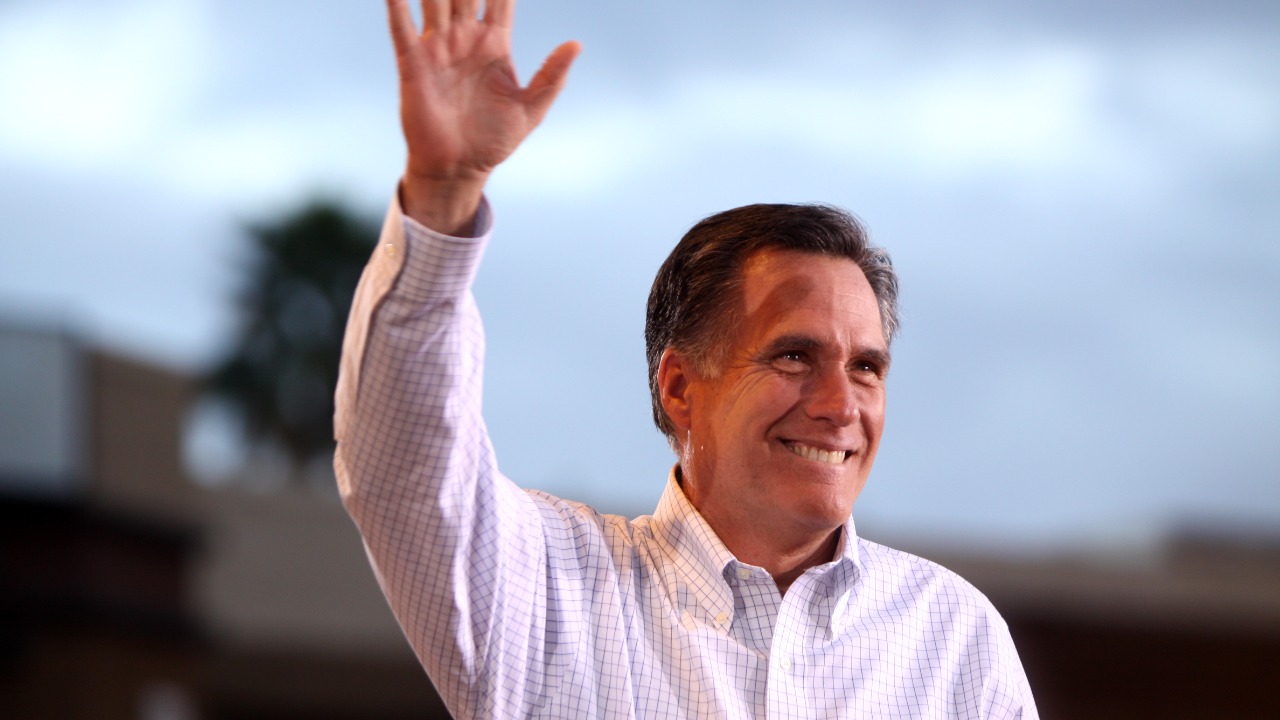
Social Security is sliding toward a funding crunch, and one of the Republican Party’s most prominent fiscal hawks is now arguing that higher taxes on the wealthy have to be part of the fix. Mitt Romney, long associated with calls for spending restraint, is urging his party to accept new revenue as Social Security nears what he describes as a breaking point for its trust fund. His shift is forcing a fresh debate on the right over whether protecting retirees now requires embracing ideas once dismissed as “tax the rich” sloganeering.
At stake is not just the future of Social Security and Medicare, but the shape of the broader tax code and the political identity of a GOP that has spent decades promising lower rates. Romney is betting that Republican voters will tolerate targeted tax hikes if they are framed as a rescue mission for programs that middle class retirees depend on. I see his argument as a test of whether fiscal realism can finally outrun anti-tax orthodoxy in Washington.
The looming Social Security crunch Romney keeps warning about
Romney has been sounding the alarm that the federal trust funds are on a collision course with basic arithmetic, and that ignoring the problem will eventually mean abrupt benefit cuts. He has framed the situation as a choice between proactive reform now or crisis management later, arguing that it is “irresponsible and reckless for Washington to continue to ignore the impending collapse of our federal trust funds” for Social Security and Medicare. In his view, the longer lawmakers wait, the more likely it becomes that retirees will face automatic reductions that neither party actually wants, a warning he has tied directly to the way politicians in Washington keep ducking hard votes on entitlements.
That sense of urgency is not abstract. Romney has stressed that Social Security and Medicare are the core entitlements driving long term deficits, and that their dedicated trust funds are projected to run short of cash within the working lives of today’s younger workers. When he presses colleagues by saying “the clock is ticking” on Social Security, he is channeling actuarial projections that show the program’s main trust fund heading toward depletion unless Congress changes either benefits or revenue. His insistence that Washington confront the “impending collapse” of these trust funds, captured in his comments as a Utah senator, sets the stage for why he is now willing to talk about tax hikes at all, something that would have been politically unthinkable for many Republicans a decade ago, as reflected in his warnings about Washington ignoring Social Security.
From entitlement hawk to tax-the-rich advocate
Romney’s new push for higher taxes on the wealthy is striking precisely because it comes from someone who has spent years urging Republicans to rein in federal spending. He has long argued that entitlement programs, especially Social Security and Medicare, are unsustainable on their current trajectory and that both parties have been dishonest about the scale of the problem. Now he is pairing that critique with a call to raise more revenue from the top of the income distribution, effectively telling his own party that math, not ideology, has to drive the next phase of reform.
In a recent opinion piece that ran about a 900-word length, Romney devoted only a single paragraph to spending cuts and instead leaned heavily into the case for new revenue. He recommended making Social Security an even more progressive program by lifting the cap on wages that are subject to payroll taxes and by targeting investment income that is currently not taxed for Social Security. He also floated the idea of “crushing” certain tax preferences that benefit high earners, including breaks that interact with the 24% capital gains tax, signaling that he is prepared to rewrite parts of the tax code that Republicans once treated as sacrosanct.
How Romney’s earlier TRUST Act previewed this moment
Romney’s current tax proposals do not come out of nowhere, they build on a longer campaign to force Congress to grapple with the finances of Social Security and other trust fund programs. Back in Oct, he led a proposal called the Time to Rescue United States’ Trusts Act, better known as the TRUST Act, which would have created bipartisan “rescue committees” for programs like Social Security and Medicare. The idea was to compel lawmakers to produce solvency plans that would then receive expedited votes in both the House and Senate, limiting the ability of either party to duck the issue or filibuster it to death.
Critics at the time worried that the TRUST Act would become a backdoor for benefit cuts, since any rescue committee would be under pressure to close funding gaps quickly. Supporters countered that the structure was neutral and could just as easily recommend revenue increases as reductions in promised payments. What matters now is that Romney’s willingness to empower such committees signaled his belief that the normal legislative process is too paralyzed to handle entitlement reform. His new openness to tax hikes on the wealthy can be seen as an evolution of that same instinct, a recognition that any politically viable rescue plan for Social Security will likely need both revenue and spending changes, just as the Time to Rescue United States’ Trusts framework anticipated.
The specific tax hikes Romney is now putting on the table
Romney is not speaking in vague generalities when he talks about taxing the rich to shore up Social Security, he is naming concrete changes that would hit very high income households. One of his central ideas is to lift or eliminate the cap on wages subject to the Social Security payroll tax, so that earnings above the current ceiling are no longer exempt. He has also suggested that certain forms of investment income, which are now outside the Social Security base, should be pulled in so that affluent investors contribute more to the program that pays benefits to retirees.
He has gone further by targeting what he describes as loopholes that allow large fortunes to escape taxation across generations. The former Utah senator has said he supports sealing a taxation loophole on large inheritances over $100 m, specifying that estates above $100 million should not be able to avoid contributing to the system. He has tied these proposals to the broader challenge of aligning Social Security’s finances with the American life expectancy, arguing that if people live longer and collect benefits for more years, then the tax code has to adjust so that the very wealthiest households shoulder more of the cost.
Entitlement reform still matters: means testing and retirement age
Even as Romney leans into higher taxes on the rich, he has not abandoned his long standing view that entitlement reform on the spending side is unavoidable. He has argued that only changes to the structure of Social Security and Medicare will make a meaningful difference to long term deficits, and that trimming around the edges will not be enough. In his latest pitch, he treats revenue as a necessary supplement, not a substitute, for reforms that would slow the growth of benefits for those who need them least.
That is where ideas like Means Testing and Raising Retirement Age enter the conversation. Romney has signaled openness to further means testing of Social Security, which would reduce or phase out benefits for higher income retirees, and to gradually increasing the age at which future workers can claim full benefits. Advocates of this approach argue that it would protect the most vulnerable while aligning the program with longer lifespans, while critics worry it could undermine political support by weakening the sense that everyone gets something back. The tension is captured in analyses that call for more aggressive means testing as the calendar turns to 2026 and the urgency of Social Security’s long term financial situation grows, a debate that has explicitly engaged As the calendar turns to 2026, so does the urgency to focus seriously on Social Security and Romney’s thinking on this issue, as well as commentary that frames Means Testing and Raising Retirement Age as the only spending side changes large enough to matter, as highlighted in discussions of Means Testing & Raising Retirement Age.
Why Romney says revenue alone will not save Social Security
Romney has been careful to argue that while new revenue is essential, it cannot be the only lever pulled if policymakers want to stabilize Social Security and Medicare for the long haul. He has pointed to projections showing that even aggressive tax hikes on the wealthy would not fully close the gap created by demographic shifts, with fewer workers supporting more retirees. In his telling, the math of an aging society means that benefits and eligibility rules have to be part of the conversation, no matter how politically uncomfortable that may be.
In a detailed discussion of his views, Romney focuses first on the importance of grappling with entitlements, namely Social Security and Medicare, because they are the largest and fastest growing parts of the federal budget. Only after laying out the scale of those obligations does he turn to the case for revenue increases, arguing that targeted tax hikes alone could significantly improve solvency but would still leave a residual shortfall. That sequencing reflects his belief that entitlement reform and revenue must be paired, not traded off, a stance that comes through clearly in his call for both entitlement reform and revenue increases.
How Romney’s tax pitch fits into the broader “tax the rich” debate
Romney’s proposals land in the middle of a broader national argument over whether wealthy Americans should pay more, and whether such promises can really solve the country’s fiscal challenges. Progressive activists have long rallied around the “tax the rich” slogan, often suggesting that higher rates on millionaires and billionaires could fund expansive new programs. Romney is instead trying to channel that impulse into a narrower mission, using targeted tax hikes to preserve existing entitlements rather than to build new ones.
Critics of this approach warn that the arithmetic of relying on the top of the income distribution is more limited than it sounds. Analyses of the tax code point out that High income households already shoulder a disproportionate share of federal income taxes, and that there are practical limits to how much more can be raised without distorting investment or driving avoidance. One recent commentary framed the issue bluntly, urging readers to Start with a basic arithmetic problem that never goes away when evaluating calls to “tax the rich,” and questioning whether symbolic offers by wealthy individuals to pay more should drive policy. That skepticism is captured in arguments that interrogate the Start with a basic arithmetic behind the “tax the rich” impulse, a challenge Romney has to answer if he wants his plan to be seen as more than a political gesture.
Romney’s NYT op-ed and the politics of breaking with GOP tax orthodoxy
Romney’s decision to lay out his case in a high profile opinion piece was as much a political signal as a policy blueprint. By putting his name on a proposal that explicitly calls for raising taxes on the super rich, he is inviting a backlash from anti tax activists and some Republican colleagues who still see any rate increase as a betrayal. At the same time, he is betting that voters who rely on Social Security and Medicare will reward a Republican willing to say out loud that the numbers do not add up without more revenue from those at the very top.
The op-ed itself, titled in a way that made clear that Mitt Romney Calls For Raising Taxes On Super Rich In NYT Op, underscored his status as a Former Utah Republican Sen who is no longer running for reelection and therefore has more freedom to challenge party dogma. He framed his argument as a pragmatic response to the projected shortfall in the Social Security trust fund, not as an ideological conversion to progressive tax politics. That distinction matters, because it allows other Republicans to consider similar ideas under the banner of fiscal responsibility rather than class warfare, a nuance that was evident in coverage of how Mitt Romney Calls For Raising Taxes On Super Rich In NYT Op.
What this means for current and future beneficiaries
For current retirees, the immediate stakes of Romney’s plan are less about tomorrow’s check and more about whether the system will still be intact a decade from now. Social Security is already adjusting its rules in ways that affect beneficiaries, including a new set of 6 2026 Social Security Rules for Beneficiaries Taking Effect that change how payments are calculated and delivered. Key Points in that update include the fact that All Social Security beneficiaries will get a cost of living adjustment beginning with their January check, a reminder that even without sweeping reform, the program is constantly evolving in response to inflation and other pressures.
Romney’s argument is that without a broader fix, those incremental changes will eventually give way to abrupt, across the board cuts once the trust fund is exhausted. For younger workers, that raises the question of whether they should expect the same level of support their parents received, or whether higher taxes and later retirement ages will be the price of keeping the system solvent. By tying his tax proposals to the goal of avoiding sudden benefit reductions, he is trying to reassure both current and future beneficiaries that shared sacrifice now, especially from the very wealthy, can prevent a more painful reckoning later, a message that resonates against the backdrop of the new Social Security Rules for Beneficiaries Taking Effect.
More From TheDailyOverview

Nathaniel Cross focuses on retirement planning, employer benefits, and long-term income security. His writing covers pensions, social programs, investment vehicles, and strategies designed to protect financial independence later in life. At The Daily Overview, Nathaniel provides practical insight to help readers plan with confidence and foresight.

