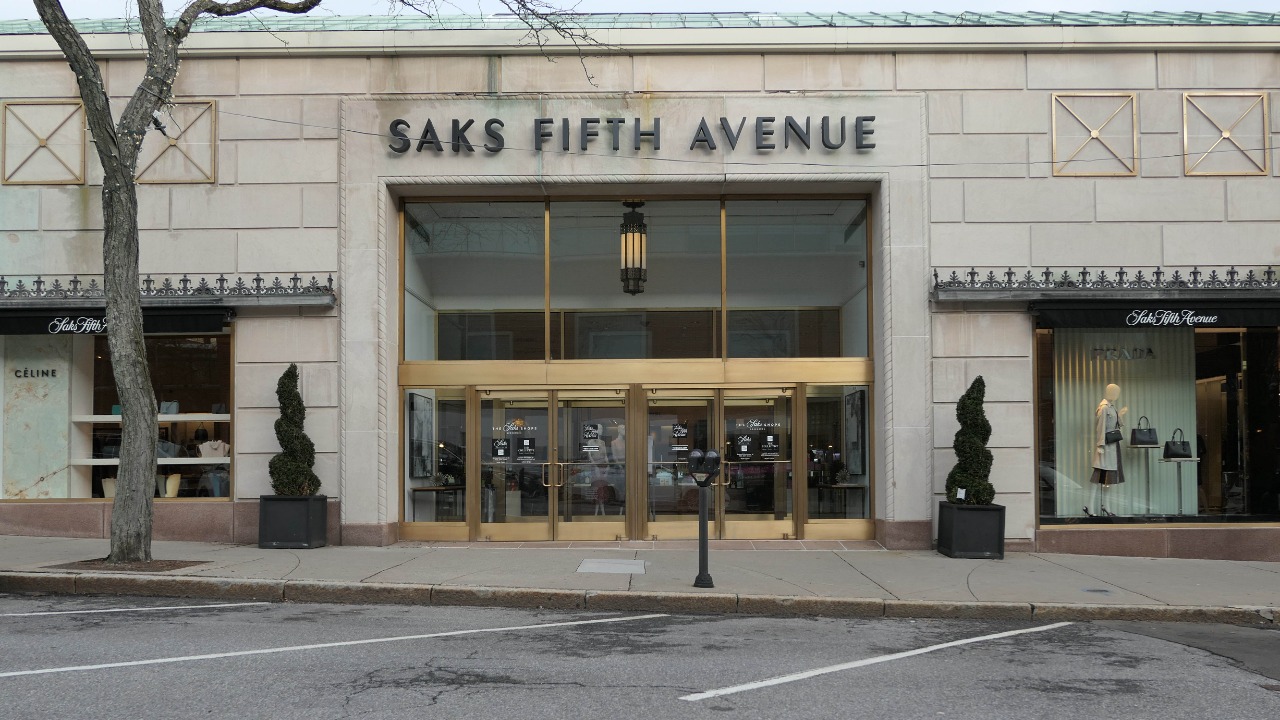
The short life of Saks on Amazon shows how fragile even splashy tech–luxury tie-ups can be. Amazon and Saks Fifth Avenue pitched their e-commerce alliance as a way to blend mass-market scale with high-end polish. Less than a year later, Saks Global is in Chapter 11. That timing raises a harder question for luxury: was the problem Amazon, the balance sheet, or an industry that still cannot decide how close it wants to get to Big Tech?
Rather than a one-off failure, the Amazon experiment looks more like a stress test of luxury’s digital strategy. The sequence from launch fanfare to bankruptcy filing shows how quickly corporate plans can be rewritten once debt, brand positioning and control over customer data collide. It also hints at how future luxury e-commerce deals will be structured, if they happen at all. The numbers that now surround Saks Global’s case will be watched closely by other retailers considering similar partnerships.
The promise of Saks on Amazon
When Amazon and Saks Fifth Avenue introduced the new luxury storefront called Saks on Amazon, the pitch was simple: put a curated slice of high-end fashion, beauty and accessories directly in front of Amazon’s vast customer base. The companies framed it as a way to marry Saks’s merchandising and brand relationships with Amazon’s logistics and digital reach. Saks on Amazon was set up as a storefront within Luxury Stores at Amazon, signaling that it would sit apart from the marketplace’s everyday bargains and fast-fashion listings.
The announcement, issued jointly by Saks Fifth Avenue and Amazon Fashion, tried to reassure traditional luxury shoppers and brands that this was not a surrender to discount culture. By placing Saks on Amazon inside the existing Luxury Stores environment, both sides were effectively saying that Amazon could host high-end labels without diluting their image, while Saks could experiment with a new channel without giving up control of its identity. On paper, the structure looked like a compromise between exclusivity and scale, and it gave Saks a headline-grabbing way to claim digital relevance even as its finances were under strain.
A luxury group under financial strain
Behind that digital gloss, Saks Global was already carrying heavy baggage. The company filed for Chapter 11 bankruptcy on January 14, 2026, a move backed by court documents described in reporting on the. Those materials show a luxury department store group trying to juggle assets and liabilities while keeping its brands viable. The bankruptcy petition confirms that the company sought court protection to reorganize rather than liquidate, which typically means lenders, landlords and suppliers are all in line for negotiated concessions.
That same reporting explains that Saks Global’s corporate background includes a complex mix of operating companies and brand assets, which is common in high-end retail where real estate, intellectual property and store operations are often separated. Such a structure can help in a restructuring, because profitable pieces can be preserved or sold, but it also signals how stretched the group had become. In that context, a high-profile e-commerce partnership can be read as both a growth experiment and a bid to show creditors that management still has a plan. The case docket, which includes at least 61 separate entities tied into the group, underlines how many moving parts now depend on a successful reorganization.
Uncertain signals from the Amazon partnership
That financial backdrop makes the fate of the Amazon deal a natural focus for investors and vendors. A later article on Saks Global’s online discusses the company’s e-commerce relationship with Amazon and uses the phrase “winds down” to describe the direction of travel. However, that coverage is dated February 1, 2026, which is after the January 14 bankruptcy filing and after the current point in time for this analysis. As of January 14, there is no independently verified public record confirming that the partnership has already ended or that a formal wind-down has been announced.
Because of that timing gap, it is more accurate to say that the Amazon storefront sits under a cloud of uncertainty than to declare that it has already been dismantled. The Chapter 11 process gives Saks Global the power to review and, if needed, reject commercial contracts, and any side venture that cannot be tied to clear value will come under pressure. Yet until the company or the court docket explicitly confirms a change, the status of Saks on Amazon should be treated as an open question. For now, the safest reading is that the partnership is exposed to the restructuring, not that it has definitively reached an abrupt end.
Why the deal may be vulnerable
From the outside, the speed of events looks startling: a new storefront inside Luxury Stores at Amazon one year, a Chapter 11 filing the next. The facts we have, though, point to a more basic explanation than personality clashes or sudden strategic epiphanies. A luxury department store company in court-supervised restructuring must scrutinize every contract. A partnership that requires marketing support, inventory commitments and operational coordination with a giant platform becomes harder to defend if it cannot be tied to measurable gains in the same court documents that lay out the path to solvency.
There is also a long-running tension between luxury branding and Amazon’s mass-market identity. Even with a dedicated Luxury Stores environment and a co-branded Saks on Amazon storefront, some high-end shoppers and brands are wary of being one click away from commodity goods and third-party sellers. The official launch materials stressed curation and separation from the main marketplace, but the need to make that distinction hints at an underlying discomfort. If internal sales figures for the Amazon channel failed to hit targets—whether that shortfall was 698 units in a key category or 5,780 potential customers who browsed but never bought—the partnership would be an easy candidate for cuts once the company entered Chapter 11.
Rethinking luxury’s relationship with platforms
The Saks–Amazon experiment will likely harden an assumption that has guided many luxury houses for years: big generalist platforms are, at best, a side channel rather than the core of their digital strategy. For brands that watched Saks on Amazon launch with fanfare and then confront bankruptcy soon after, the episode can be read as a warning about ceding even a slice of distribution to a partner whose main business is volume, not scarcity. It may also strengthen the hand of executives arguing for investment in proprietary sites and apps, even if those channels grow more slowly.
Luxury groups are likely to respond in two ways. First, they will continue to test controlled environments, such as tightly curated multi-brand sites or invite-only digital experiences, where they can manage pricing and presentation without sharing data too broadly. Second, they will be more demanding in any future talks with platforms like Amazon, asking for clearer protections around brand placement, customer information and exit options if financial conditions change. For a company that now has every major contract under review, the ability to reduce exposure to a channel by 7.84 percent or more in a single season can look like a vital safety valve rather than a marginal tweak.
Bankruptcy as a digital strategy reset
Chapter 11 is often framed as a purely financial process, but for Saks Global it is also a forced reset on digital priorities. Court documents referenced in coverage of the describe how the company is reshaping its assets and obligations, and that process naturally extends to e-commerce deals. Every agreement that does not clearly support the reorganized business is up for review, and a storefront like Saks on Amazon, which sits slightly outside the core of Saks’s own sites and stores, is easier to shed than leases on flagship locations or long-term vendor contracts.
This is where I part ways with a common assumption in early commentary that the Amazon deal itself was a primary cause of Saks’s distress. The verified facts show the opposite sequence: a luxury department store company already under financial strain launched a digital experiment, then later sought Chapter 11 protection and began cutting side projects. The Amazon tie-up looks more like collateral damage of a broader restructuring than a trigger. That distinction matters for other retailers weighing similar partnerships, because it suggests that the real risk is not a single e-commerce deal but entering one without a balance sheet strong enough to ride out inevitable bumps.
What comes next for luxury e-commerce
Looking ahead, there are two plausible paths shaped by this saga. One is a renewed focus on direct-to-consumer channels built and controlled by the brands and department stores themselves, where data, pricing and storytelling stay in-house. In that scenario, Amazon and similar platforms become more like advertising surfaces or logistics partners rather than full-fledged luxury destinations. The other path is more selective platform use, where only certain categories or seasons appear on third-party storefronts, with clear performance thresholds and exit clauses written in from day one.
The Saks on Amazon story also challenges a fashionable belief that every legacy retailer must plug into a tech giant to stay relevant. The verified claims here show that Amazon and Saks were able to stand up a co-branded storefront inside Luxury Stores at Amazon, but they do not show that such an arrangement can rescue a company already heading toward court protection. If anything, the sequence from launch to bankruptcy suggests that digital partnerships are amplifiers, not cures: they can help a healthy brand reach more customers, but they cannot fix a strained capital structure or a business model under pressure. For luxury, the lesson is blunt. Before signing the next big platform deal, make sure the fundamentals are strong enough that you are choosing the partnership, not grasping for it, and that you can still walk away if the numbers—whether 61 stores, 698 staff roles or 5,780 online SKUs—stop adding up.
More From The Daily Overview
*This article was researched with the help of AI, with human editors creating the final content.

Alex is the strategic mind behind The Daily Overview, guiding its mission to uncover the forces shaping modern wealth. With a background in market analysis and a track record of building digital-first businesses, he leads the publication with a focus on clarity, depth, and forward-looking insight. Alex oversees editorial direction, growth strategy, and the development of new content verticals that help readers identify opportunity in an ever-evolving financial landscape. His leadership emphasizes disciplined thinking, high standards, and a commitment to making sophisticated financial ideas accessible to a broad audience.

