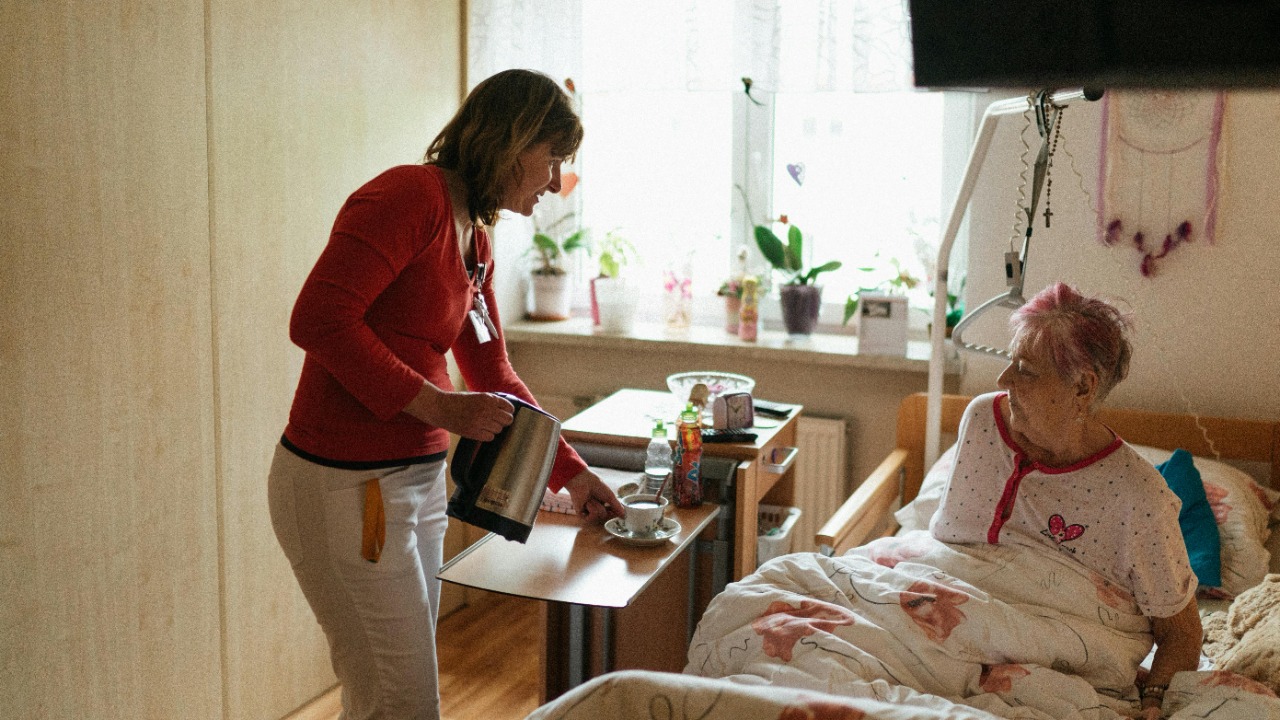
Federal data now shows that 38.2 million Americans provided unpaid eldercare in the 2023-2024 period, with the heaviest burden falling on workers aged 55 to 64 who are simultaneously approaching retirement. Lawmakers in Congress have responded with proposed legislation that would grant Social Security credits to caregivers, but the measures have not become law, leaving millions to absorb the financial impact on their own. The collision between family obligation and retirement planning has created a quiet crisis for the so-called sandwich generation, those adults squeezed between caring for aging parents and supporting children or saving for their own futures.
38 Million Unpaid Caregivers and a Peak at Pre-Retirement Age
The scale of unpaid eldercare in the United States is now measurable with precision. According to the Bureau of Labor Statistics, 14% of the civilian noninstitutional population aged 15 and over provided unpaid eldercare during the 2023-2024 period, a figure representing 38.2 million people. The data comes from the American Time Use Survey, which tracks how Americans spend their hours across work, leisure, and caregiving activities and is accessible through the agency’s interactive time-use database. That 14% figure captures a broad swath of the population, but the distribution is not even across age groups, revealing a pronounced skew toward people in late middle age.
The sharpest concentration falls on people closest to retirement. Adults aged 55 to 64 reported the highest eldercare prevalence at 24%, roughly one in four people in that age bracket, according to the Bureau of Labor Statistics’ eldercare release summary. This is the same cohort that financial planners typically describe as being in their peak saving years, the final stretch before drawing down 401(k) accounts and claiming Social Security. For many in this group, the math does not work: hours spent driving a parent to medical appointments or managing their daily needs are hours not spent earning wages or contributing to retirement accounts. While the American Time Use Survey does not isolate those caring for both children and elderly relatives at the same time, the age overlap strongly suggests that a significant share of these caregivers are managing obligations on both ends, with little room to recover lost earnings before retirement.
How Caregiving Erodes Social Security Benefits
The retirement penalty for unpaid caregiving operates through a specific mechanism in the Social Security system. Benefits are calculated based on a worker’s 35 highest-earning years; when a caregiver steps out of the workforce, even temporarily, those zero-earning years can drag down the average, producing a smaller monthly check at retirement. For someone who spends five or ten years out of paid work to care for a parent or a child with a disability, the reduction can be severe and permanent. The office of U.S. Senator Kirsten Gillibrand has underscored that caregivers who leave the workforce lose crucial Social Security credits, increasing the risk of lower or insufficient benefits after they themselves age out of their caregiving roles.
The damage extends beyond the monthly benefit calculation. Caregivers who reduce their hours or exit the labor force also lose access to employer-sponsored retirement plans, health insurance, and the compounding growth that comes from consistent 401(k) contributions during peak earning years. Unpaid caregiving can also interrupt access to employer-sponsored retirement plans, health insurance, and the compounding growth that comes from consistent 401(k) contributions during peak earning years. AARP’s “Valuing the Invaluable” 2023 update, which the Administration for Community Living has cited in its own policy materials, attempts to quantify the broader economic toll of caregiving nationally, estimating hundreds of billions of dollars in unpaid labor. For individual caregivers, the practical result is a retirement savings gap that widens with every year spent outside paid employment, often without any formal recognition in the Social Security records that determine their future income.
Congressional Proposals Stall While the Problem Grows
Two separate legislative efforts have tried to address the retirement penalty. Senator Gillibrand’s proposed Social Security Caregiver Credit Act would create a new category of credit for people who provide substantial unpaid care, assigning deemed earnings to caregivers so that their benefit formulas do not treat caregiving years as zeros. The legislation envisions eligibility thresholds based on hours of care provided per month and the types of dependents being supported, meaning it would cover both eldercare and care for children with disabilities. In parallel, Senator Chris Murphy and Representative Brad Schneider have moved to bolster support through their own caregiver credit bill, reintroducing the concept in Congress and signaling that the issue resonates beyond a single office or party.
The gap between proposal and law matters because the demographic pressure is accelerating. As the baby boom generation ages further into its 70s and 80s, the number of Americans needing eldercare will continue to climb, and the share of middle-aged workers pulled into unpaid caregiving is likely to rise with it. BLS time-use data already show that nearly a quarter of people in the 55-to-64 bracket are providing unpaid eldercare, and that share could change as the population ages. Without a credit mechanism, each of those caregivers faces a compounding retirement shortfall that will be difficult to close with late-career catch-up contributions alone. The legislative proposals would not eliminate the financial sacrifice of caregiving, but they would prevent the Social Security formula from treating years of unpaid family care as years of zero productivity, a change advocates argue is the bare minimum recognition of the economic value these caregivers provide.
Why Employer Policies Alone Cannot Close the Gap
Some analysts and financial services firms have pointed to employer flexibility as a partial solution. A Bloomberg-sponsored analysis of the sandwich generation’s retirement readiness has raised concerns about under-saving amid rising life expectancy and escalating caregiving demands, highlighting how flexible work arrangements and paid leave can help. Flexible schedules, remote work options, and phased retirement programs can allow caregivers to remain attached to the labor force, preserving at least some earnings and benefit accrual while they juggle family responsibilities. In workplaces that offer comprehensive paid family leave, caregivers may be able to step back temporarily without sacrificing health insurance or retirement contributions, softening the immediate financial blow of caregiving episodes.
But these measures depend entirely on employer willingness and are unevenly distributed across industries and income levels. Higher-paid professionals are more likely to have access to remote work and generous leave, while hourly workers in service or manufacturing roles often have little flexibility and limited benefits. Even when employers do offer supportive policies, they cannot change how the federal benefit formula treats years with low or no earnings. Data from the BLS, accessible through its public query tools, consistently show disparities in access to benefits by occupation and wage level, suggesting that voluntary employer measures will leave large segments of caregivers unprotected. Without a statutory caregiver credit, employer policies can mitigate but not erase the long-term retirement penalty baked into Social Security’s structure.
Rethinking Retirement Policy for a Caregiving Nation
The emerging picture is of a labor market and retirement system that still assumes a linear, uninterrupted career, even as tens of millions of Americans move in and out of paid work to care for loved ones. Federal time-use and labor data confirm that unpaid eldercare is not a marginal phenomenon but a central feature of middle age for a large share of the population, particularly those nearing retirement. Yet the core rules governing Social Security and many employer retirement plans have not been updated to reflect this reality, effectively shifting the cost of eldercare onto the future incomes of those who provide it. For the sandwich generation, this means that today’s unpaid hours can translate into tomorrow’s financial insecurity, especially for workers with less flexibility and fewer benefits.
Policymakers now face a choice between incremental adjustments and more fundamental reform. Caregiver credits within Social Security would be one targeted way to align benefits with the country’s reliance on unpaid family labor, especially if paired with better data collection and reporting through established federal statistical systems. Additional steps, such as expanding access to paid family leave, encouraging portable retirement benefits, and strengthening enforcement of workplace protections for caregivers, could distribute the costs of care more broadly across society rather than concentrating them on individual households. As the United States ages, the question is no longer whether unpaid caregiving will shape retirement outcomes, but whether public policy will continue to ignore that reality or begin to recognize and compensate the work that millions are already doing in the shadows of the formal economy.
More From The Daily Overview
*This article was researched with the help of AI, with human editors creating the final content.

Nathaniel Cross focuses on retirement planning, employer benefits, and long-term income security. His writing covers pensions, social programs, investment vehicles, and strategies designed to protect financial independence later in life. At The Daily Overview, Nathaniel provides practical insight to help readers plan with confidence and foresight.