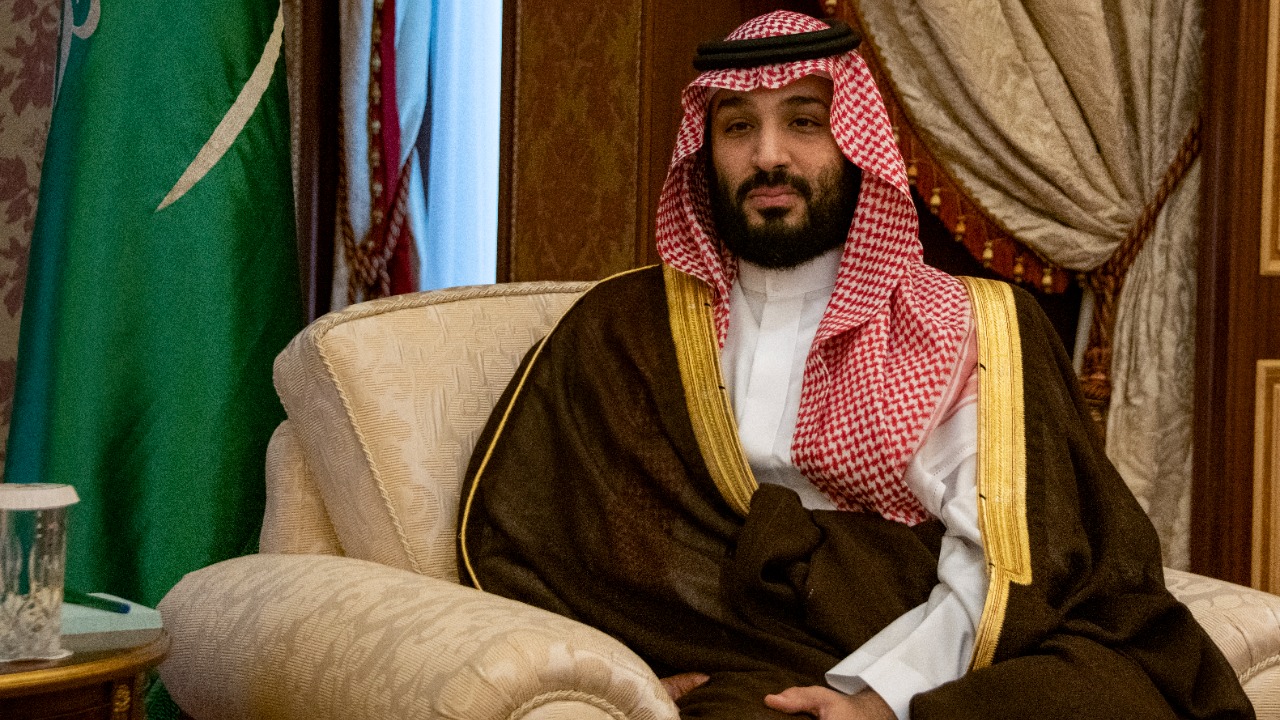
The Saudi crown prince has just put a number on his ambition for the United States, and it is big enough to reset expectations on both sides of the relationship. By pledging a vast new wave of capital into American industry and technology, he is turning what used to be a transactional oil-for-security bargain into a sprawling investment partnership that reaches from data centers in Memphis to chip fabs on the Gulf.
What looks at first like a simple promise of jobs and factories is in fact a strategic pivot, one that ties Saudi Arabia’s domestic transformation to the future of U.S. artificial intelligence, energy and defense. The scale of the money, the sectors it targets and the political choreography around it all signal that the kingdom wants to be treated less as a client and more as a co-architect of the next phase of American economic power.
The trillion‑dollar headline and a decade in the making
The centerpiece of the shift is the Saudi crown prince’s decision to hike his country’s committed investment in the U.S. economy to nearly $1 trillion, a figure he highlighted in mid November as part of a broader push to lock in long term deals. That pledge, reported on Nov 17, 2025, came with the explicit promise of creating “hundreds of thousands of jobs” in the United States and was framed as a win for President Donald Trump, who publicly embraced the scale of the commitment and its political upside for American workers, according to a detailed account of the Saudi Crown Prince announcement.
That headline number did not appear out of nowhere. It builds on a pattern of Saudi capital flowing into the United States that accelerated after President Trump’s highly publicized visit to Riyadh and the, in May, when the two governments touted roughly $600 billion in Saudi commitments across economic and defense deals. The White House later underscored that those agreements, formalized again on Nov 17, 2025, were designed to “directly benefit the American people,” presenting the $600 billion figure as proof that the partnership was already reshaping supply chains and weapons contracts, as laid out in an official $600 billion fact sheet.
From oil to AI: how Washington became the launchpad
The crown prince’s latest U.S. tour was not built around oil fields or arms shows, but around artificial intelligence and advanced computing, and it is here that the pivot becomes clearest. During his first American trip since the killing of Jamal Khashoggi in 2018, he convened top executives at a high profile investment forum and promised to lift Saudi investment in the United States to $1 trillion while pitching a government‑backed Saudi AI firm as a partner for corporate America, according to a detailed rundown of the Companies gathering. That same week, U.S. regulators approved exports of cutting edge AI chips to Gulf buyers, a move that followed what one analyst described as “Saudi’s Victory Lap” after the crown prince’s meetings in Washington and that explicitly cited Saudi Arabia’s AI company HUMAIN as a key customer straddling the interests of the U.S. and China, as detailed in coverage of Saudi’s Victory Lap.
Inside the Oval Office, the technology focus was just as explicit. During his White House session with President Trump, the crown prince pressed for deeper cooperation on AI infrastructure at the same time that U.S. tech leaders were racing to build massive data centers on American soil, including xAI’s Colossus facility in Memphis, which has become a symbol of how Many new data centers in the United States are now central to the AI race. Analysts have warned, however, that this surge in infrastructure could concentrate power in a handful of platforms even as it promises a clean energy build‑out, a tension highlighted in reporting that tracks Colossus in Memphis alongside Saudi ambitions in chips and cloud, as explored in a broader look at how However the AI race is unfolding.
Vision 2030, the PIF and why the money is moving now
Behind the splashy U.S. announcements sits a domestic agenda that is just as ambitious. In October, Saudi Arabia rolled out its National Investment Strategy as a core pillar of Vision 2030, explicitly targeting total investment flows of $3 trillion and aiming to lift annual investment to $450 billion annually by 2030 in order to diversify away from crude exports. That framework, which treats outbound capital as a tool for transforming the kingdom at home, is the policy backbone for the current U.S. push, as spelled out in a State Department overview of how, In October, Saudi Arabia launched its National Investment Strategy under Vision 2030.
The main engine for that strategy is The Saudi Public Investment Fund, which has been tasked with driving the country’s transition from a hydrocarbon‑dependent exporter into a diversified, high tech economy. A recent analysis of The Strategic Role of the Public Investment Fund on Sep 15, 2025, describes how the PIF has ramped up its global portfolio to secure long term growth, with U.S. assets now central to its plan to seed new industries and bring know‑how back to the kingdom, as detailed in a breakdown of how The Strategic Role of the Public Investment Fund is evolving.
Inside the Washington charm offensive
The crown prince’s latest visit to Washington was choreographed as much for symbolism as for deal‑making, and it is here that the political stakes of the investment pivot come into focus. One detailed account, labeled Faisal’s view, argues that There were many ways to interpret the Saudi Arabian Crown Prince Mohammed bin Salman trip, but that the core message was that the United States remains the partner of choice even as Riyadh courts Beijing and Moscow, a framing that casts the new U.S. commitments as a hedge against geopolitical uncertainty, as laid out in an analysis of how Faisal reads the visit.
At the same time, U.S. foreign policy experts have been quick to note that this embrace comes after decades in which the old security guarantees frayed, especially after President Trump decided not to respond militarily to attacks on Saudi oil infrastructure that many in Riyadh saw as a test of American resolve. A recent expert brief argues that the latest wave of investment and defense deals is an attempt to rebuild those commitments on a more transactional, interest‑based footing, with both President Trump and the crown prince invoking shared economic gains rather than abstract notions of alliance, as examined in a study of President Trump and the latest U.S.‑Saudi embrace.
AI mega‑deals and the new industrial map
The most concrete expression of the Saudi pivot is a cluster of AI and digital infrastructure deals that tie Saudi capital directly to U.S. technology companies. On Nov 18, 2025, officials unveiled Saudi‑US investment deals worth US $575 billion to reshape the future economy, Led by SDAIA, Humain, DataVolt, and Aramco Digital on the Saudi side and partners such as xAI, AWS, AMD, Cisco and NVIDIA in the United States, with $18.7 billion spread across 8 initiatives that range from hyperscale data centers to joint research labs, according to a detailed breakdown of how Led Saudi and U.S. partners structured the package. In parallel, a separate report describes how the crown prince signed a memorandum that involves Nvidia supercomputers and pledged to channel a significant share of the new U.S. allocation into AI infrastructure, a move that one account, headlined Story by John Baker, frames as the moment when Saudi Prince Unveils Massive U.S. Investment Shift and positions Saudi Crown Prince Mohammed bin Salman as a central player in the global compute race, as captured in the narrative of Saudi Prince Unveils Massive Investment Shift.
The crown prince has also surrounded himself with some of the most influential figures in Silicon Valley and beyond to sell this vision. At the same Nov investment forum where he courted corporate leaders, Tesla CEO Elon Musk and Nvidia CEO Jensen Huang shared a stage to talk about the future of AI, with Musk predicting that work will eventually be optional and hinting that his own companies could do “little with Saudi Arabia actually” if the partnership did not align with his values. That mix of enthusiasm and caution captures the mood among U.S. executives, who see the scale of Saudi capital as irresistible but remain alert to reputational and governance risks, as described in a report on how Tesla CEO Elon Musk and Nvidia CEO Jensen Huang engaged with the crown prince.
What this pivot means for U.S. power
For Washington, the Saudi investment surge is both an economic windfall and a strategic test. On one level, the promise of nearly $1 trillion in capital, layered on top of earlier $600 billion commitments and the US $575 billion in AI‑heavy deals, offers a powerful boost to American manufacturing, energy and technology at a time when the United States is racing to out‑build China in chips and clean infrastructure. On another level, it deepens U.S. exposure to a partner that is simultaneously hedging with Beijing and Moscow, and that has shown it is willing to use oil output and investment flows as tools of leverage, a dynamic that U.S. officials will have to manage carefully as they welcome Saudi money into critical sectors.
For Riyadh, the pivot is a bet that anchoring its Vision 2030 transformation in the United States will deliver both the technology and the political cover it needs to navigate a turbulent region. By tying its National Investment Strategy and the muscle of The Saudi Public Investment Fund to U.S. assets, the kingdom is signaling that it wants to be seen not just as an oil supplier but as a long term stakeholder in the American economic project. That ambition is visible in everything from the branding of Saudi Arabia’s AI champions to the way official biographies now emphasize the country’s role as a global investor, a shift that is captured in reference profiles of Saudi Arabia’s evolving identity.
More From TheDailyOverview
- Dave Ramsey warns to stop 401(k) contributions
- 11 night jobs you can do from home (not exciting but steady)
- Small U.S. cities ready to boom next
- 19 things boomers should never sell no matter what

Grant Mercer covers market dynamics, business trends, and the economic forces driving growth across industries. His analysis connects macro movements with real-world implications for investors, entrepreneurs, and professionals. Through his work at The Daily Overview, Grant helps readers understand how markets function and where opportunities may emerge.

