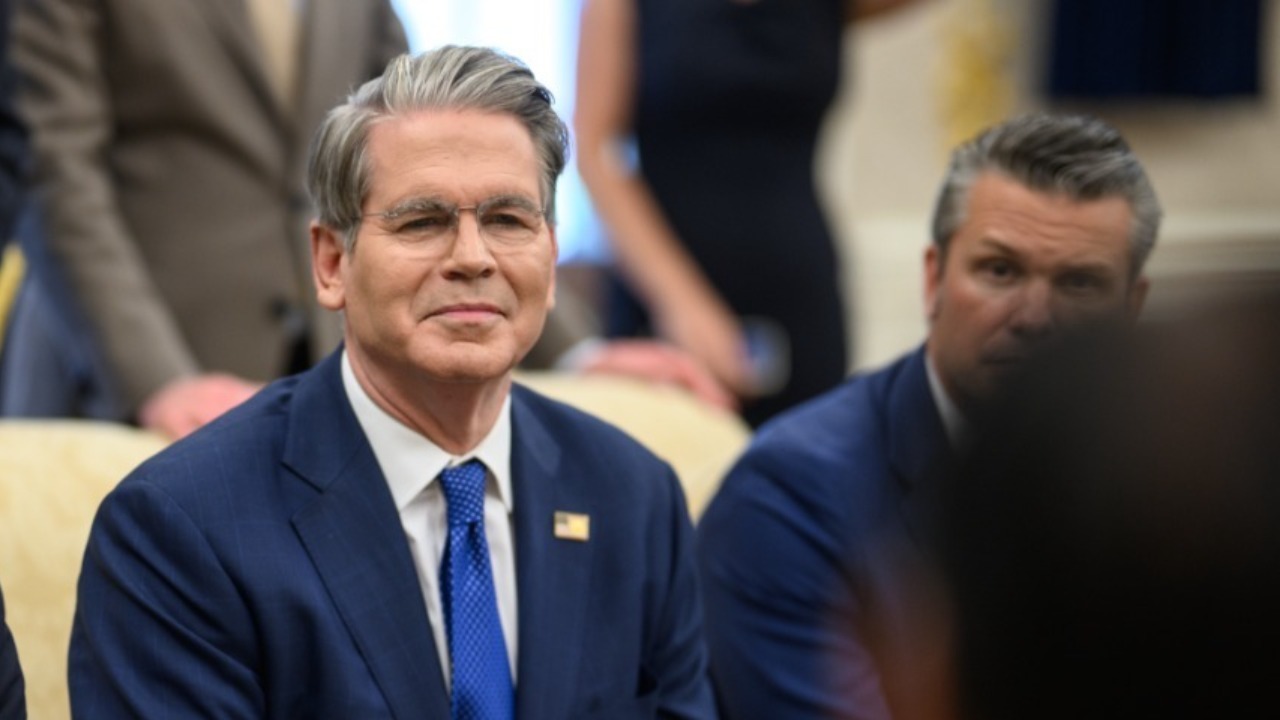
The official in charge of safeguarding the United States financial system now wants to rewrite the rules that govern it. Treasury Secretary Scott Bessent is pushing to remake the powerful council that polices systemic risk, arguing that the current framework is choking off credit and innovation instead of preventing the next crisis. His call to rewire the regulator that guards finance is not a technical tweak, it is a direct challenge to the post‑2008 consensus about how much oversight Wall Street needs.
At stake is who gets to decide what counts as dangerous in modern markets, and how aggressively Washington should lean on banks, insurers, and shadow lenders before trouble hits. By targeting the Financial Stability Oversight Council, or FSOC, Bessent is going after the central nervous system of the Dodd‑Frank era, and signaling that the Trump administration wants a looser, more market‑driven approach to financial stability.
FSOC, born from crisis, moves to the center of Bessent’s agenda
I see Bessent’s push as a referendum on the architecture built after the 2008 meltdown. The Financial Stability Oversight Council was created in the wake of that shock as a kind of super‑regulator, designed to spot threats that individual agencies might miss and to coordinate a response before panic spread. Its voting members include the head of the Board of Governors of the Federal Reserve System, the Comptroller of the Currency, and other top regulators, a structure that was meant to keep any single watchdog from being blindsided by the next AIG or Lehman Brothers, according to detailed descriptions of the council’s voting members.
That design flowed directly from the Dodd‑Frank Act, which promised to end the era of ad hoc rescues by constraining the growth of the largest financial firms and restricting the riskiest activities. The Obama administration framed those reforms as a way of “ending bailouts,” with new rules intended to keep taxpayers and small businesses from being left on the hook for Wall Street’s mistakes, a goal that is spelled out in the law’s own summary of how Ending bailouts: Reform would work. FSOC became the institutional expression of that promise, with the power to label firms “systemically important” and subject them to tougher oversight.
Bessent’s case for loosening the guardrails
Now Treasury Secretary Scott Bessent is arguing that the pendulum has swung too far toward caution. In public remarks in Washington, he has laid out a plan to overhaul the regulatory panel that monitors the financial system, contending that its current posture is stifling lending and risk‑taking that a healthy economy needs. As he describes it, the council’s expansive view of systemic danger has turned into a drag on growth, and he is urging a shift toward looser regulations that would give banks and nonbank lenders more room to extend credit, a stance reflected in reports that Treasury Secretary Scott Bessent is pressing to relax the system’s guardrails.
According to people familiar with his plan, Bessent will argue that lowering the regulatory burden on certain firms would free up capital for households and businesses without meaningfully increasing systemic risk. He is expected to frame the current FSOC regime as a relic of a different era, one that treated size and complexity as inherently suspect, and to claim that more targeted tools can manage genuine threats. That argument is central to his coming proposal to reshape the regulatory body created from the financial crisis, with reports noting that Bessent will argue that lowering certain requirements can coexist with a stable system.
Rewriting the mandate of a crisis‑era watchdog
What Bessent is really challenging is FSOC’s mandate to err on the side of caution. The council was set up to monitor systemic risk across banks, insurers, hedge funds, and other institutions that could threaten the broader economy if they failed. It was created as part of the post‑crisis response, with a brief to look across markets and designate firms as systemically important when their distress might spill over, a role that has been described in detail in accounts of how The Financial Stability Oversight Council emerged following the 2008 financial crisis. That mission has always been controversial, but until now it has been largely accepted as the price of avoiding another taxpayer‑funded rescue.
Bessent’s overhaul would tilt that balance. He has signaled that he wants FSOC to move away from broad, preemptive designations and toward a narrower, more data‑driven approach that intervenes only when clear signs of trouble appear. In his telling, the current framework treats potential problems as if they were imminent, which he believes discourages innovation in areas like fintech and nonbank lending. His critics, including some veterans of the crisis response, counter that the whole point of FSOC is to act before risks are obvious, and that weakening its authority could leave regulators scrambling in the next downturn. That tension between preemptive oversight and reactive regulation is at the heart of his effort to recast the council’s mandate.
Inside the administration’s push to revamp FSOC
From my vantage point, Bessent’s campaign is also a window into the Trump administration’s broader philosophy on regulation. He has made clear that “Our administration is changing that approach,” a phrase that captures the White House’s view that the post‑crisis regime has leaned too heavily on precaution and not enough on growth. The Treasury Department and the White House have declined to spell out every detail of the plan in advance, but they have backed his push to revamp the FSOC and to reposition it as a facilitator of market dynamism rather than a brake, a stance reflected in accounts that quote him saying “Our administration is changing that approach” and note that Our administration is changing that approach while The Treasury Department and the White House stay publicly cautious.
The politics are delicate. On one side, industry groups and some lawmakers have long argued that FSOC’s power to label firms as systemically important is opaque and heavy‑handed, and they see Bessent’s plan as a long‑overdue correction. On the other, defenders of the current system warn that loosening oversight in the name of efficiency risks repeating the mistakes that made FSOC necessary in the first place. President Donald Trump has consistently favored deregulation across sectors, and Bessent’s initiative fits squarely within that agenda, but the administration also knows it will own the consequences if a lighter touch coincides with new instability. That political calculus helps explain why the rhetoric has been bold while the official rollout has been carefully staged.
The stakes for markets, borrowers, and taxpayers
For markets, the immediate impact of Bessent’s plan would likely be psychological as much as legal. A clear signal that FSOC will be less aggressive in designating firms as systemically important could ease pressure on large insurers, asset managers, and nonbank lenders that have worried about being swept into the toughest regulatory category. Banks might see more flexibility in how they structure certain activities, particularly if the council steps back from treating size alone as a red flag. That shift could encourage more risk‑taking at the margins, which is exactly what Bessent wants and exactly what his critics fear.
For borrowers and taxpayers, the trade‑offs are more complex. If Bessent is right, a leaner FSOC would mean more credit flowing to households buying homes, students taking out loans, and small businesses seeking to expand, with fewer compliance costs passed on in the form of higher fees and interest rates. If his opponents are right, the same loosening could allow hidden vulnerabilities to build up in corners of the system that are already hard to monitor, from leveraged loans to complex derivatives. The original Dodd‑Frank vision of constraining the largest firms and restricting the riskiest activities was meant to keep those dangers in check, and any move away from that model will test whether the United States can enjoy the benefits of a more lightly regulated financial system without reviving the conditions that made FSOC necessary in the first place.
More From TheDailyOverview

Grant Mercer covers market dynamics, business trends, and the economic forces driving growth across industries. His analysis connects macro movements with real-world implications for investors, entrepreneurs, and professionals. Through his work at The Daily Overview, Grant helps readers understand how markets function and where opportunities may emerge.