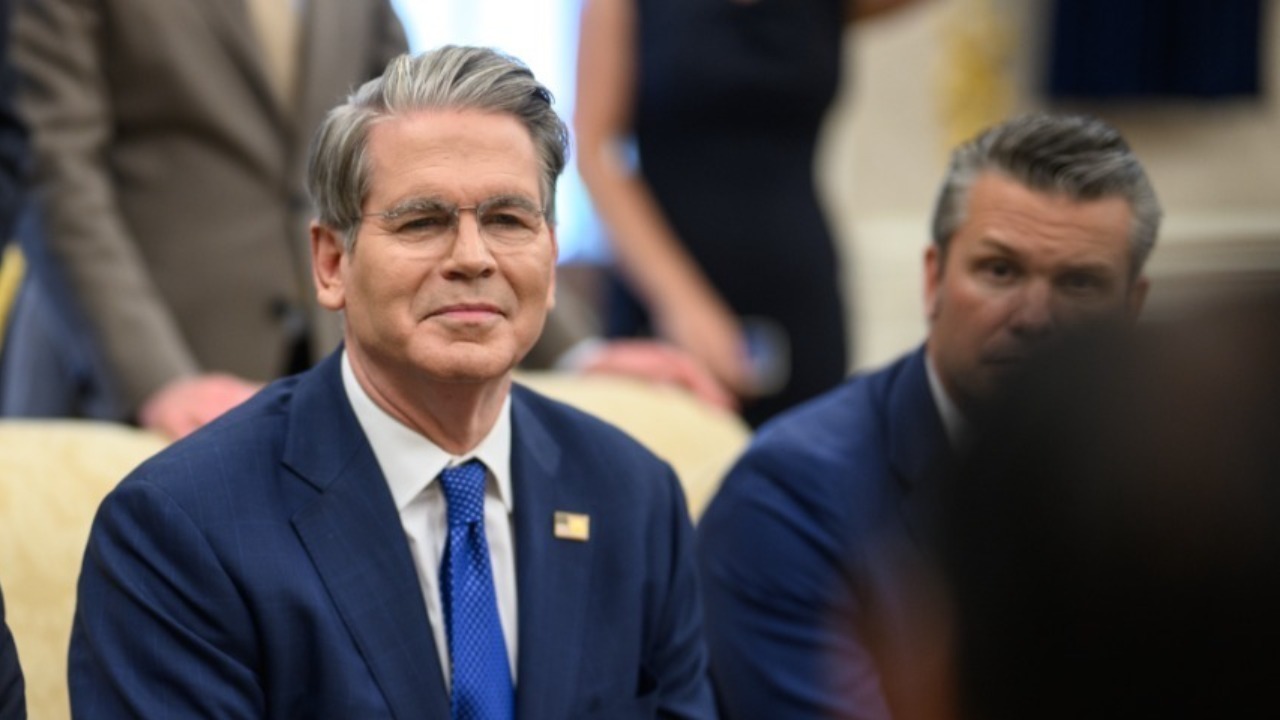
Treasury Secretary Scott Bessent has accused the Federal Reserve of running annual losses of more than $100 billion and of operating under a statutory framework that limits independent audits of key monetary policy decisions. The criticism surfaced in mid-2025 coverage and resurfaced in reporting on his Feb. 4, 2026, congressional testimony, as he clashed with Chair Jerome Powell over accountability and governance issues. At stake is whether the Fed’s long-standing insulation from day-to-day political oversight can withstand sustained pressure from the administration and its allies.
What the Fed’s Own Books Show
Bessent’s headline figure is not invented. The Federal Reserve System’s 2024 audited statements, released in March 2025 and reviewed by an independent accounting firm, confirm that consolidated net income stayed negative through the end of the year. Those figures reflect a simple arithmetic problem: the Fed is paying higher short-term interest on bank reserves and reverse repurchase agreements than it earns on the longer-term Treasury and mortgage securities it amassed during years of near-zero rates and quantitative easing. As policy rates rose to fight inflation, the cost of those interest payments jumped quickly, while income from fixed-rate assets barely moved.
The accounting trail is visible in the Fed’s weekly H.4.1 statistical release, where negative net income appears as negative “Earnings remittances due to the U.S. Treasury.” The central bank’s own late-2024 balance sheet review describes a large consolidated deferred asset tied to this accumulated negative net income. In practical terms, the Fed is recording an IOU to itself: future profits, whenever they return, must first offset that deferred asset before any surplus can again be sent to the Treasury. The Board of Governors hosts the full accounting treatment in the combined Reserve Bank report, where note disclosures spell out how losses, remittances, and capital are handled under the Federal Reserve Act. For outside economists and market participants, those documents provide the baseline for assessing whether Bessent’s loss figures match the official numbers.
The Oversight Gap Bessent Is Targeting
Bessent’s sharpest charge is not just that the Fed is losing money but that Congress has no effective mechanism to examine the decisions that produced those losses. Under Section 714 of Title 31, the Government Accountability Office is explicitly barred from auditing monetary policy deliberations, transactions directed by the Federal Open Market Committee, and certain sensitive communications with foreign central banks and international financial institutions. Those carve-outs were crafted during the late 1970s to insulate interest-rate decisions and open-market operations from day-to-day political pressure. But they also mean the balance sheet expansion that set up the current losses, and the strategy for shrinking those holdings, sit largely outside GAO’s reach.
Bessent has framed that statutory gap as a trust problem rather than a technical one. During a February 4, 2026, House hearing, the Treasury secretary argued that the Fed “lacks accountability and has lost public trust,” a line later reported by national media outlets covering his clash with Chair Jerome Powell. He tied that critique to the central bank’s controversial headquarters renovation, which had already drawn fire from President Donald Trump as a symbol of bureaucratic excess. At the same time, Bessent has been careful not to claim direct control over day-to-day policy. In comments reported by Reuters, he said decisions about shrinking the portfolio and adjusting the pace of so-called quantitative tightening would be “up to the Fed” and that the central bank would likely “take its time” with any balance sheet moves. The administration’s strategy, in other words, is to attack the Fed’s political insulation while publicly acknowledging its legal independence over interest rates and asset purchases.
The Renovation Fight as a Pressure Tool
The headquarters renovation has become a proxy battle in the broader oversight dispute. The White House, according to one wire service account, escalated pressure on Powell by highlighting the project’s rising costs and questioning whether the Fed had adequately justified the scope of the work. For Bessent, the construction budget and the operating losses are two sides of the same coin: evidence, he argues, that an institution shielded from normal appropriations politics has lost touch with fiscal reality. His call for a sweeping review of the Fed’s mission, reported in mid-2025 coverage, explicitly linked “over $100 billion in annual operating losses” to the renovation as twin symptoms of an agency that has grown unaccountable to taxpayers.
Powell has tried to defuse the controversy by inviting scrutiny on his own terms. In response to the criticism, he requested an outside watchdog review of the building overhaul, effectively asking an independent inspector to evaluate the project’s cost controls and procurement decisions. That move allowed him to argue that the Fed was not stonewalling Congress or the public while still defending its core monetary-policy autonomy. But it also conceded ground: once the principle of external review is accepted for construction spending, it becomes easier for critics to argue that similar scrutiny should extend to the balance sheet and to the risk management behind large-scale asset purchases. For taxpayers, the stakes are not abstract. Every quarter that the deferred asset on the Fed’s books grows, the Treasury receives no remittances from the central bank, and the federal deficit is larger by the amount of income that would otherwise have been transferred.
Why “Zero Oversight” Overstates the Case
Bessent’s rhetoric, while grounded in real financial data, oversimplifies the oversight picture. The Fed is already subject to multiple layers of review: annual independent audits of the Reserve Banks, public release of detailed financial statements, and regular testimony by the chair before Congress. The audited reports spell out not only income and expenses but also the valuation of securities holdings, the treatment of unrealized gains and losses, and the mechanics of remittances to the Treasury. In addition, the Federal Open Market Committee publishes minutes and, with a lag, full transcripts of its meetings, giving lawmakers and the public a window into the reasoning behind major policy shifts. Those disclosures are not the same as a GAO performance audit, but they do provide a factual basis for criticism and debate.
Outside analysts also have powerful tools to reconstruct and evaluate the Fed’s choices in real time. Market economists routinely pull data from the central bank’s statistical releases and from public databases such as the St. Louis Fed archive to chart interest rates, reserve balances, and the size and composition of the Fed’s portfolio. Academic researchers have used those series to model how changes in the policy rate and in the balance sheet affect inflation, employment, and financial stability. That body of work has, in turn, informed congressional hearings and public commentary. Bessent’s claim of “zero oversight” elides this ecosystem of scrutiny, which, while imperfect and often ex post, has constrained the Fed’s room for error by subjecting its decisions to constant analysis and criticism.
What a Real Accountability Debate Would Look Like
The clash between Bessent and Powell is ultimately less about the existence of oversight than about its scope and timing. One path, favored by many central bank defenders, would preserve the current statutory protections for monetary policy while strengthening transparency around non-policy operations like facilities management, cybersecurity, and human resources. Under that approach, the renovation saga would be treated as a governance failure to be fixed with better procurement rules and clearer reporting, not as a reason to open rate decisions to GAO audits. Supporters argue that preserving a firewall around the FOMC is essential to prevent presidents and lawmakers from leaning on the Fed to juice growth ahead of elections or to suppress borrowing costs for fiscal reasons.
Bessent and his allies in the White House appear to have a more expansive goal: to narrow or even remove the carve-outs in Section 714 so that independent auditors can examine how the Fed sizes its balance sheet, prices emergency lending, and manages interest paid on reserves. That would not automatically politicize every rate move, but it would invite a new class of investigations into whether particular programs unduly benefited Wall Street, foreign counterparties, or specific sectors of the economy. Proponents say such audits would simply bring the Fed closer to the accountability standards applied to other powerful agencies. Critics counter that even the threat of a future investigation could make policymakers more risk-averse in crises, slowing their response when financial markets seize up. As operating losses and renovation costs keep the Fed in the political crosshairs, the question is no longer whether the central bank will face more scrutiny, but whether that scrutiny will stop at its marble walls or reach into the heart of its monetary toolkit.
More From The Daily Overview
*This article was researched with the help of AI, with human editors creating the final content.

Grant Mercer covers market dynamics, business trends, and the economic forces driving growth across industries. His analysis connects macro movements with real-world implications for investors, entrepreneurs, and professionals. Through his work at The Daily Overview, Grant helps readers understand how markets function and where opportunities may emerge.

