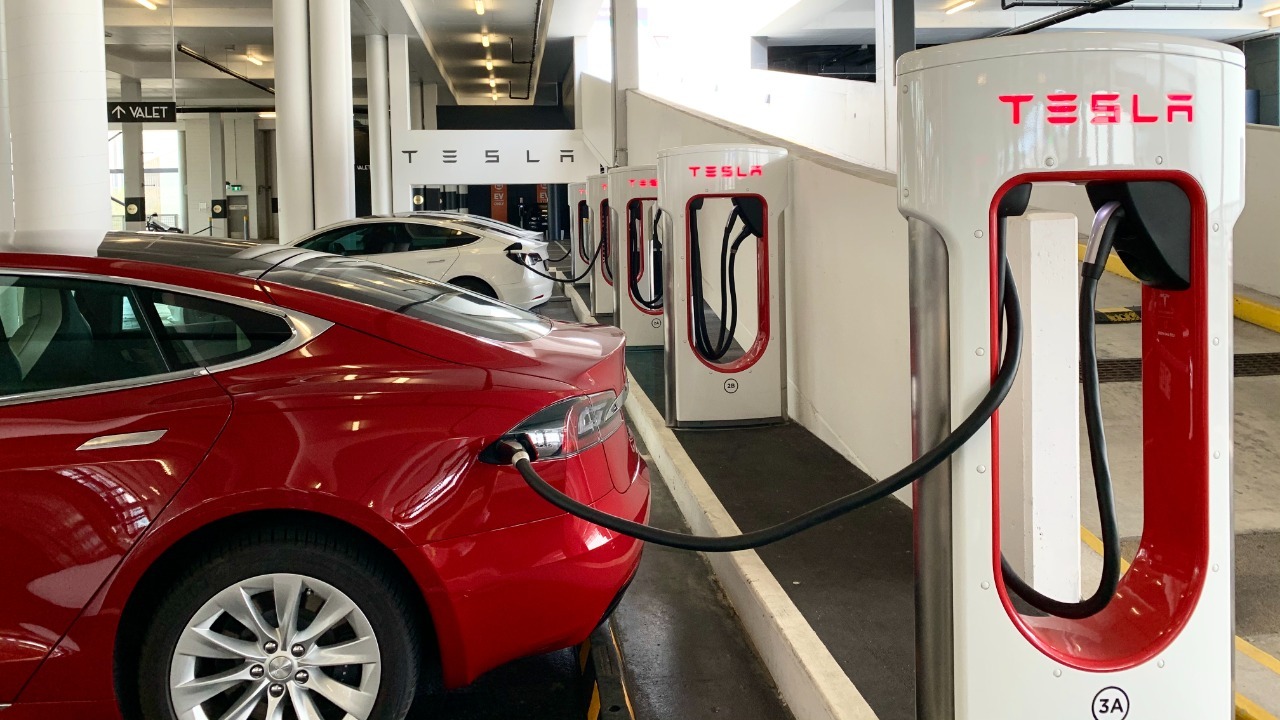
For drivers weighing a Tesla against a Subaru Outback, the real question is not just sticker price but what it costs to keep each one moving every month. Fuel and electricity bills are where the long term financial gap opens up, and the difference can be stark once you translate kilowatt hours and gallons into dollars. I set out to compare typical monthly charging costs for a Tesla with the gasoline tab for a Subaru Outback, using recent data on energy prices and efficiency to show how the numbers stack up in everyday use.
Instead of leaning on broad claims about electric vehicles being cheaper, I focus on concrete per mile and per month figures that matter to a household budget. By lining up what it costs to power a Tesla at home against the fuel bill for a Subaru Outback driven the same distance, and then layering in what happens when you rely on public charging or higher gas prices, the tradeoffs become much clearer.
How much it costs to charge a Tesla each month
On home electricity, the baseline for an electric sedan is already well established, and it gives a useful starting point for Tesla drivers. Typical home charging for an electric car comes out to roughly $49 per month, a figure that reflects average residential power rates and moderate commuting. That $49 per month benchmark is not Tesla specific, but it captures the core advantage of plugging in at home instead of paying for gasoline, especially for drivers who can charge overnight on standard utility rates.
When I narrow that lens to Tesla models, the operating cost gap with gasoline vehicles widens further. Analyses of Tesla ownership show that, on a per mile basis, electricity is significantly cheaper than fuel, and over time that difference can add up to more than over $1,200 in savings compared with a comparable gas car. That long term figure is built on the same basic reality drivers see on their monthly bills, where a Tesla charged primarily at home typically costs less to run than a similar crossover or wagon that depends on the pump.
Per mile electricity costs for Tesla drivers
To understand how those monthly totals form, it helps to look at what each mile costs in electricity. When you break down home charging, it costs anywhere from 4.4 to 13.3 cents per mile to charge a Tesla at home, depending on local electricity rates and the specific model. At the lower end of that range, a 1,000 mile month would cost about $44 in electricity, while even the higher end still keeps the bill close to what many drivers spend on a single tank of gas.
Those per mile figures translate into a predictable monthly pattern for most owners. If I assume a mid range cost in that 4.4 to 13.3 cent band and a typical 1,000 to 1,200 miles of driving, the monthly electricity bill for a Tesla tends to land in the same neighborhood as that earlier $49 benchmark. The key is that the cost per mile is relatively stable and, unlike gasoline, is not subject to the same volatility at the pump, which makes budgeting for a Tesla’s monthly energy use more straightforward.
What a Subaru Outback spends on gas in a typical month
To compare that with a Subaru Outback, I look at how much fuel the wagon burns to cover the same ground. The Monthly Cost of Fuel for a Subaru Outback depends on several familiar variables: how many miles you drive, what you pay per gallon, and whether your routes lean more highway or city. Even with decent fuel economy, a driver who logs around 1,000 miles a month can easily burn through multiple tanks, and at current prices that often pushes the monthly gasoline bill well beyond what a Tesla owner pays for home charging.
Reporting that directly compares a Tesla with a Subaru Outback frames the question in simple terms: is a Subaru Outback Cheaper To Drive than a Tesla when you focus on energy alone. There are plenty of factors to consider, but when I match similar mileage, the gasoline costs for the Subaru Outback typically come in higher than the electricity costs for the Tesla, especially for drivers who can charge at home most of the time and avoid premium public charging rates.
Annual savings and ownership costs beyond the pump
Zooming out from a single month, the cumulative effect of cheaper electricity becomes more striking. Over a year of driving, the gap between what a Tesla owner spends on charging and what a Subaru Outback driver pays for fuel can translate into thousands of dollars. Analyses of Annual Operating Expenses Driving a Tesla show that The Tesla Model Y alone can save about $6,000 in gasoline over its life compared with a similar gas powered vehicle. That $6,000 figure reflects not just one cheap month, but the compounding effect of lower per mile energy costs over years of ownership.
Those fuel savings sit alongside other cost differences that matter to a household budget. When I factor in maintenance, Teslas avoid oil changes and many of the routine services that come with internal combustion engines, which can further widen the gap with a Subaru Outback over time. At the same time, the long term savings that can add up to over $1,200 in operating costs compared with a gas car are grounded in the same monthly reality: lower energy costs per mile, especially when charging is done at home on standard residential rates.
When public charging and high electricity prices narrow the gap
The picture is not universally rosy for electric drivers, and the details matter for anyone comparing a Tesla with a Subaru Outback. The biggest caveat is how often you rely on public charging networks instead of home power. In some regions, However, the savings are less pronounced when using public charging networks, where a recent charge at a Tesla station cost more than filling up a comparable gas car. If a driver depends heavily on fast chargers with high per kilowatt hour rates, the monthly electricity bill for a Tesla can creep closer to, or even exceed, what a Subaru Outback owner pays for gasoline.
That is why I see home charging as the linchpin of the cost advantage. Drivers are urged to look closely at their own electricity bills to understand what they pay per kilowatt hour, then use tools like the Tesla Destination Charger and other Chargin calculators to estimate their true monthly costs. In Canada, for example, drivers can turn to a dedicated Tesla Supercharger Cost Calculator to tailor estimates to local rates and their own driving patterns, which is essential for a fair comparison with a gasoline vehicle like the Subaru Outback.
How a mechanic’s short list and real world habits shape the choice
Beyond spreadsheets, the decision between a Tesla and a Subaru Outback often comes down to how and where you drive. A veteran Mechanic who compiled a list of Electric Vehicles they Would Buy and Why They Are Worth It highlighted how charging access and reliability shape real world costs. For drivers with a garage, a stable commute and access to overnight charging, the monthly electricity bill for a Tesla tends to stay low and predictable, reinforcing the advantage over a gasoline Subaru Outback that must visit the pump regularly.
For others, the calculus is more nuanced. Reporting that asks whether a Subaru Outback Cheaper To Drive than a Tesla underscores that There is no single answer, because the outcome depends on mileage, local energy prices and how often you rely on public chargers. What the numbers do show consistently is that, for a driver who can charge at home and covers a typical monthly distance, the Tesla’s electricity bill is usually lower than the Subaru Outback’s gasoline tab, and over time that gap can reshape the total cost of owning either vehicle.
More From TheDailyOverview

Cole Whitaker focuses on the fundamentals of money management, helping readers make smarter decisions around income, spending, saving, and long-term financial stability. His writing emphasizes clarity, discipline, and practical systems that work in real life. At The Daily Overview, Cole breaks down personal finance topics into straightforward guidance readers can apply immediately.

