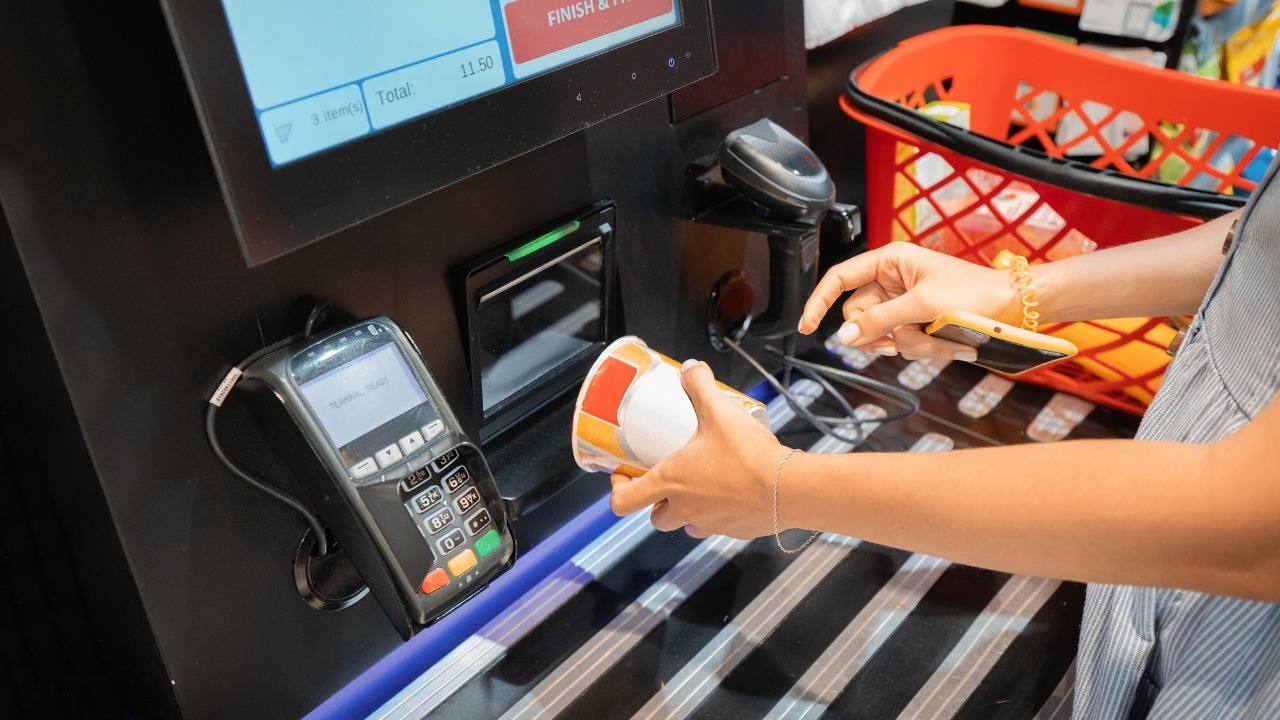
Self checkout was sold as the future of retail, a frictionless way to grab groceries and get out the door. Instead, a surge in theft and mounting public backlash is pushing some of the country’s biggest chains to rip out machines and rethink the entire model. The quiet reversal now unfolding in big-box aisles and dollar stores shows how quickly a cost-cutting experiment can turn into a liability.
As Walmart and Dollar General scale back self-service lanes, they are exposing a deeper tension between automation, customer trust, and basic security. The result is a messy transition period in which shoppers are being steered back to human cashiers, lawmakers are circling with new rules, and retailers are scrambling to contain losses that have become impossible to ignore.
Self checkout theft goes mainstream
Theft at self-service kiosks has shifted from edge case to everyday risk, and retailers now have the numbers to prove it. New research cited by investigators found that self-checkout theft has doubled in recent years, with 27% of Americans admitting they have stolen at least one item while using the machines. That is not a fringe minority, it is a cultural normalization of “just this once” shoplifting that adds up to billions in shrink when multiplied across thousands of stores and millions of transactions.
Retail workers and loss-prevention teams describe a mix of opportunistic and deliberate tactics, from “forgetting” to scan small items to brazenly ringing up expensive electronics as cheap housewares. One viral example involved a customer at Walmart scanning a television as a 50 cent bowl, a stunt that captures how easily barcodes and inattentive oversight can be exploited. As these incidents pile up, they are feeding a perception that self checkout is not just convenient, it is an invitation to cheat.
Walmart’s U-turn from “frictionless” to “hands-on”
No retailer embraced automation more visibly than Walmart, and no reversal is being watched more closely. The company has begun removing self-checkout machines from select stores, including locations such as Shrewsbury, Missou, as part of a broader shift toward more personalized interactions with cashiers. Internal reviews of shrink and customer satisfaction have collided with pressure from local police and community leaders, who, as one report on Police Pressure and noted, saw self-service lanes as a magnet for petty crime.
Shoppers are already seeing the impact on store layouts. Reports describe how Walmart has caught on to growing opposition, selectively removing self-checkout lanes from late 2023 into mid 2024 and reconfiguring front ends around staffed registers. In parallel, a new “ratio” law in California has pushed the chain to adjust how many kiosks a single worker can monitor, with one report on The Retail Apocalypse and Store Closures noting that And Walmart has had to limit certain items at the machines altogether. Even local radio coverage framed it bluntly, warning that Shopping at Walmart may look very different in 2026 as the retailer reduces the number of self-checkout lanes and leans back into human cashiers.
Dollar General’s retreat from the machines
If Walmart’s pivot is high profile, Dollar General’s is sweeping. The discount chain, which operates more than 20,000 locations nationwide, has decided to eliminate the “vast majority” of its self-checkout, a move executives tied directly to shrink. One analysis noted that Dollar General made the call despite a 6% Q1 net sales rise, with leadership arguing that the cost of theft and mis-scanned items outweighed the labor savings, as detailed in a Dollar General briefing that emphasized the role of store managers and sales associates in regaining control.
The rollback is not symbolic. Dollar General is pulling out self-checkout stands in 300 stores and limiting their use in hundreds more, explicitly citing problems with merchandise and mis-scanned items. Another update on the company’s strategy said the retailer plans to remove self-checkout entirely from more than 300 of its “high-shrink” locations as part of a broader effort to combat losses, while also noting that other chains like Target and Walmart are piloting similar limits. Company leaders framed the shift as a return to basics, with one report quoting them saying that While Dollar General still operates kiosks at some stores, the experiment had not done enough good during an earnings call.
Industry ripple effects, from Target to local laws
Once giants like Walmart and Dollar General start backpedaling, the rest of the sector pays attention. A detailed breakdown of the shift noted that Major Chains Lead the Shift and that Walmart and Dollar General have trimmed self-checkouts across 9,000 store locations, signaling that the experiment is being scaled back, not just tweaked. Another section of the same reporting, labeled The Industry Follows Walmart, Lead, described how other retailers are reevaluating their approach after watching Walmart’s experience, with one passage noting that In March, Dollar General announced that happier customers made it worthwhile to shift back toward staffed lanes.
Other big-box names are not standing still. Target, which once leaned heavily into self-service, is now part of the cohort experimenting with limits, with one analysis noting that chains like Target and Walmart are piloting caps on basket size and item categories at kiosks. Local governments are also stepping in. In Costa Mesa, California, a proposed bill would force Retailers to introduce new self checkout restrictions, including rules that a single worker can monitor only up to three machines, as described in a report on Retailers facing tighter oversight. Another piece on a new “ratio” law underscored how The Retail Apocalypse and Store Closures narrative has merged with concerns about automation, with And Walmart cited as a prime example of a chain being forced to switch how shoppers use the machines.
Shoppers caught between convenience and suspicion
For customers, the rollback is not just a policy shift, it is a change in daily routines. Many shoppers had come to rely on scanning a handful of items and skipping long lines, and some are now venting frustration as stores steer them back to manned lanes. A survey-driven feature on self-service culture noted that Self checkout theft is surging at the same time that a sizable share of users admit to cutting corners, a contradiction that leaves honest customers feeling watched and guilty shoppers emboldened, as captured in the Jan coverage of Walmart and other chains. Local TV segments have echoed the tension, with one report opening on NOW PLAYING ABOVE and explaining that Retailers are increasingly removing self-checkout lanes due to rising concerns over theft.
Chains are trying to thread the needle by keeping some automation while nudging shoppers toward staffed registers. One Dollar General executive described the strategy plainly, saying “This is intended to drive traffic first to our staffed registers, with assisted checkout options available as second or third options,” in a briefing on Mar changes that also warned about theft and shoplifting. At the same time, viral clips like a creator declaring “raise your hand if you hate selfch checkckout just as much as I. do” while discussing how Walmart was forced to close self-checkout lanes permanently show how resentment toward the machines has become its own form of consumer pressure. As more stores quietly pull kiosks and reassign workers, the balance between speed, security, and human interaction is being reset in real time, one checkout line at a time.
More From TheDailyOverview
*This article was researched with the help of AI, with human editors creating the final content.

Grant Mercer covers market dynamics, business trends, and the economic forces driving growth across industries. His analysis connects macro movements with real-world implications for investors, entrepreneurs, and professionals. Through his work at The Daily Overview, Grant helps readers understand how markets function and where opportunities may emerge.