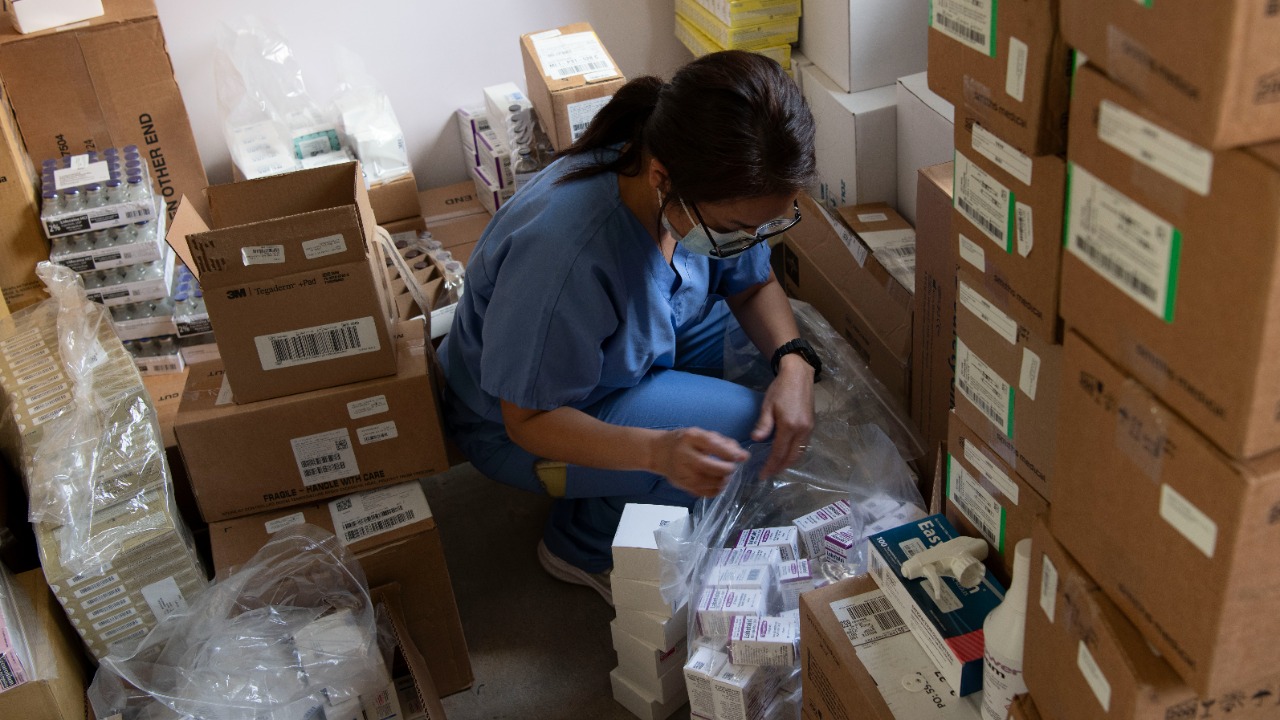
California’s latest crackdown on organized retail theft has laid bare just how industrialized shoplifting has become, with law enforcement seizing nearly 17 million dollars in stolen goods in a single year. The haul, stacked floor to ceiling in police photos, is not a one-off bust but the visible tip of a sprawling criminal economy that treats big-box stores and luxury brands as warehouses to be raided. I see a state racing to catch up to a problem that has quietly scaled into a parallel supply chain.
Behind the dramatic images of recovered sneakers and power tools is a more sobering reality: organized crews, sophisticated fencing networks and a constant churn of stolen merchandise moving from California storefronts into online marketplaces and out-of-state buyers. The numbers now emerging from state and local investigations show that what many shoppers experience as “petty” shoplifting is, in practice, a high-volume business that has forced police, retailers and technology firms into an uneasy new alliance.
The $17 million wake-up call
The headline figure is stark. State officials say they recovered 17 million dollars in big-ticket retail theft items in 2025, a single-year snapshot that captures only what investigators managed to intercept. That total, pulled together by the California Highway Patrol and partner agencies, reflects a surge in organized retail crime investigations that state leaders describe as having increased 31 times since Governor Gavin Newsom took office, a scale that underscores how quickly these theft rings have multiplied across the state. The State officials credit a dedicated task force led by the CHP with driving those recoveries and mapping out the rings operating across California.
Officials in the governor’s office have framed the 17 million dollar haul as both a success and a warning. On one hand, they point to the expansion of the CHP’s organized retail crime operations since their establishment in 2019 as proof that focused enforcement can claw back stolen inventory and disrupt repeat offenders. On the other, they acknowledge that the value of goods recovered in 2025, while significant, likely represents only a fraction of what was actually stolen from retailers that year. In their account, the same data that allows them to tout nearly 17 million dollars in recovered merchandise also reveals how deeply entrenched these theft crews have become, prompting Governor Gavin Newsom to lean on the CHP as the backbone of a broader statewide strategy.
Inside California’s organized theft economy
What makes the 17 million dollar figure so jarring is not just the money but the sheer volume of goods that had to move to reach that total. State data show that more than 270,000 stolen items were recovered as part of the crackdown, a number that hints at warehouse-scale operations rather than opportunistic shoplifting. Investigators describe crews that target specific products, from high-end electronics to everyday household goods, then funnel them through fences who specialize in repackaging and reselling the merchandise, often in bulk lots that can be moved across state lines or into online storefronts that look legitimate to unsuspecting buyers.
Visuals from recent seizures drive home how curated these thefts have become. In one widely circulated set of images, officers stand in front of stacks of Nike sneakers, brand-new power tools and Lancome beauty products, all laid out in neat rows that resemble a retail display more than an evidence room. Those Photos from California raids show how thieves zero in on brands like Nike and Lancome that can be flipped quickly and at high margins, turning big-box aisles into shopping lists for criminal buyers who place orders in advance.
How law enforcement is trying to catch up
For police, the challenge is less about catching a single shoplifter and more about dismantling the networks that organize, transport and monetize stolen goods. The California Highway Patrol has become the central player in that effort, with its organized retail crime operations expanding each year since 2019 into a statewide web of investigators, analysts and local partners. According to state briefings, the CHP’s specialized teams now coordinate multi-jurisdictional stings, track repeat offenders and work with prosecutors to tie together cases that might otherwise be written off as isolated thefts, a shift that has helped them recover nearly 17 million dollars in Retail Theft Items in 2025 alone.
Local agencies, meanwhile, are leaning more heavily on technology and cross-border intelligence sharing to keep pace with crews that can hit multiple cities in a single day. One example comes from a case highlighted in which thieves managed to steal eight high-end vehicles, including a Ferrari 812 GTS and a Porsche 911 GT3, in just eight minutes, a brazen spree that investigators linked to broader patterns of organized theft in Calif. That incident, described in detail in a report on 8 cars stolen in rapid succession, illustrates how quickly professional crews can strike and vanish, forcing departments to think less like traditional patrol units and more like data-driven investigative teams.
Retailers, tech firms and the new surveillance playbook
Retailers are not waiting for police to solve the problem on their own. Large chains and mall operators are investing in license plate readers, shared databases and real-time alert systems that can flag suspicious vehicles or repeat offenders as they move from store to store. One technology company, Flock Safety, has promoted a model in which retailers and law enforcement share intelligence and leverage modern technology so that organized crime has fewer places to hide, a pitch captured in a When post that urges businesses to plug into regional camera networks. In practice, that can mean a stolen SUV used in a smash-and-grab at a California outlet mall is automatically flagged if it passes a camera near a freeway on-ramp, giving officers a narrow window to intercept it.
From my vantage point, this emerging surveillance playbook raises as many questions as it answers. On one side, retailers argue that without tools like automated license plate readers and shared watch lists, they are effectively inviting repeat crews to treat their stores as open inventory. On the other, civil liberties advocates warn that systems built to track organized theft can easily spill over into broader monitoring of shoppers and drivers who have done nothing wrong. The tension is evident in how companies market these tools, with Flock and others emphasizing partnerships with law enforcement and retailers while sidestepping deeper debates about data retention and oversight that will only intensify as more California cities plug into these networks.
Public perception, politics and what comes next
The political stakes around shoplifting in California are now inseparable from the raw numbers. Images of officers standing over mountains of seized goods have fueled a narrative of “out-of-control” theft that resonates with voters who see locked-up merchandise and security guards in their neighborhood stores. Coverage by reporters such as Jeremy Louwerse has amplified that sense of crisis, describing California cops scrambling to tackle a shoplifting surge that has forced chains to rethink everything from store layouts to staffing. For Governor Gavin Newsom, the 31-fold increase in organized retail crime investigations is both a talking point and a vulnerability, proof that his administration is acting but also a reminder of how far the problem has spread on his watch.
Looking ahead, I expect the debate to shift from whether organized retail crime is a serious issue to which mix of enforcement, technology and legal changes can actually bend the curve. State leaders are already touting the role of the CHP and new task forces, while retailers push for tougher penalties on repeat offenders and clearer rules for online marketplaces that traffic in stolen goods. At the same time, stories that link high-speed car thefts, smash-and-grab robberies and large-scale shoplifting into a single narrative of criminal opportunism, like those that describe the Insane pace of some Calif crews, will keep pressure on officials to show measurable progress. The 17 million dollars in recovered goods is a dramatic benchmark, but if anything, it suggests that the true cost of California’s shoplifting crisis is still being counted.
More From The Daily Overview

Grant Mercer covers market dynamics, business trends, and the economic forces driving growth across industries. His analysis connects macro movements with real-world implications for investors, entrepreneurs, and professionals. Through his work at The Daily Overview, Grant helps readers understand how markets function and where opportunities may emerge.