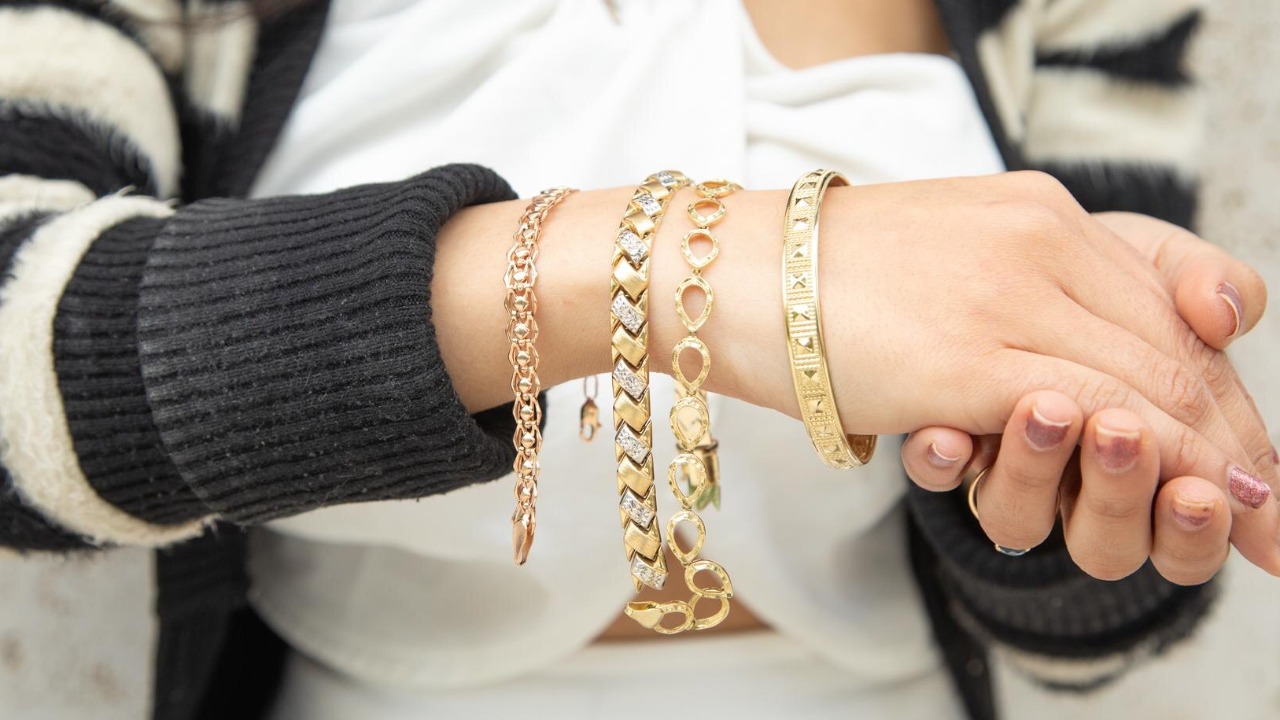
Shoppers are quietly trading logo handbags and seasonal sneakers for diamond solitaires and gold bracelets, warns Angara chief executive Ankur Daga, who says younger buyers are “prioritizing affordability and stone size in lab-grown diamonds” over the latest fashion drops. His warning lands just as Bain and Altagamma data point to a luxury market that is still growing but slowing, with consumers scrutinizing price and long-term value more than during the boom years. The key questions now are what counts as “soft” versus “hard” luxury, how much evidence supports Daga’s claim that Gen Z is ditching one for the other, and what that shift could mean for brands built on runway trends.
Defining Soft vs Hard Luxury
Luxury analysts draw a clear line between “hard” and “soft” categories, and Bain’s deep research on the sector treats watches and jewelry as hard luxury because they are durable goods that can be worn for years and often resold, while fashion, accessories and leather goods are grouped as soft luxury that is more exposed to trend cycles. In Bain’s latest global review of the sector, the firm sizes the overall luxury market at about 1.5 trillion dollars in 2024 and estimates that hard luxury accounts for roughly 30 percent of that value, a share that reflects both the high ticket prices of fine jewelry and watches and the fact that these items are increasingly treated as quasi-investments rather than pure indulgences, according to its luxury in transition report.
Within that 30 percent slice, jewelry stands out as a relative bright spot, with Bain and Altagamma projecting that global jewelry sales will grow about 5 percent year on year in 2025 even as some other categories lose momentum. In their joint outlook on the sector, the two groups describe a market that is “reshaped” by shifting consumer trends and channel dynamics, and they flag that hard luxury is gaining share as shoppers look for lasting value and are increasingly open to buying pre-owned items, including fine watches and signed pieces, through the secondhand channel that Bain says is expanding at a double-digit pace, as detailed in its joint study with Altagamma.
Daga’s Warning and Angara’s Perspective
Against that backdrop, Angara CEO Ankur Daga argues that the shift is not just visible in spreadsheets but in the shopping carts of younger customers who are “ditching soft luxury” in favor of customizable hard luxury pieces they can wear daily. In an interview with TechCircle, Daga said he sees younger consumers prioritizing affordability and stone size in lab-grown diamonds, framing this as a conscious trade-off where a larger, lab-grown stone in a classic setting wins out over a smaller, mined diamond or a designer handbag at the same price point, and he links that behavior to a broader desire for personalization and perceived permanence.
Daga also presents Angara’s own operating model as a response to this shift, telling TechCircle that the company is vertically integrated, with control over design, manufacturing and distribution that he says lets it turn around bespoke pieces quickly and manage inventory more efficiently than traditional jewelry houses. As part of that strategy, he has laid out plans to expand in India with three new stores by 2025, positioning the country as both a manufacturing hub and a growth market where he claims Angara is seeing about 20 percent year on year sales growth in 2024, according to the same TechCircle interview, although those figures remain company statements rather than independently verified data.
What Changed Now – Consumer Behavior Shifts
The clearest evidence that something has changed in younger shoppers’ priorities comes from survey work on Gen Z’s jewelry habits, including research published through GlobeNewswire that found 70 percent of respondents in that age group opt for lab-grown diamonds primarily for affordability. The same survey reported that 60 percent of young buyers value stone size over origin, a finding that maps directly onto Daga’s comments and suggests that for a large share of Gen Z, a bigger lab-grown diamond ring or pendant is more appealing than a smaller mined stone or a similarly priced soft luxury item, especially when wages and savings have not kept pace with the price inflation seen in many branded fashion and leather goods.
Those preferences are emerging just as the broader luxury market is cooling from the post-pandemic boom, with Bain and Altagamma citing a slowdown in demand of about 2 percent in 2024 as shoppers react to higher prices and economic uncertainty, a trend that has been highlighted in coverage by AP News. In that reporting, analysts tie the pullback in discretionary spending to inflation and weaker consumer confidence, and they note that categories perceived as more discretionary or trend-driven, such as ready-to-wear fashion and some leather goods, appear more exposed than items that can be justified as long-term purchases, which helps explain why value-focused Gen Z shoppers might be more willing to commit to a piece of jewelry than to a seasonal handbag.
Why It Matters – Market Polarization and Growth
Bain’s category forecasts indicate that this is not just a passing blip but part of a broader polarization within luxury, with hard luxury expected to grow at about 4 to 6 percent in 2025 compared with a projected 1 to 3 percent range for soft luxury categories, according to its luxury in transition analysis. That gap may look small on paper, but it implies that watches and jewelry could steadily gain share of total spending if the pattern persists, especially when combined with the roughly 5 percent year on year jewelry growth that Bain and Altagamma see for 2025 and the relative resilience of affluent buyers who are still willing to trade up for items they view as durable stores of value.
Another piece of the puzzle is the secondhand market, which Bain says is expanding particularly fast in hard luxury, with the resale channel for watches and jewelry growing at about 10 percent and drawing in younger buyers who want branded pieces at lower price points, a trend highlighted in its joint work with Altagamma. That growth in resale gives consumers more options to treat jewelry and watches as semi-liquid assets, which can reinforce the perception that hard luxury is a safer place to park discretionary spending than soft luxury items that lose value quickly and have a thinner secondhand market, especially when inflation is eroding purchasing power and prompting households to think harder about what they get in return for a four-figure splurge.
Broader Industry Backdrop
Despite these headwinds, Bain and Altagamma still describe the global luxury market as “resilient,” arguing in their latest joint release that overall spending continues to rise even as growth moderates and becomes more uneven across regions and categories, as laid out in their global luxury report. They emphasize that shifting consumer trends are reshaping the market, with value-seeking behavior, a stronger focus on timeless products and a growing appetite for circular models such as resale and refurbishment all playing into the relative strength of hard luxury compared with more fashion-driven segments.
Within that global picture, India features as a growth market for jewelry and other hard luxury goods, which helps explain why Angara and Daga are investing there even as some Western brands pull back on store openings elsewhere. In his TechCircle interview, Daga said Angara plans three new stores in India by 2025 and cited about 20 percent year on year sales growth in 2024 for the country, framing India as both a source of digitally savvy consumers who are comfortable customizing jewelry online and a base for the company’s vertically integrated manufacturing model, while additional Bain-linked coverage of the luxury outlook points to stronger momentum in parts of Asia compared with more mature markets that are seeing sharper slowdowns.
What Remains Uncertain
For all the data points lining up in favor of hard luxury, there is still limited evidence on how durable this shift will be, and much of the 2025 outlook is based on projections rather than realized results. Bain’s expectation that hard luxury will grow 4 to 6 percent next year while soft luxury manages only 1 to 3 percent is a forecast, not a guarantee, and the 5 percent jewelry growth figure for 2025 sits in the same category, meaning that a deeper economic downturn, a faster-than-expected recovery in fashion, or a change in Gen Z tastes could all alter the balance, as the firm itself acknowledges in its forward-looking analysis.
Regional differences also complicate any sweeping claim that shoppers everywhere are ditching soft luxury for hard luxury, since Bain and Altagamma see stronger growth in parts of Asia and more mixed trends in Europe and North America, while the GlobeNewswire survey that found 70 percent of Gen Z respondents opting for lab-grown diamonds reflects a specific sample rather than the entire global youth population. That is why Daga’s warning should be read as a grounded but still partial view: his experience at Angara, his focus on lab-grown stones and customization, and his expansion plans in India all align with the data pointing to a shift toward hard luxury, yet the long-term balance between jewelry cases and fashion racks will depend on how consumers respond as prices, economic conditions and cultural tastes keep changing.
More From The Daily Overview
*This article was researched with the help of AI, with human editors creating the final content.

Grant Mercer covers market dynamics, business trends, and the economic forces driving growth across industries. His analysis connects macro movements with real-world implications for investors, entrepreneurs, and professionals. Through his work at The Daily Overview, Grant helps readers understand how markets function and where opportunities may emerge.

