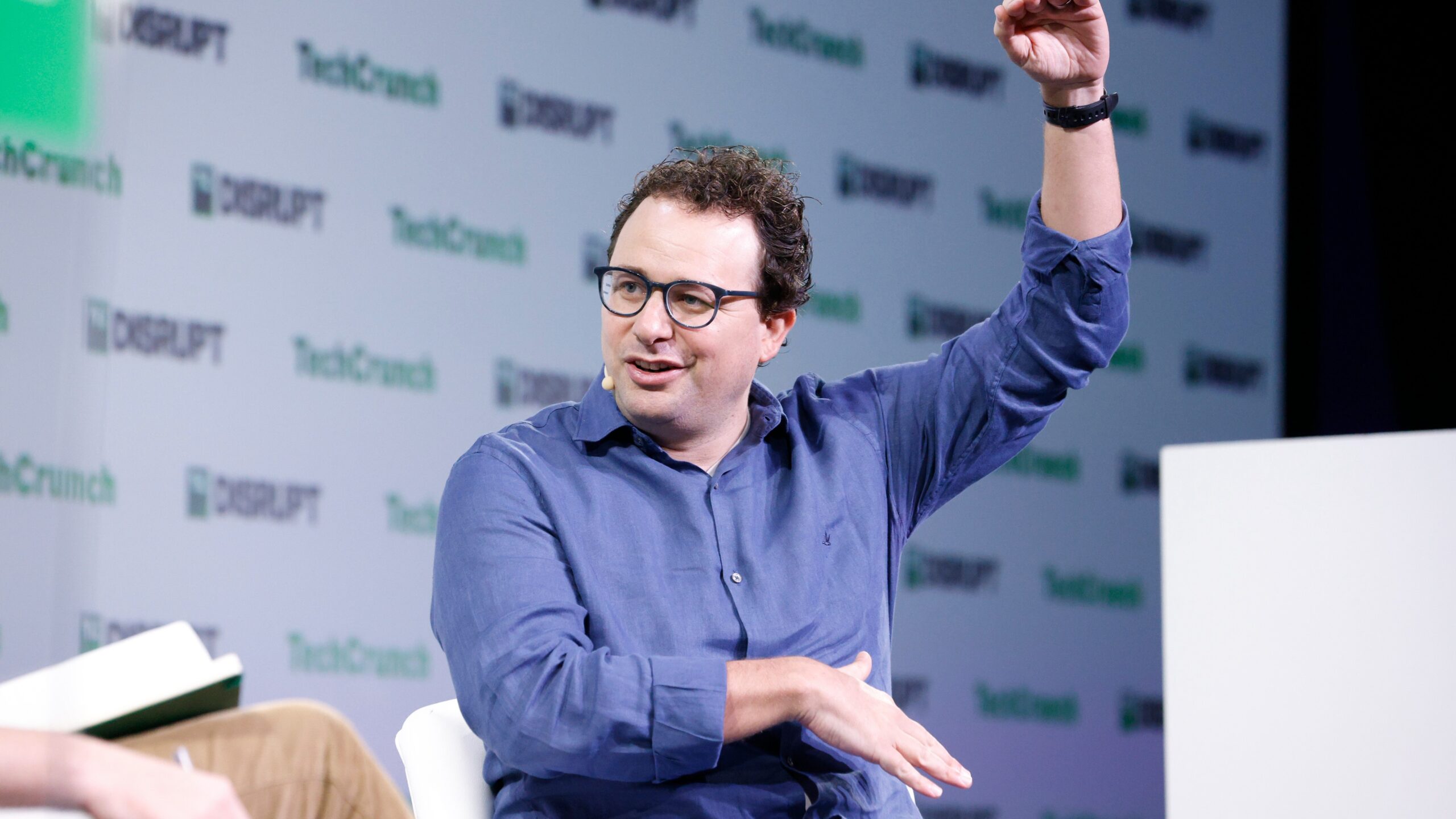
Artificial intelligence is forcing a new kind of economic thought experiment into the mainstream: what happens if output surges while work disappears. Anthropic CEO Dario Amodei is sketching a future in which Silicon Valley’s most powerful firms enjoy a 50% jump in GDP-style output even as unemployment climbs. The warning is not about a distant singularity, but about a near-term collision between unprecedented productivity and a labor market that may not be ready.
At the center of his argument is a blunt tradeoff. AI systems could supercharge growth for a narrow slice of the economy, particularly the companies building and deploying the technology, while leaving large groups of workers scrambling for relevance. The question I keep returning to is whether politics, policy and corporate culture can adjust as quickly as the models themselves.
Runaway growth for Silicon Valley, rising risk for everyone else
Amodei’s most eye-catching scenario is a world where AI pushes baseline GDP growth into the mid single digits while the tech sector races far ahead of the rest of the economy. In his telling, the companies at the core of the AI boom, the Silicon Valley AI leaders, could see their own effective contribution to GDP climb by as much as 50%, a figure that would have sounded like science fiction in the era of incremental software updates. That kind of surge would concentrate wealth and power in a handful of platforms and funds that already dominate cloud computing, chips and data, deepening the divide between tech hubs and the rest of the country.
The same scenario, he argues, could coexist with a labor market under acute stress. In interviews and public appearances, Anthropic CEO Dario Amodei has described a future in which overall GDP expands even as joblessness rises, a combination he calls historically unusual. The beneficiaries in this picture are the “Silicon Valley elites” who own the models, the data centers and the equity, not the workers whose tasks are being automated away.
“High GDP, high unemployment”: a new macro puzzle
What makes Amodei’s warning stand out is not just the headline number, but the macroeconomic contradiction he is asking policymakers to confront. He has said that AI could deliver strong growth in output at the same time as it pushes unemployment higher, a pairing he frames as something we have “almost never seen before.” In his view, people tend to associate rapid GDP growth with plentiful jobs and rising wages, but generative AI threatens to break that link by letting a small number of highly capitalized firms do far more with far fewer people.
That tension runs through his broader economic commentary. In one detailed discussion of AI’s impact, Anthropic Chief Executive Dario Amodei predicted that artificial intelligence will spur significant economic growth while warning that many workers could be left behind if institutions do not adapt. He has argued that the technology will shift the central challenge from creating wealth to sharing it, a point he has reiterated in conversations about how governments and companies should respond at events like Davos and in interviews summarized by Anthropic CEO watchers.
From entry-level coders to entire careers on the line
The abstract macro story is already showing up in very concrete job categories, starting with software engineering. Tech CEO Warns of AI Potential to Disrupt Employment Dario Amodei, CEO of Anthropic, has repeatedly cautioned that the tools his own company is building could soon handle much of the work that junior developers do today. In May, Amodei warned that the AI systems Anthropic and other labs are racing to deploy might eliminate roughly half of entry level coding roles, a stark forecast that has been highlighted in coverage of how Anthropic and its rivals are changing hiring pipelines.
More recently, he has gone further, suggesting that entire software engineering careers may vanish as AI led coding tools mature. Anthropic CEO Dario Amodei has said that long standing roles could be erased, even as he insists that society can “deal with it” if it plans ahead, a tension captured in reporting that describes how his tone swings wildly between excitement and fear about the technology’s trajectory. That ambivalence is echoed in his conversation with Google DeepMind CEO Demis Hassabis, where Anthropic CEO Dario Amodei said we are only “6 12 months away” from AI doing what software engineers do, a timeline that has been widely cited in analyses of how quickly Google scale models could reshape white collar work.
A tech CEO asking government to step in
Unlike some of his peers, Amodei is explicit that market forces alone will not deliver a fair outcome if AI drives both higher output and higher unemployment. He has said that the government will need to play a central role in navigating the massive displacement in jobs that could result from advances in generative models, arguing that public policy must help ensure the upside is shared rather than captured entirely by a narrow elite. In one widely discussed interview, Amodei framed this as a shift from an economy focused on producing enough to one focused on distributing the gains, a view that has been linked to his call for new tools to manage Amodei’s “massive displacement.”
Anthropic Chief Executive Dario Amodei has also warned that if policymakers fail to act, AI could entrench a world where some regions and sectors enjoy extraordinary prosperity while others are left behind. He has floated ideas that range from stronger safety nets to new forms of worker ownership, while stopping short of endorsing a single blueprint, and has argued that only coordinated action can prevent a scenario in which Silicon Valley’s 50% style gains coexist with entrenched joblessness. That argument is reinforced by his broader comments on how AI might increase both economic growth and unemployment, remarks that have been parsed in detail by analysts tracking how others were left out of previous technology booms.
Inside the warning: from nuclear analogies to social choices
Amodei’s rhetoric has grown more urgent as the capabilities of large models have accelerated. Tech CEO Warns of AI Potential to Disrupt Employment Dario Amodei, CEO, Anthropic has shocked parts of the tech world by comparing the stakes of AI deployment to handing nuclear weapons to unstable regimes, a deliberately provocative analogy that underscores how seriously he takes the risk of getting the transition wrong. In one account of his remarks, he is quoted warning that the same systems that might deliver a 50% boost to Silicon Valley style GDP could also be misused in ways that are as destabilizing as giving nuclear weapons to North Korea, a line that has been highlighted in coverage of his comments to Silicon Valley audiences.
At the same time, he keeps returning to the idea that the outcome is not predetermined. In one detailed profile, Anthropic CEO Dario Amodei is described as arguing that societies can adapt to these transformative technologies if they are honest about the risks and move quickly to update education, labor rules and corporate norms, a stance captured in a post that summarized how Tech CEO Warns of AI Potential to Disrupt Employment Dario Amodei, CEO, Anthropic wants workers and governments to prepare. That dual message, of extraordinary upside and equally extraordinary disruption, runs through the reporting that first surfaced his claim that Silicon Valley elites could see 50% growth while unemployment spikes, and that later tracked how his comments about AI increasing both economic growth and unemployment have forced economists to revisit long held assumptions about the relationship between innovation and jobs.
More From TheDailyOverview
*This article was researched with the help of AI, with human editors creating the final content.

Grant Mercer covers market dynamics, business trends, and the economic forces driving growth across industries. His analysis connects macro movements with real-world implications for investors, entrepreneurs, and professionals. Through his work at The Daily Overview, Grant helps readers understand how markets function and where opportunities may emerge.

