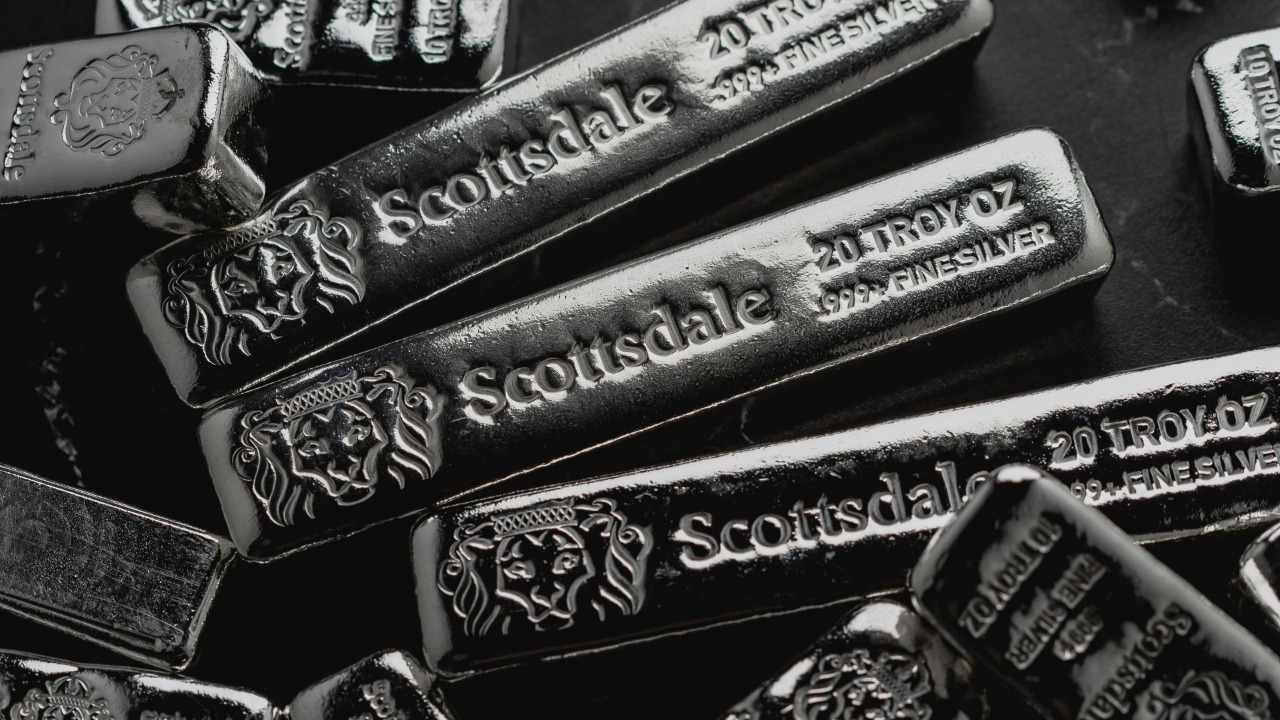
Silver’s spectacular boom and sudden collapse have turned a supposed safe haven into a trap for late‑arriving buyers. After sprinting to record levels earlier this year, the metal has given back a chunk of those gains in a matter of days, inflicting heavy losses on investors who believed the rally was bulletproof. The violence of the move is now raising a deeper question: is the silver market structurally misaligned in a way that leaves ordinary buyers uniquely exposed when sentiment turns.
The answer lies in a mix of leverage, speculative flows and a disconnect between paper contracts and physical demand that has been building for years. When that tension snapped, prices did not simply “correct”, they air‑pocketed, leaving some investors nursing double‑digit losses while others insist the long‑term story is intact.
The plunge that stunned silver bulls
The immediate damage is stark. Spot prices of the white metal were reported down more than 10% at $76.1138 per ounce as of 11.03 p.m. ET Wednesday, extending a sell‑off that began after silver’s latest peak. By the next session, benchmark contracts showed Silver falling to 74.16 USD per troy ounce, a drop of 12.38% from the previous day, according to one set of market data. A parallel feed also pegged Silver at the same 74.16 USD, underscoring how abrupt the reversal has been across pricing venues.
Those numbers are even more jarring when set against the euphoria of mid‑January, when Silver prices surged above $90 per ounce, setting a new all‑time high and feeding talk of a “physical squeeze” on Wall Street. That spike, described as a Physical Run on Wall Street, drew in momentum traders and retail buyers convinced that structural shortages would keep pushing prices higher. The subsequent collapse has left anyone who bought near $90 nursing losses of roughly 15% to 20% in a matter of days, even before factoring in leverage or currency swings.
Macro shock: from safe haven to collateral damage
The sell‑off in silver is not happening in isolation. A broader rout in precious metals has erased an estimated $7 trillion in combined value from Gold and silver, a wipeout that has delivered a brutal reminder of how quickly “safe” assets can reprice when macro assumptions change. As risk sentiment soured, Gift this global move to a firmer dollar, weaker equities and a rush to unwind crowded trades, a combination that has hit leveraged commodity positions particularly hard. In that environment, even assets traditionally viewed as hedges can become sources of liquidity as investors sell what they can, not what they would like.
Politics have added another jolt. After President Donald Trump picked Kevin Warsh as the next Federal Reserve chair, Commodities faced a severe sell‑off as markets reassessed the path of interest rates and inflation. Spot gold and spot silver, which had been treated as safe‑haven assets to hedge against U.S. volatility, instead plunged as traders priced in a potentially more hawkish Fed and a stronger dollar. A separate account of the correction noted that Gold and silver were simply giving back part of an extraordinary run after record highs, a reminder that macro catalysts can flip the narrative from “inflation hedge” to “overbought risk asset” almost overnight.
Paper games, mean reversion and the “broken” feel
Behind the price action sits a market structure that many investors now describe as broken. Years of growth in futures, options and exchange‑traded products have created a vast layer of paper exposure on top of a relatively tight physical market. When Silver prices surged above $90, that leverage amplified the move, as short sellers scrambled to cover and momentum funds piled in. Now that the tide has turned, the same leverage is accelerating the fall, forcing liquidations that have little to do with real‑world demand for jewelry, solar panels or electronics.
Even some institutional voices are questioning how far prices had drifted from fundamentals. Analysts at a major bank have warned that silver could slide back toward $50, and Galena Asset Management’s Galena Asset Management specialist Maximilian Tomei has argued that fundamentals alone cannot explain a commodity being untethered from actual supply and demand. A separate outlook framed the current phase as Mean Reversion Risk, noting that after an extraordinary rally in 2025, silver prices are now vulnerable to a pullback as speculative excess is wrung out.
Real‑world demand is strong, but buyers still lose
What makes the current rout so frustrating for many investors is that the long‑term demand story remains compelling. A detailed review of Silver Demand in 2026 highlights how Technology, Industry and the Future of Global Markets are increasingly tied to the metal, from solar panels and electric vehicles to AI‑driven data centers. That same analysis points to structural supply deficits that are not easily fixed, as new mines take years to develop and environmental constraints tighten. In theory, that should support higher prices over time, yet in practice, it has not shielded recent buyers from short‑term carnage.
Part of the disconnect comes from the way financial markets price expectations rather than current flows. An outlook labeled After the 2025 rally notes that demand for silver in the power distribution and industrial sectors may actually decline by around 4 percent in the near term, even if the medium‑term trajectory remains positive. That nuance is often lost in social‑media narratives that focus on “inevitable” shortages. When expectations overshoot, mean reversion can be brutal, and it is the buyers who chased the story at the top who end up feeling like the market is rigged against them.
Retail investors: from silver squeeze dreams to margin calls
The human side of this volatility is playing out in trading apps and online forums. One widely shared post on an investing board began with a resigned Yes, nothing to worry about for anyone holding silver, before acknowledging how scary a single day’s crash can feel. The same writer added a cautionary But, implicitly recognizing that not everyone has the time horizon or risk tolerance to ride out 20% swings. For those who bought on margin or through leveraged exchange‑traded products, the drawdown is not just psychological, it is a forced exit.
In India, where households have long favored precious metals as a store of value, the picture looks slightly different but no less complex. Local benchmarks show Silver Price Today on domestic exchanges holding near ₹3,499 per 10 grams, with the article noting that, Overall, silver remained range‑bound after the late‑January fireworks. That relative calm masks the fact that many Indian buyers had already paid higher rupee prices when global quotes were near their peak. For them, the sense that the market is stacked in favor of fast‑moving global funds, rather than long‑term savers, is likely to deepen.
More From TheDailyOverview
*This article was researched with the help of AI, with human editors creating the final content.

Grant Mercer covers market dynamics, business trends, and the economic forces driving growth across industries. His analysis connects macro movements with real-world implications for investors, entrepreneurs, and professionals. Through his work at The Daily Overview, Grant helps readers understand how markets function and where opportunities may emerge.

