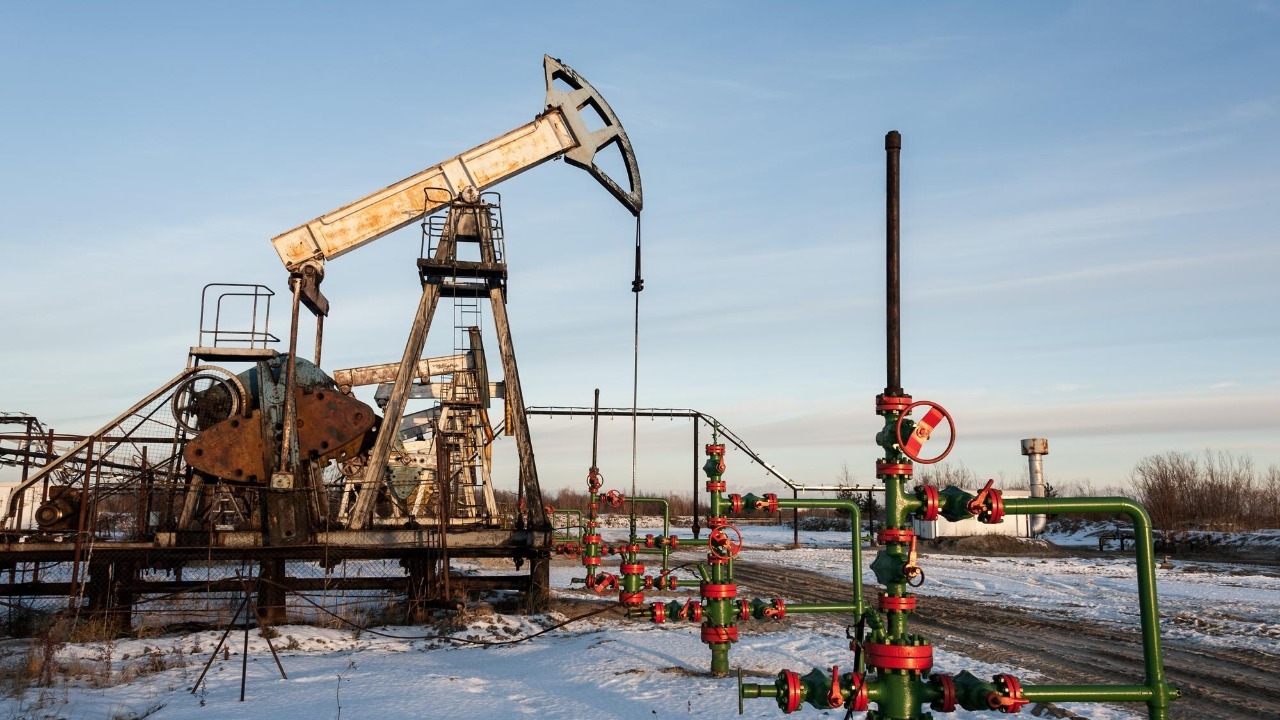
A wave of U.S. Treasury sanctions targeting Russia’s largest oil producers is squeezing the country’s energy sector from every direction, and the firms least equipped to absorb the blow are its smaller, independent operators. With Urals crude trading near $45 per barrel and buyers in Asia pulling back, the financial pressure on companies that lack the scale and political connections of state-backed giants has become severe. The result is a slow-motion shakeout that could reshape Russia’s oil industry for years to come.
Treasury Sanctions Widen the Net
The U.S. Department of the Treasury has built a layered sanctions architecture over the past year that now covers most of Russia’s major oil infrastructure. In January 2025, Treasury designated Gazprom Neft and Surgutneftegas while announcing a petroleum-services prohibition timeline aimed at cutting off upstream support. That prohibition, which covers exploration and well completion services, took effect on February 27, 2025, according to an OFAC guidance document issued alongside the determination. The scope is broad: drilling, production, refining, storage, maintenance, and transport are all included, and the language is deliberately sweeping to discourage creative attempts to work around the rules.
These measures sit on top of earlier actions that expanded the list of restricted actors and activities. Treasury has used its authorities under Executive Order 14024 to target core nodes of Russia’s energy system, while also issuing a separate determination under Section 1(a)(i)(A) that extends sanctions risk to foreign financial institutions dealing with Russia’s military-industrial base. In a recent determination, officials stressed that foreign banks facilitating certain Russia-related transactions could themselves face sanctions, even if they are not directly named by OFAC. For small Russian producers that rely on regional banks and niche trade financiers, this warning has had a chilling effect: lenders are increasingly unwilling to touch any transaction linked to Russian oil, no matter how technically compliant it might be.
Price Collapse Compounds the Pain
Sanctions alone did not create the crisis facing small Russian producers. The collapse in the price they can actually realize for their crude has been equally destructive. Urals crude, the benchmark for most Russian exports, has fallen to around $45 per barrel, a level that strains the economics of fields with higher lifting costs. Shipping disruptions, stranded volumes, and tanker seizures have compounded the problem, forcing sellers to accept steeper discounts just to move barrels. Buyers have been pulling back, wary of secondary sanctions risk and the growing difficulty of arranging compliant transactions with Western insurers and banks.
For Russia’s oil majors, $45 crude is painful but survivable. They control vast, low-cost fields and benefit from preferential tax treatment and easier access to state-backed financing. Small independents operate on thinner margins, often producing from mature or technically challenging wells that require constant investment to sustain output. When the realized price drops below their breakeven, they cannot simply wait it out; they need continuous revenue to service debt, pay wages, and maintain equipment. The petroleum-services ban makes that last point especially acute: without access to Western drilling technology and well-completion expertise, keeping aging fields productive becomes progressively harder and more expensive, accelerating decline rates just as cash flow is drying up.
Enforcement Actions Raise Compliance Costs
Treasury has not limited itself to broad designations. It has also pursued targeted enforcement against the networks that help Russian oil move above the G7 price cap. One action identified specific entities and vessels involved in price-cap violations, including cargoes priced above the cap and a tanker singled out by its IMO number. A separate round of sanctions targeted a ship manager linked to Sovcomflot, Russia’s state shipping company, while also updating official guidance on how the price cap should be implemented in practice. Each enforcement action sends a signal to the maritime insurance and shipping industries: the cost of getting caught is rising, and ignorance of counterparties is no longer an acceptable defense.
This enforcement posture hits smaller operators disproportionately. Large companies can absorb compliance costs, build in-house legal teams, and maintain relationships with the shrinking pool of willing intermediaries. They can also tap into Russia’s growing “shadow fleet” of aging tankers that operate outside Western insurance networks and are often controlled through opaque ownership structures. Independent producers, by contrast, lack the logistics infrastructure to arrange their own shipping and must rely on traders and middlemen whose risk appetite is shrinking with every new Treasury action. The practical effect is that small firms face wider discounts, longer payment cycles, and fewer willing counterparties than their larger rivals, even when they are selling the same grade of crude into the same destination markets.
Asian Demand Shifts Add Uncertainty
The buyer side of the equation has also become less reliable for Russian crude sellers. Analysis of Russian fossil fuel exports into Asian markets through early 2025 shows that the Urals FOB Primorsk average price series has tracked well below levels that would sustain many smaller producers. Chinese demand for Russian oil eased in April 2025, even as India boosted purchases of Russia’s ESPO crude during the same period. Exports of sanctioned Russian Arctic oil to China were set to rise in April, but the overall picture is one of shifting and unreliable demand rather than a stable floor under prices. Traders now speak of a “buyer’s market” in which Asian refiners can pick and choose among discounted barrels from multiple suppliers.
This volatility matters because small Russian producers cannot easily redirect their output. They typically sell into regional pipeline systems or to domestic refiners, and their access to export markets depends on intermediaries who are themselves under growing pressure from Western regulators and banks. When Chinese buyers pull back, the entire chain feels it. Indian demand has partially filled the gap, but Indian refiners are aggressive negotiators who demand steep discounts and flexible payment terms, further compressing the margins that smaller upstream companies need to survive. The result is a market where only the lowest-cost, best-connected producers can reliably move their oil at a profit, while higher-cost independents are pushed toward shut-ins, distressed asset sales, or quiet bankruptcy.
State Consolidation as the Likely Outcome
The most important critique of the current sanctions regime is that, while it clearly constrains Russia’s oil revenues and raises operating costs, it may also be accelerating a structural shift toward greater state control over the sector. When financing dries up and service providers retreat, the entities best positioned to step in are those with direct or indirect state backing. Russia’s major oil companies, already deeply intertwined with the government, can access budget support, tax relief, and regulatory forbearance that are out of reach for smaller players. As independents struggle to refinance loans or fund basic maintenance, they become potential acquisition targets for larger firms that can buy assets at a discount and weather the sanctions storm.
U.S. officials have signaled that this collateral effect is an acceptable trade-off for maintaining pressure on the Kremlin. In the same determination that warned foreign banks about Russia-related transactions, Treasury emphasized that it is prepared to escalate measures against institutions that help Moscow adapt, underscoring that sanctions could extend to facilitators even if they are not explicitly named on any list. For small Russian producers, this means there is little prospect of relief from Western policy in the near term. Their survival will depend on either being absorbed into larger, state-aligned structures or pivoting almost entirely to domestic markets where prices and volumes are likely to remain lower. Over time, that dynamic points toward a more consolidated, less competitive Russian oil industry, one that is leaner, more politically controlled, and more insulated from Western leverage, but also less capable of sustaining high levels of investment and innovation.
More From The Daily Overview
*This article was researched with the help of AI, with human editors creating the final content.

Grant Mercer covers market dynamics, business trends, and the economic forces driving growth across industries. His analysis connects macro movements with real-world implications for investors, entrepreneurs, and professionals. Through his work at The Daily Overview, Grant helps readers understand how markets function and where opportunities may emerge.

