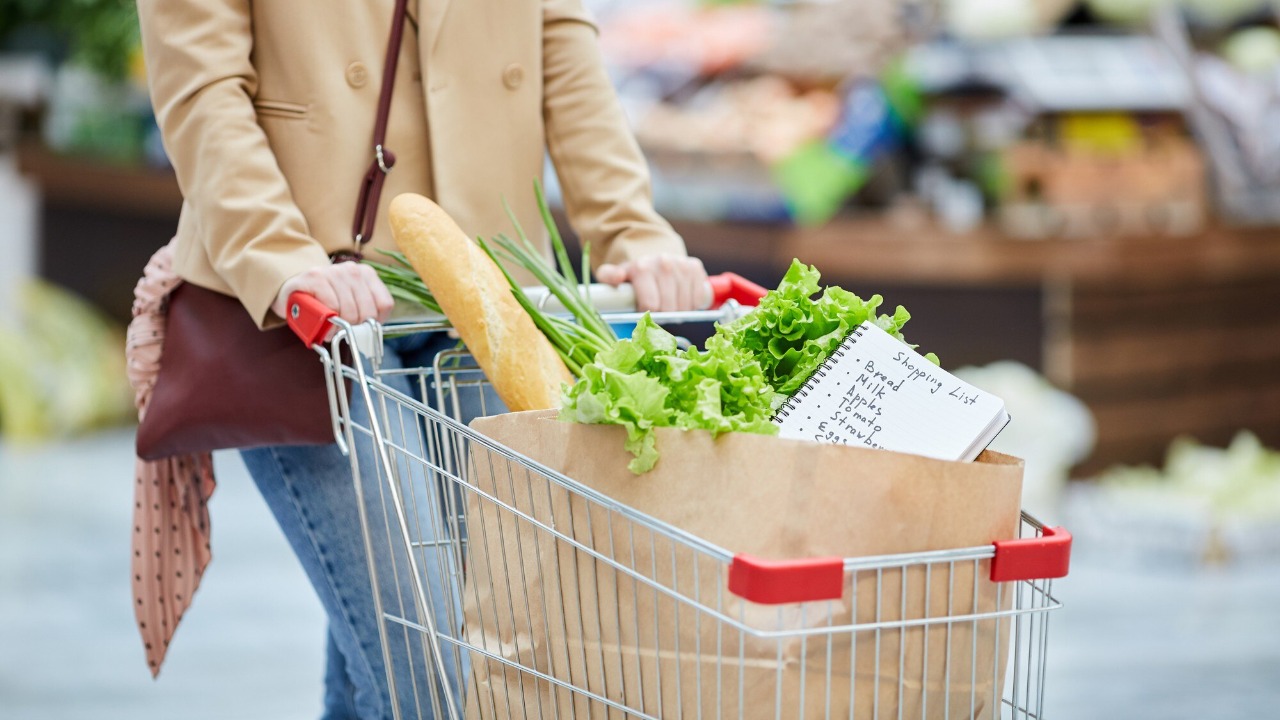
American families are spending more on groceries than at any point in recent memory, and the gap between what government programs provide and what a healthy diet actually costs keeps widening. The federal data tells a clear story: food prices have climbed steeply since the start of the pandemic, household budgets have shifted to absorb the blow, and safety-net adjustments have struggled to keep pace. This article walks through the numbers that explain why so many people feel squeezed at the checkout line, and what official benchmarks reveal about the true scale of the problem.
What a “Healthy, Low-Cost” Diet Actually Costs Now
The federal government tracks what it should cost to eat well at home, and those estimates have risen sharply. The USDA’s Center for Nutrition Policy and Promotion publishes monthly food plan reports that break down grocery spending at four tiers: the Thrifty Food Plan, the Low-Cost Food Plan, the Moderate-Cost Food Plan, and the Liberal Food Plan. Each tier estimates the expense of preparing nutritionally adequate meals at home, reported by age and sex groups as well as for a reference family. The Thrifty plan, the most restrictive of the four, serves as the baseline for SNAP benefits, which means it directly shapes how much assistance low-income households receive each month and defines what policymakers consider the bare minimum cost of a healthy diet.
What makes these reports so telling is the distance between the Thrifty tier and the higher-cost tiers. A family trying to follow the cheapest government-recommended diet faces a fundamentally different shopping list than one budgeting at the moderate or liberal level, with fewer options for convenience, variety, and brand choice. Yet even the Thrifty plan has grown more expensive as ingredient costs have climbed, reflecting higher prices for staples like grains, dairy, and protein. For households already stretching every dollar, the upward drift in even the lowest-cost plan means less room for fresh produce, lean meat, or dairy, pushing families toward cheaper, calorie-dense alternatives that carry long-term health risks such as obesity, diabetes, and heart disease.
Food Now Claims a Bigger Share of Every Paycheck
Beyond the sticker shock at the store, the broader budget picture confirms how deeply food inflation has cut into household finances. The Bureau of Labor Statistics tracks this through its annual Consumer Expenditures report, and the 2023 data lays out spending on food overall, food at home, and food away from home alongside the share of total expenditures each category represents. When food claims a larger slice of the pie, other non-discretionary costs like rent, utilities, health care, and transportation get crowded out. That tradeoff is especially painful for lower-income households, where food already represents a disproportionately large share of spending and where there is less flexibility to cut back in other parts of the budget.
The BLS dataset is valuable precisely because it captures behavior, not just prices. If families respond to higher grocery bills by eating out less, the food-at-home share rises even as the food-away-from-home share may dip, signaling a shift in habits rather than relief from cost pressures. If they cope by buying cheaper brands, cutting portion sizes, or skipping meals, the total dollar figure may look stable while nutritional quality deteriorates. The numbers in the report reflect real choices made under pressure, and the trend line since the pandemic has pointed in one uncomfortable direction: Americans are devoting more of their income to feeding themselves, with less room for savings, emergency expenses, or investments in education and opportunity.
SNAP Benefits and the Thrifty Plan Gap
For the roughly tens of millions of Americans who rely on the Supplemental Nutrition Assistance Program, the connection between the Thrifty Food Plan and monthly benefit levels is direct and consequential. SNAP maximum allotments are recalculated each fiscal year through a cost-of-living adjustment process, and the current standards that took effect on October 1, 2025, update maximum allotments and income thresholds to reflect changes in the cost of the Thrifty plan. In theory, this mechanism is designed to ensure that benefits keep pace with food inflation so that a household receiving the maximum allotment can still afford the basket of foods the plan describes.
The structural challenge is that the Thrifty plan was always designed to represent the floor of adequate nutrition, not a comfortable grocery budget. When food prices surge across nearly every category, a cost-of-living adjustment pegged to that floor can leave recipients short of what they need to actually follow the diet in practice. In practical terms, a family receiving the maximum SNAP allotment may still find that prices for staples like eggs, ground beef, bread, and fresh produce have outrun the benefit increase. The adjustment mechanism works as intended from an accounting standpoint, but the lived experience for recipients can feel like running on a treadmill that keeps speeding up, with benefits that arrive on time yet run out days before the end of the month.
This tension raises a question that policymakers have largely sidestepped: whether the Thrifty plan itself adequately reflects how Americans eat and shop. The plan assumes home preparation of nearly all meals, minimal food waste, bulk buying when prices are favorable, and access to affordable grocery stores with competitive prices. Those assumptions do not hold for many urban and rural communities where food deserts, limited transportation, and irregular work schedules make cheap home cooking difficult or impossible. Households that rely on smaller neighborhood stores or corner markets often pay higher prices per unit, and families with multiple jobs may lack the time required to cook from scratch. The gap between the model and reality may be widening faster than the annual cost-of-living adjustment can close it, leaving SNAP recipients to bridge the difference with food pantries, informal support networks, or simply going without.
Cumulative Inflation Since the Pandemic Started
Zooming out from monthly reports and annual adjustments, the cumulative picture since January 2020 is striking. An analysis from the Pew Research Center uses Consumer Price Index data to quantify how much grocery costs have risen since just before the pandemic began, translating years of monthly changes into a single, long-run measure. The analysis highlights specific food categories that climbed fastest, with eggs and meat standing out as particularly sharp increases and other staples such as cereal and bakery products also posting substantial gains. These are not luxury items; they are basic sources of calories and protein that appear in nearly every household’s weekly shopping cart, which means their price spikes have an outsized impact on family budgets.
The value of Pew’s work is that it synthesizes raw inflation data into a clear, accessible picture of how far prices have moved. Annual inflation rates can mask the full impact because they measure year-over-year change rather than the total distance traveled. A family that saw grocery costs rise steeply in 2021 and 2022, then more slowly in 2023 and 2024, still faces a bill that is dramatically higher than it was five years ago. Wages have grown over the same period, but not uniformly across occupations, regions, or education levels, and not always fast enough to offset higher food costs. For workers in low-wage service jobs or sectors with stagnant pay, the cumulative increase in grocery prices translates directly into reduced purchasing power, even if headline inflation appears to be moderating.
Why the Numbers Matter for Policy and Families
Taken together, the USDA food plans, BLS expenditure data, SNAP benefit formulas, and cumulative inflation analysis describe a consistent pattern: the official floor for a healthy diet keeps rising, food is consuming a larger share of household budgets, and the primary nutrition assistance program is tethered to a benchmark that may underestimate real-world costs. This convergence of evidence helps explain why so many families report feeling that they are doing everything “right” financially—cooking at home, shopping sales, relying on benefits where eligible—yet still cannot keep their grocery spending under control. It also underscores that the squeeze at the checkout line is not simply a matter of individual budgeting choices, but a structural shift in the economics of food.
For policymakers, these numbers pose difficult but unavoidable questions. If the Thrifty Food Plan no longer matches how families actually shop and cook, adjusting SNAP benefits around its edges will not fully solve the problem. Re-examining the assumptions built into that plan, monitoring how much of household income food now consumes, and tracking cumulative price changes rather than just annual inflation could all inform more realistic standards for nutrition assistance and poverty measurement. For families, the data offers validation that the pressure they feel is real and quantifiable—not a failure of personal discipline, but the result of sustained price increases colliding with limited income growth and safety-net formulas that have struggled to keep up.
More From The Daily Overview
*This article was researched with the help of AI, with human editors creating the final content.

Cole Whitaker focuses on the fundamentals of money management, helping readers make smarter decisions around income, spending, saving, and long-term financial stability. His writing emphasizes clarity, discipline, and practical systems that work in real life. At The Daily Overview, Cole breaks down personal finance topics into straightforward guidance readers can apply immediately.
